https://www.6amgroup.co/wp-content/uploads/2023/02/PAGE-1-.png62812006AM6AM2023-02-10 14:17:182023-02-15 10:30:11Celebrating Black History Month With House & Techno
When you think of techno, punk probably isn’t the next genre that comes to mind.
However, did you realize that the history of punk music actually had an influence on techno at the end of the 1980’s, culminating in the formation of Underground Resistance?
Also, techno and punk communities are both underpinned by several shared values.
While it would be impossible to cover all of techno and punk history in one article, in this post you’ll learn some of the history of punk’s impact on techno music and the values the two music communities have in common.
https://www.6amgroup.co/wp-content/uploads/2022/06/Featured-Images-1x1-8.png108010806AM6AM2022-06-03 13:50:122022-06-03 16:03:31Techno’s Punk Influence: From Iggy Pop to Underground Resistance
An interdisciplinary display exploring the evolution of the techno scene, from Detroit in the 1980s to West Berlin during the Cold War to its present-day place in the pantheon, Techno Worlds runs in Montréal from May 13 to June 19. Read more
https://www.6amgroup.co/wp-content/uploads/2022/05/Screen-Shot-2022-05-10-at-11.42.18-AM-e1652208211268.png5411024Max SpruillMax Spruill2022-05-10 14:21:242022-05-10 14:21:24A Traveling Techno Exhibit Grooves into Montreal this Month
If you’re not new around these parts, you know that 6AM is all about techno. On top of organizing events for you to dance and listen to, 6AM brings you informative and entertaining pieces about the music you love. So assuming you’re a fellow tech-nerd, what could possibly be more informative and entertaining than a little techno 101 history lesson? If you actually are new around here or just want a more general overview of the genre as a whole, check out 6AM’s Techno Music Guide first. But if this ain’t your first rodeo and are already familiar with this horse, get your saddle on and giddy up cuz’ we’re taking a ride through the domain of one of our favorite subgenres: dub techno. Read more
https://www.6amgroup.co/wp-content/uploads/2022/04/Featured-Images-1x1-9.png10801080Max SpruillMax Spruill2022-04-21 07:00:402023-08-27 11:08:18Techno History Guide: A Deep Dive Into Dub
House music is one of the oldest forms of modern dance music that has made multi-generational impacts. It still is one of the cornerstones of dance music to this day and has an immortal presence and influence in all of music. Perhaps you’re a veteran house head who wants to have a little flashback into time and rediscover why you fell in love with it. Or maybe you’re new to house music and want to take a deep dive into this iconic genre with a rich history. Either way, 6AM has got you covered with this house music guide.
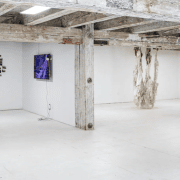
Amsterdam is opening a new electronic music museum called Our House. It’s slated to open its doors on Friday, October 29. Billed as “the world’s first modern museum” dedicated to electronic music, Our House will span six exhibitions and 15 installations, including photo galleries, interactive vinyl players, documentaries, flyers, drum machines and a closing 4D audiovisual experience called “The Culture Ride.”
https://www.6amgroup.co/wp-content/uploads/2021/10/ourhouse.jpeg20482048Kevin ChingKevin Ching2021-10-17 10:39:132021-10-21 11:05:07Amsterdam Opens New Electronic Music Museum: Our House
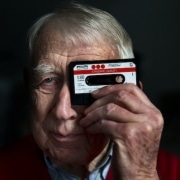
The cassette inventor Lou Ottens passed away at the age of 94. The audio recording pioneer and inventor of the compact cassette transformed the way people listened to music. From Pauline Oliveros, the godmother of recorded performance instruments, to Halim El-Dabh, the creator of the first electronic music composition, the cassette tape helped pioneer the history of electronic music. Read more
https://www.6amgroup.co/wp-content/uploads/2021/03/ANP-322193467-1.jpg398600Nathan ChristopherNathan Christopher2021-03-11 10:28:012021-03-11 10:28:01Cassette Inventor Lou Ottens Dies, How Cassette Impacted Music
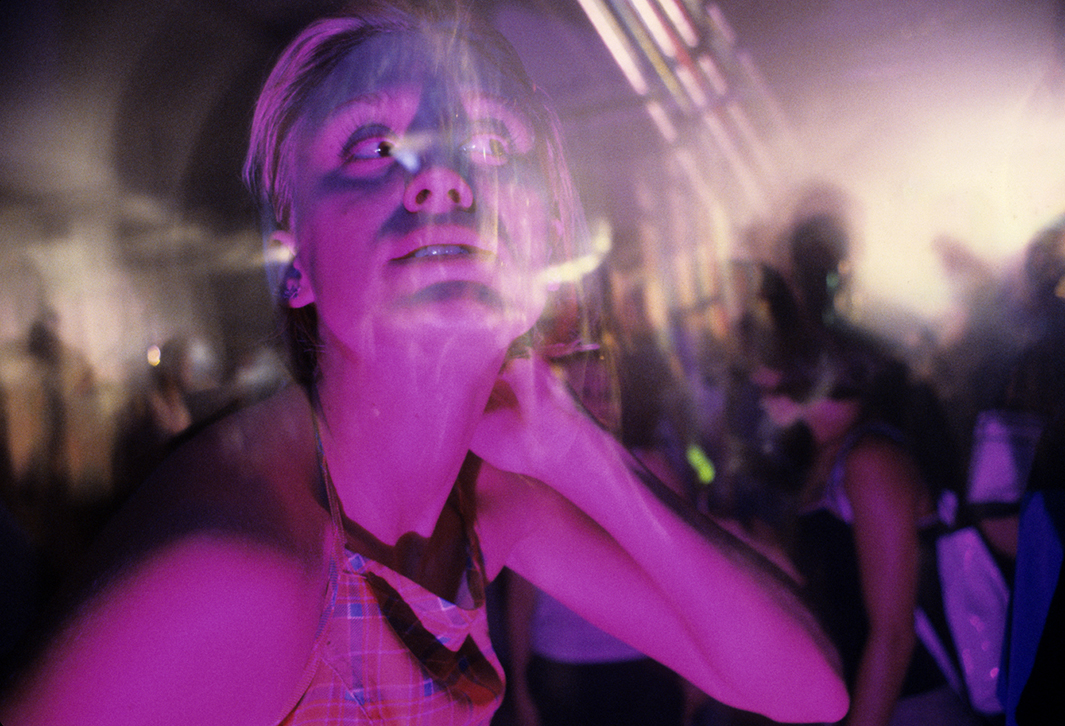
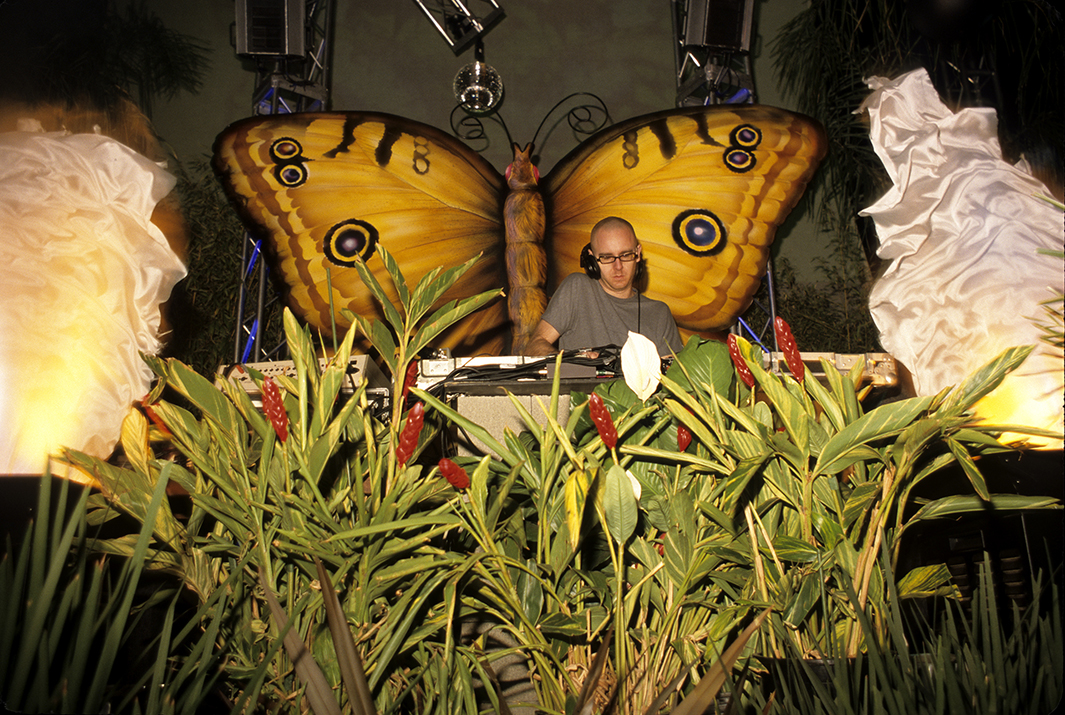
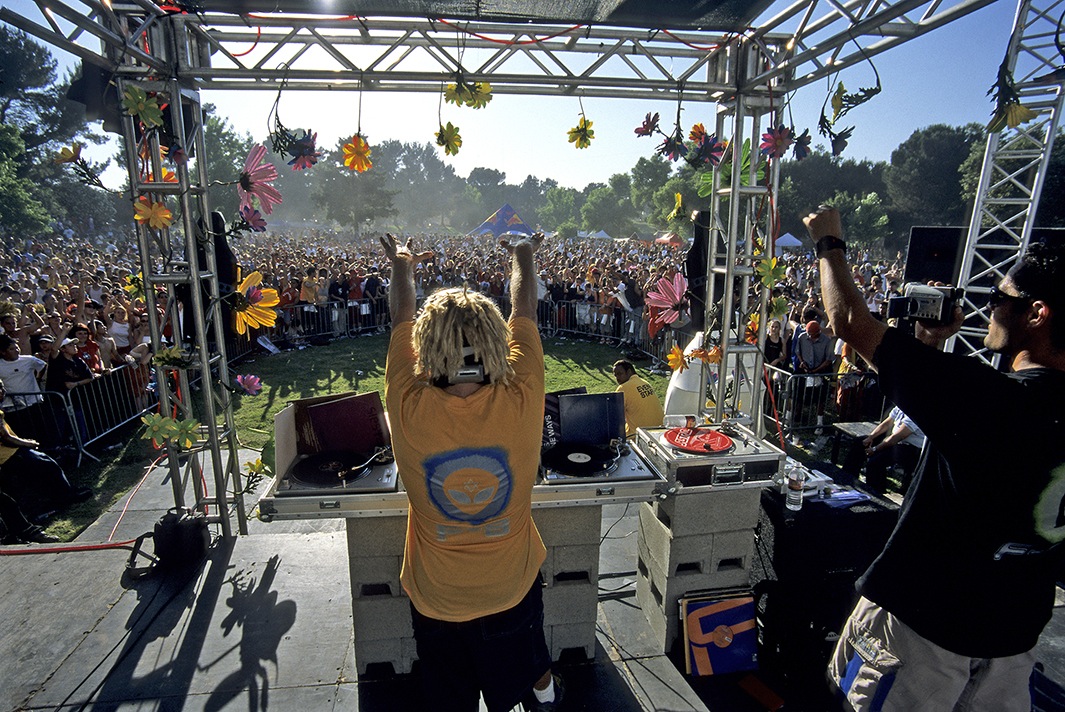
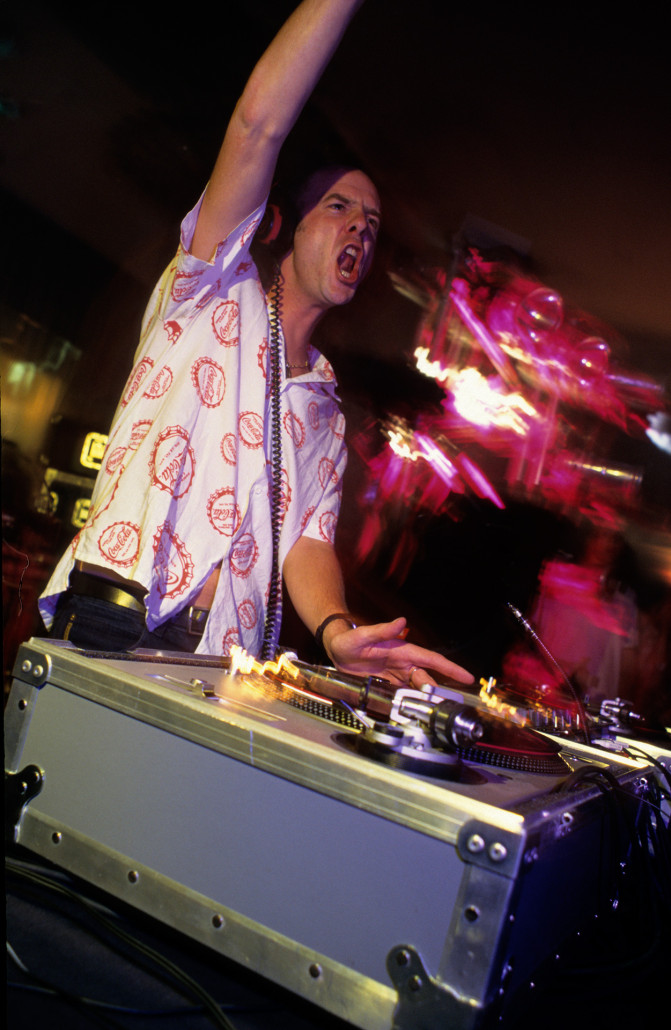
If you’ve ever seen or searched for photos of raves from the 90’s, there’s a high probability that you’ve come across the work of Michael Tullberg. Present at one of the most dynamic times in West Coast rave culture, Tullberg was one of the primary photographers to document the widespread rave movement of the time. With years of photos at his disposal, it was only a matter of time before the public was exposed to his vast collection. With the release of his book, Dancefloor Thunderstorm: Land of the Free, Home of the Rave, Tullberg takes us down an engaging path of radical audiovisual experiences.
Dancefloor Thunderstormis comprised of over 500 photos from events occurring between 1996 and 2002, the second rave wave that swept over Los Angeles. But this isn’t where things started for esteemed photographer, Michael Tullberg. After moving to Los Angeles from Boston in the early 1991, Tullberg was working a variety of media jobs, and eventually landed a brief gig writing a club review for the magazine LA Pop. He later went on to have his work published in magazines such as Mixmag, Rolling Stone, and URB, but for starters he was predominately a writer, and photography was a relatively untouched territory for Tullberg at the time.
As I sit down with Michael over a beer in Hollywood he depicts a series of events that eventually explain his involvement as the officially unofficial rave historian of our time. Reminiscing on his club review for LA Pop, Michael explains that his introduction to nightlife photography was rather sporadic.
“The editor calls me and says, ‘look, we love your words, but we need pictures! Can you help us out?’ I had not owned a still camera for many years up until that point, but fortunately I had a friend who let me borrow her camera, and I went at it.I went to The Probe and explained my situation, and they let me shoot. That’s when I realized I had a talent for this type of photography. It was totally raw and unpolished, but it was definitely there”
This was a welcome turning point in his artistic career. Like many freelance individuals, Michael would accept work for a variety of clientele; from industrial gothic parties to the upscale exclusive events in the Beverly Hills scene, nothing was off limits for Tullberg. But something about that club night changed him, and his perspective and vision began to take shape.
“As time progressed I started becoming very disenchanted with some of the people in those scenes. Particularly the Beverly Hills club scenes. It was the personification of elitist velvet rope attitude…and the music in that scene was horrrrible.”
Where exclusive scenes such as that were not appealing to Tullberg, the rave provided a completely polarized experience – one of vivid imagery and an overall feeling of inclusivity. The latter is key, and from there, Tullberg was present at almost every major event capturing early rave moments with the likes of DJ Dan, The Crystal Method, Fatboy Slim, Richie Hawtin, and even Carl Cox at the beginning of his US popularity. Tullberg always had a keen eye for spotting a popular movement, and his instincts served him right as he embraced the frontlines of American rave culture.
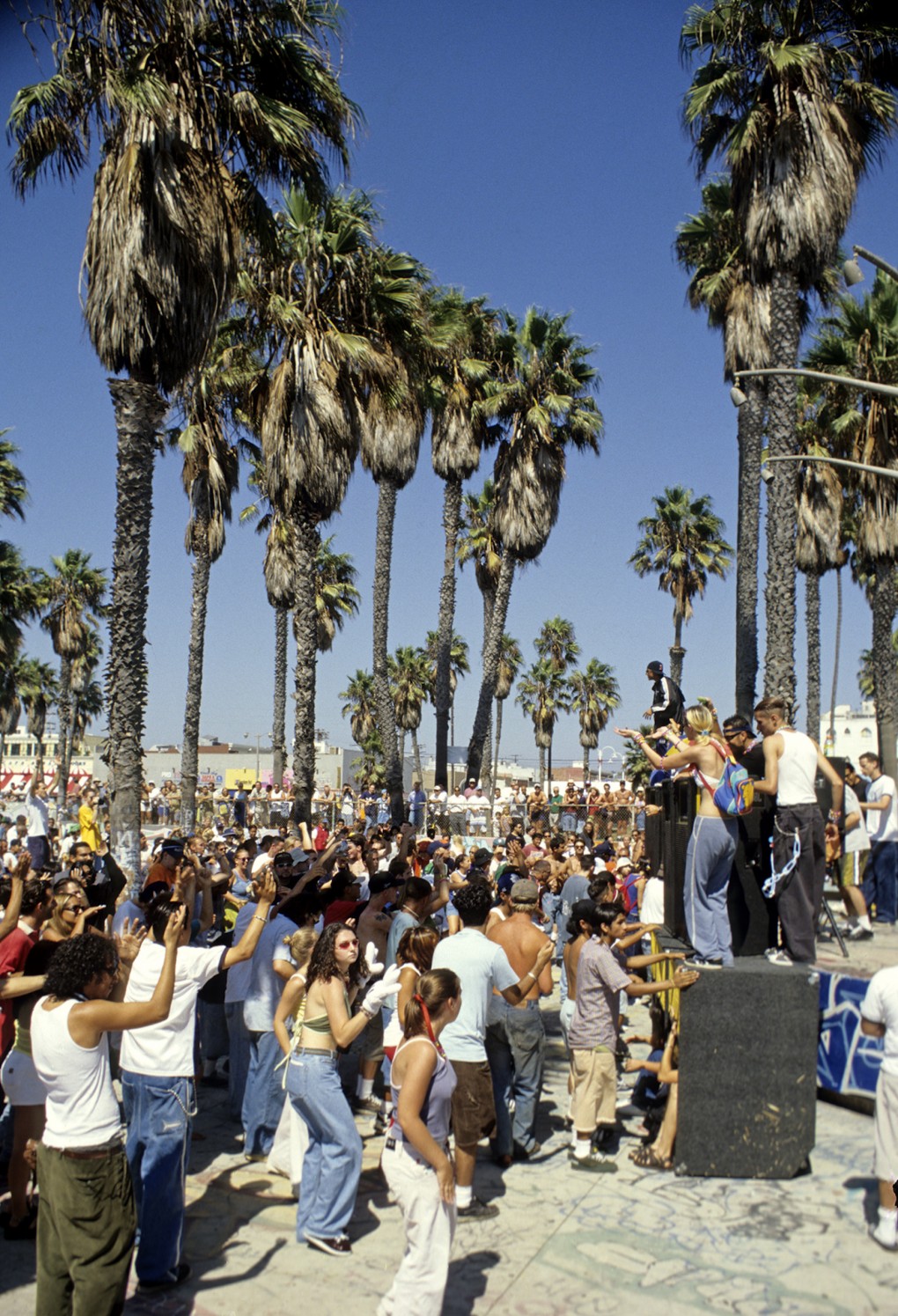
Traversing all over Southern California and other areas throughout the United States, Tullberg found himself at many pivotal events within the historical rave context. From one of the largest desert raves to “benefit” raves on the Venice Beach boardwalk, he documented it all, and developed an iconic style of nightlife photography that would leave a lasting impression on everyone.
“For them, this is another clue of the impending end of civilization”
This is what Tullberg had to say about the tourists that would line the fences of Venice Beach in the late 90’s. An awe inspiring sight, no doubt, to see hundreds of ravers in broad daylight moving to tribal breaks and funky rave rhythms. Around 5:58 in the video below you’ll see a man sporting a superb bucket hat, taking his own pictures to bring back to friends and family of his “wild time” in California. We’ll venture to take a stab and say his work is far from Dancefloor Thunderstorm material.
Admittedly, I was not present in Los Angeles during this dynamic time in 1997, and naturally my curiosity was peaked as to how a rave such as this could happen in the middle of Venice Beach. Tullberg graciously explained that “these were free benefit shows, with people bringing in canned food items, and would then make donations to homeless shelters.” Raving for a cause…I like it.
Public raves such as this were more of a rarity then what the rave scene was used to. As a counter-culture, much of the rave scene operated in the shadows and away from the public spotlight. We continue to chat about Venice Beach and some of the other noteworthy raves seen throughout Dancefloor Thunderstorm, and with my brief experience with desert raves, it was time to divulge into one of the last great desert raves of the 1990’s – Dune 4.
“It was basically a basin with a rock wall. This was about 7:00 AM, the sandstorm had gone away, everyone is up and had their second wind”
Taking place on an Indian reservation near the California/Arizona border in June 1998, Dune 4 was a true test of raving will power, and is professed by many to be one of the great desert raves that California had seen. This one photo had me curious as to what other desert photo gems Tullberg has waiting in Dancefloor Thunderstorm – my experiences don’t come close to anything of this magnitude, and even this picture can’t do the night complete justice. According to Tullberg, “a sandstorm came through and blasted through the whole area,” leaving ravers two options. They could either seek shelter and let the storm subside, or they could put their head down and keep raving to the energetic sounds of Christopher Lawrence.
Without Michael Tullberg, we may not have such detailed accounts and photos to look back on. Dancefloor Thunderstorm will act as a comprehensive guide to one of the most dynamic times in dance music, and can be enjoyed by ravers, old and new. With over 500 photos in Dancefloor Thunderstorm, these really don’t begin to scratch the surface. But after looking through various photos with Michael, I realize that the work he has done is an essential piece in the history of dance music – not just for California, or even the United States, but for the world. Through his artistic documentation of the rave moment, he showed that the power of electronic music could have a profound impact on the music community, and no one would argue that considering that dance music has become the dominant sound on a global scale today.
Through years of photography, and with a little help from ex-URB colleagues, Paul Rivas and Josh Glazer, Michael Tullberg is proud to present Dancefloor Thunderstorm: Land of the Free, Home of the Rave.
For those who want to collect a rare piece of rave history, Dancefloor Thunderstore will be available on October 8th through the Official Website, with an official launch party happening October 8th with DJ’s: Jason Blakemore, Freddy Be, Mark Lewis, and Riley Warren.
https://www.6amgroup.co/wp-content/uploads/2015/10/Venice-Beach.jpg14951020Lee TrotterLee Trotter2015-10-05 22:50:252015-10-06 14:59:08Dancefloor Thunderstorm: Land of the Free, Home of the Rave