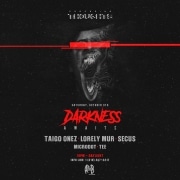

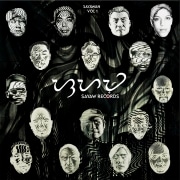
Sayaw Records is celebrating its label launch with its debut compilation Sayawan Vol. 1 (out December 11, 2020). The album features 15 tracks from various artists including Sayaw Records label founders Mica (UK) and Alinep. Based in the Philippines, Sayaw Records is a non-commercial electronic music label and serve to connect some of the country’s top electronic music producers. Read more
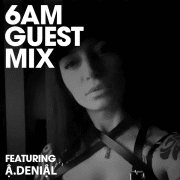
This week’s Guest Mix features Ậ.DENIẬL, also known as Annes, from Russia. She first entered the DJ world at the age of 14 taking her first steps into underground techno and breakbeat at Tunnel, St. Petersburg’s first techno. Since she hasn’t looked back. Read more
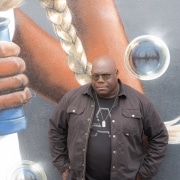
Even over the phone, Carl Cox‘s smile is contagious and felt. Immediately, he conveys a sense of warmth making anyone feel right at home. Wrapping up the call, Carl Cox cooks up industry wisdom and DJ advice, conveying a sense of warmth making me feel right at home.
Chatting from Melbourne before hitting the road for a month-long tour of North American shows, the legendary DJ and producer talks everything from having Diddy shake it on the dance floor in Ibiza to how he’s seen the industry change in the last three decades.
His first stop is EDC Mexico. Afterward, he’ll give California some major love in Los Angeles where Kölsch, Nic Fanciulli and JIA will join him on February 29. He’ll also grace the decks at CRSSD Music Festival in San Diego on March 8.
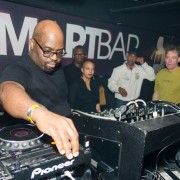
After featuring 25 essential clubbing destinations for house and techno in Asia, it’s now time to highlight our very own underground dance music scene here in the States.
While we originally narrowed down our list to 23 essential underground dance music destinations, we recently expanded it to a total of 30 venues you should take the time to visit for techno and house here in the United States. Here they are in alphabetical order by city:

The underground scene has been in constant battle with various forces for many years, and especially so with mainstream culture. But now, it is facing another adversary — one that can appear too powerful and enigmatic to beat: Facebook.
Facebook has been a source of discontent for underground artists. The Quietus recently came out with an article bemoaning what the social media giant has been doing in “killing” the underground culture.
The interview quoted German composer Antye Greie-Ripatti, or AGF, who had some unpleasant experiences with the social media platform, such as an unauthorized artist’s page that was created without her knowledge. She also spoke out on the lack of user agency and individual privacy, as well as he homogenizing force of the platform which hampers her own way of communicating as an artist, a sentiment shared by other artists as well.
“When you log in to an artist’s page, Facebook gives you suggestions on how to ‘improve’ your ‘performance’. They give you tools and tips which make it look like they’re trying to help, but it’s just pushing you into this marketing mindset. I find myself caring about the response to a post, when I don’t want to. I want to focus on my music – that’s how I make a connection to the audience, first and foremost,” said artist Rrose as quoted in the interview.
One of the criticisms raised against Facebook is that while it is useful to connect to many people across the globe, it also inadvertently puts pressure on the artist to keep more than they need to One example is Facebook requiring artist pages to respond to all the messages she receives, even though sometimes they are weird requests or inappropriate messages. Plus having to maintain multiple social media accounts like Instagram and Twitter simultaneously is seen by some artists as overwhelming and annoying.
Then there is the matter of “promoting” artist pages on the platform. Artists spend quite a lot to promote their Facebook pages to get a wider reach that their pages normally would not get. However, the expenses involved has made it difficult for many independent artists to avail this feature. And if they do, at times the money spent would not be worth as it does not often translate into profit.
There is also the matter of content in which Facebook’s algorithms tends to favor promoting content designed to go viral. This puts high-quality thoughtful content that lack viral elements to make it appealing at a great disadvantage as less people get to see well-thought of opinions instead of audience-friendly but fake content.
On the other hand of these complaints, independent artists find themselves between a rock and a hard place. The option of leaving Facebook is too much of a risk for them to take, especially that it is pretty the largest social media network in the globe and other social media networks could not compare to the scope Facebook already has.
“The once liberatory potential of the internet has dissipated into a mirror of inequality, with power massively skewed online just as it is irl,” Mollie Zhang of The Quietus . “As we surrender personal information and soak up dopamine hits, it becomes even more challenging to envision how independent artists can survive. Hopefully, as this conversation keeps moving, we can begin to figure out how the difficult people can continue making brilliant art.”
It is safe to say this is the hope of everyone else in the industry and beyond as well.
H/T: The Quietus

“Let’s link up and collaborate!”
Yes I am completely aware of how stereotypical that sounds, but given the climate of the electronic music industry we live in today, the need for collaboration is higher than ever.
Here is a simple truth: promoters can choose to view everyone else around them as competition or, instead, as essential elements in nurturing the scene they themselves are a part of. In the United States the more underground sounds of electronic music are still playing catch up to the EDM beast that exploded shortly after the turn of the new century. Every week I hear and read comments from house and techno fans asking for bigger and more, especially when they compares the United States’ scene with that of Europe. They want bigger events, more production and, more importantly, acts that don’t tour in the States often. Let’s be honest here though, these acts are either really expensive to bring Stateside or are simply too high a risk for the promoter as they don’t promise high enough attendance to make the booking viable.
We often see promoters, music fans, blogs, news outlets and artists use the word “underground” in the context of electronic music, yet the meaning of the word can vary depending on the context used.
More often than not, the connotation attached to the term is that akin of a stamp of approval, signifying that the sound/music in question is pure, genuine and stands on an honest backbone of creativity that has not been marred by any type of commercialism. But in some circles the word “underground” is used to refer to music played at non-legal venues, while the same type of music by the very same artists can be found at mega-stages and parties somewhere else in the world, leading to confusion as to what truly constitutes the “underground”. On the other side of the coin, and in more commercial circles, the “underground” label can be attached to a scene that is out of touch with the rest of the world, a scene that is seen as unpolished, un-professional, dangerous and, in some cases, even “dirty.”
In this article we examine some of the positions adopted on the subject:

The mere mention of clubbing and nightlife evokes thoughts of dark rooms, a dance floor filled with black-clad partygoers, sunglasses and a sense of elitism that would put the Royal family to shame. In all fairness, it’s hard to not imagine nightlife, and in particularly the techno scene, as a truly serious affair. But is it really?
Early last year, I encountered a seemingly bizarre Twitter account that used the handle @DearMorni. Whoever this Dear Morni was, they clearly enjoyed making crude yet pin-pointed jokes at the expense of the DJs, clubs, and really anything that was dance music related with a focus on underground house and techno. The more tweets I read, the more I laughed. The jokes were all brutal yet innocent, and always contained at least a pinch of truth. Most were accompanied by haphazard memes that were also getting love on Dear Morni’s Instagram account. The photoshop job on each was boorish but I could sense it was part of gig – there was sure nothing serious about Dear Morni.
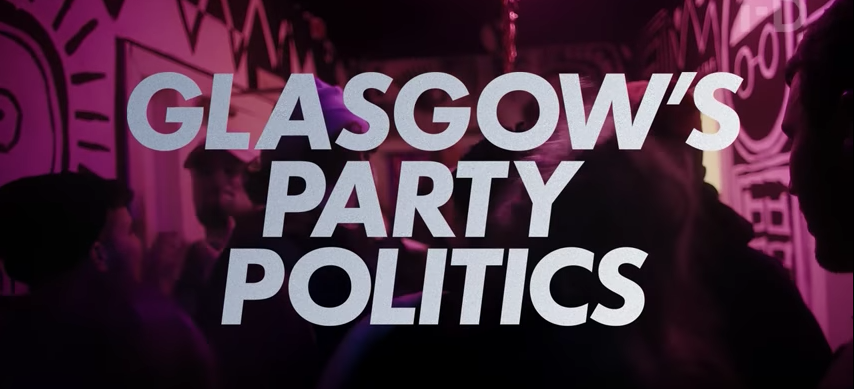
Glasgow, a city that truly knows how to party.
The largest city in Scotland is known to be a hot-bed for skillful DJs and producers, in large part thanks to a thriving nightlife scene with several world-renowned clubs the likes of Sub Club, La Cheetah and SWG3.
But beyond the clubs, there’s a deep underground after-hours scene that is rapidly becoming one of the most talked about in the world. i-D has decided to explore this late-night/early-morning world through a mini-documentary that dives deep into the city’s underground scene and the players that are making it shine.
“Discontent with the current political climate, they are artfully rebelling, reclaiming the city and throwing illegal after-hours parties. In this love letter to inner-city Scottish misfits, we discover more about the ripple effects of regeneration on Glaswegian youth culture.” — i-D
Watch the documentary in full below:


