6AM and its community is a wonderfully diverse microcosm of various backgrounds that all share the love for dance music. As May is Asian American Pacific Islander (AAPI) Heritage Month, 6AM wanted to bring a spotlight to the AAPI artists and dance music industry members that are contributing to our constantly thriving scene. Even with various obstacles and the unfortunate recent aggression towards Asian Americans since the pandemic, there is still a growing talent pool of AAPI artists and industry figures. Apologies in advance to those who we did not get a chance to include in our list and apologies to those who do not necessarily associate themselves as AAPI.
In no particular order, 6AM wanted to bring you this constantly expanding list of AAPI dance music community members.
https://www.6amgroup.co/wp-content/uploads/2022/05/Featured-Images-1x1-1.png108010806AM6AM2023-05-17 07:00:392023-05-17 10:47:13Celebrating AAPI Members of the Electronic Music Industry
Unless you were living under a rock this weekend, you would have seen Donald Trump losing to Joe Biden in the U.S. Presidential race. There was a collective exhale that was full of hope and relief. This last election marked the country’s need to make changes and get out of what felt was like a toxic relationship. On Saturday, November 7 several media outlets started reporting election results with Trump losing as Biden became the projected winner of the 2020 presidential election. It felt like the whole world was also celebrating with the United States including artists and celebrities who also shared in the spirited weekend. Read more
https://www.6amgroup.co/wp-content/uploads/2020/11/will-reyes-CUZTbcvUijU-unsplash-scaled.jpg17072560Daisy MaganaDaisy Magana2020-11-09 10:26:192020-11-09 12:45:24Electronic Music Artists React to Trump Losing and Biden's Presidential Win
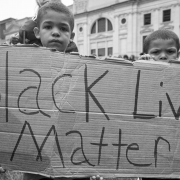
From a global pandemic to racial strife, 2020 is giving the world major growing pains. The time in isolation has augmented social injustices that in a non-COVID-19 era would probably go unnoticed. Overlooked not because people didn’t care, but because their every day consumes all of their attention. For good or for bad, that’s just how it’s been; however, it’s time things change, right? People, especially younger generations, are mobilizing to help each other and make a difference. So when it comes to DJs and producers, should artists keep silent when it comes to activism?
https://www.6amgroup.co/wp-content/uploads/2020/10/Artists-Activism.jpg6671000Daisy MaganaDaisy Magana2020-10-15 08:48:572020-10-15 09:29:45Should Artists Keep Silent When it Comes to Activism?
TOKiMONSTAisn’t afraid to get loud. Urging for greater inclusivity, she’s amplifying the power of her voice via social media to make noise. “I was never one to state my opinions on society outwardly. It wasn’t what I thought musicians should do,” explains Jennifer Lee, artist’s real name. “However, times are different now.” In an e-mail interview, Lee talks about the music industry’s shared responsibility in elevating artists from different backgrounds and highlights a series of “checks and balances” within the ecosystem. She also dishes on French artist Dombresky’s remix of her song “Come and Go.”
If you are feeling down and hopeless today, let the story of Jennifer Lee, known as TOKiMONSTA serve as inspiration.
In an interview with Pitchfork, Lee shared for the first time what she went through during the past 12 years. The Los Angeles-based artist tells of how she had been suffering from persistent migraines for 10 years, but doctors hadn’t detect anything unusual. Fortunately a health scare in 2015 led to specialists finding the culprit: an extremely rare and potentially fatal brain disease called Moyamoya.
“‘Moyamoya’ is a Japanese word that means ‘a puff of smoke,'” she said. “When your main arteries start shrinking, the blood still wants to reach your brain, so it starts taking these smaller, weaker collateral vessels. Usually you wouldn’t be able to see those little veins, but because they’re taking more blood to compensate, it looks like a puff of smoke is coming from the base of your brain. If your arteries start to shut down and the blood starts to take these weaker vessels, you’re either going to have a stroke or an aneurysm or thrombosis. It just explodes, basically, because those veins are not meant to take on an artery’s worth of blood.”
“Without any treatment, most people don’t live past 40… I didn’t know how much time I had, and I was leaving on tour… It’s a really convoluted process to get treatment. But I was a ticking time bomb. I was really desperate and scared shitless,” Lee adds. She sought treatment at Stanford, the leading institution for the treatment of the disease; upon diagnosis, she was advised to immediately undergo a brain surgery.
She eventually went through two brain surgeries in January 2016 as the disease affected both sides of her brain. The procedures were successful and at first she was doing fine. However, afterwards she found herself not able to talk or understand speech. Lee recalls, “I could still think thoughts, but all the words I knew were gone. I even tried texting people and my texts were complete gibberish. It was almost like suddenly I spoke a different language than everyone else… But the worst part was that I couldn’t understand any kind of music whatsoever. It didn’t sound right.”
For Lee, the thought of not able to produce music anymore was the worst part. Her language became better as time progressed but, having spent so much time in the hospital she lost muscle tone in her body, so she had to learn how to walk again on top of overcoming the biggest struggle: making music again. “I opened Ableton and I couldn’t understand what I was doing, even though at that point my speech was at 90 percent… The part of my brain that knew how to put sounds together was broken,” Lee relates. “I didn’t want to pity myself, but it was a heart-wrenching pain.”
Compounding the difficulties she faced physically was an emotional struggle she was not expecting to face: her boyfriend broke up with her after surgery. “That moment was probably the worst I’ve ever felt in my entire life. But that sadness allowed me to regain some clarity. I knew I had to overcome it.”
She decided to stop for a while and gave herself room to recuperate, something she was glad to have done looking back. “I think if I had pushed myself I would never have found the music again…I gave myself a couple weeks with music to be like, ‘Just don’t touch this shit—chill out, work on other aspects of your life, try to be normal again.'”
Lee eventually got back to music again, and the first song she managed to write after the surgery was a track titled “I Wish I Could Be.” “I wrote the instrumental and finally felt a sense of completion, like, ‘I’m back! This is a good song.’ I was given that glimmer of hope that everything would be fine.” Belgian soul singer-songwriter Selah Sue wrote the lyrics for the tracks, touching on deep meaning for both Lee and listeners.
The song would be the first of the many tracks she was able to make after recovery, all featured in her upcoming third album Lune Rouge. As Lee talks about the album, it becomes clear that making it was a cathartic experience. “This album isn’t going to be made to satisfy the needs of an industry or the needs of a trend. I’m just going to make songs that make me happy, and I really hope they make other people happy, too,” she adds. “It’s my most personal piece of work…each of these beats—all these songs I put together—tell a story.”
Two months after the surgery she went to SXSW and on the following month, in April, she played at Coachella. This was followed by full tours with no one knowing about what she went through. Lee hopes that her story will help bring light to Moyamoya, as well as to give attention to all personal struggles people may be facing in their lives.
“We all go through really terrible things and face hardships. Being able to play Coachella three months after having the surgery was very significant to me. If I can do something like this, anyone can,” she shares.
Titled Lune Rouge, TOKiMONSTA’s new album is coming out October 6th through her own Young Arts Records imprint. Along with the aforementioned song, the Fovere follow-up effort includes collaborations with Joey Purp, Isaiah Rashad, and IO Echo. Said to be “her most personal body of work to date,” it also comes with “We Love”, a glimmering, summer-ready single featuring MNDR, which you can listen to below.
Lune Rouge Tracklist:
01. Lune
02. Rouge
03. Thief (feat. SAINTS)
04. I Wish I Could (feat. Selah Sue)
05. We Love (feat. MNDR)
06. Bibimbap
07. NO WAY (feat. Isaiah Rashad, Joey Purp & Ambré Perkins)
08. Don’t Call Me ft. Yuna
09. Rose’s Thorn
10. Early to Dawn (feat. Selah Sue)
11. Estrange (feat. IO Echo)
[brew_cta id=”4″]
https://www.6amgroup.co/wp-content/uploads/2017/09/tokimonsta.jpg45611406AM6AM2017-09-14 09:03:062017-09-14 09:17:22Resiliency: How TOKiMONSTA Recovered Lost Speaking and Musical Abilities Following Brain Surgery