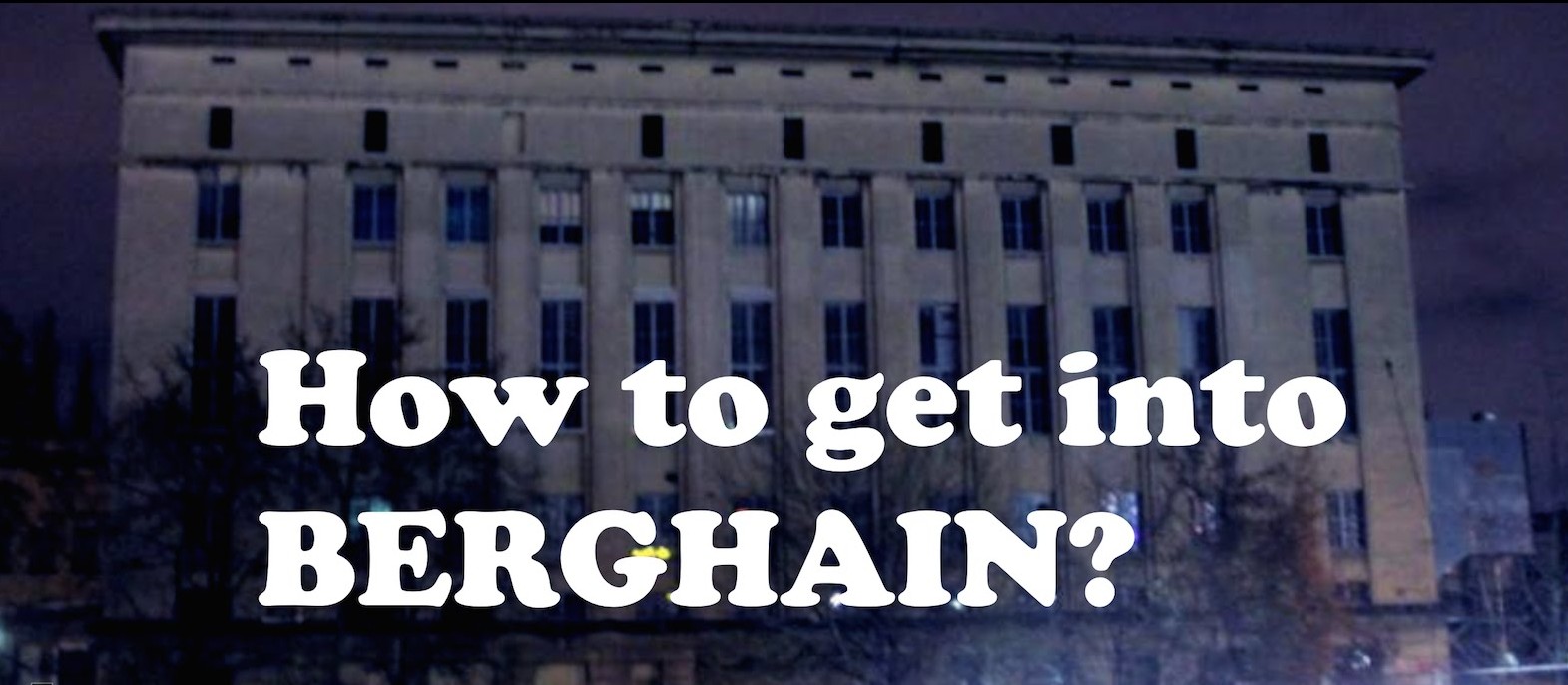
Two weeks ago we got into Berghain on a warm September Sunday afternoon, exactly 24 hours before the club was granted “high culture” status by a German court and allowed to pay at a lower tax bracket than pure entertainment venues.
But what makes Berghain a high culture venue? BBC’s Lisa Ludwig explores the venue’s door policy and morefor “The Cultural Frontline” programme. Listen to the clip in full below or via the BBC iPlayer.
https://www.6amgroup.co/wp-content/uploads/2016/09/Get-Into-berghain-e1475015139108.jpg6861571Marco SgalbazziniMarco Sgalbazzini2018-09-27 08:20:582019-06-20 07:27:15#TBT Series: That One Time The BBC Told Us How to Get Into Berghain
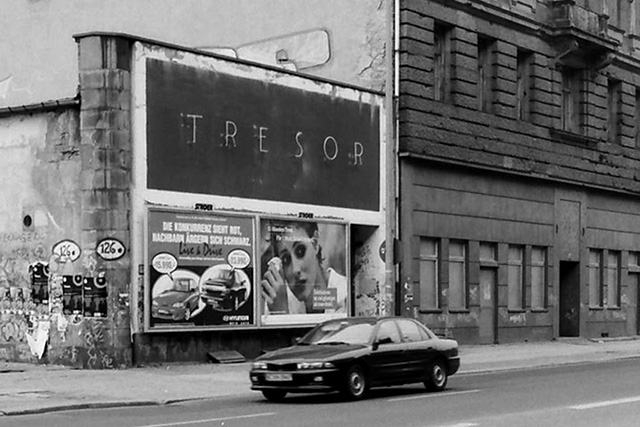
Tresor, the iconic East Berlin techno club that opened on March 13th of 1991, is now located in the city’s Kraftwerk Power Station.
Over the past 25 years Tresor has created many historic moments in the musical and party history of the city. From Jeff Mills’ first sets on three turntables, to the grandiose Tresor Park parties, to various chapters of the Loveparade with Sven Väth in the 90s and since then countless generation-spanning parties, that represented for their visitors the highlights of their personal clubbing experiences. The history of the club was always eventful and not without complications: from the temporary closure by the authorities in the early years, to several raids, all the way to the closure and demolition of the old location in 2005, as well as the years of wandering in exile and the resurrection in the new location Kraftwerk Berlin.
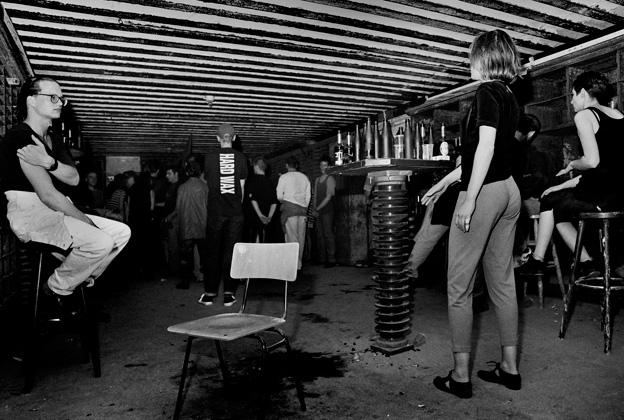
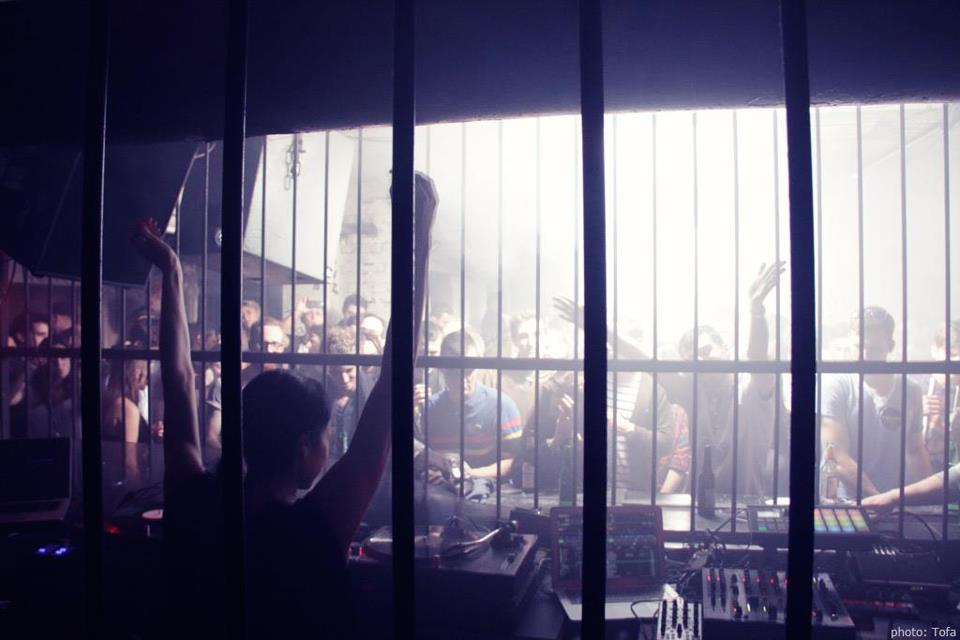
The institution has released five images of their new more permanent location within the building. Spread across three floors, the unique location hosts parties with events taking place ever Monday, Wednesday, Thursday, Friday and Saturday. Lineups are techno-heavy with extreme focus on guest and resident acts that play high-caliber sets that go deep into the next morning. The pictures contained herein are of the floor in the venue that was used for Tresor’s 25 Year Anniversary weekend and other more one-off events such as Atonal, a space that will be used more often from now on on top of the existing rooms, which include the famous vault in the basement.
While you may recognize the space, as it has been used for sporadic larger scale events in the past as well as art exhibitions, Tresor has announced that it will be used more often as an event space for its techno-heavy lineups.
Check out some amazing previously unreleased images of the venue below and read here for more in-depth history of the club.
https://www.6amgroup.co/wp-content/uploads/2017/02/Tresor-New-.jpg6731008Marco SgalbazziniMarco Sgalbazzini2018-02-27 09:41:352019-06-20 07:26:25#TBT Series: Images of Tresor's Location Inside Berlin's Kraftwerk Power Station
During the summers of 1987-89, Britain experienced one of its largest youth movements ever. A direct result of the rise of acid house, the introduction and consumption of ecstasy, and the need for a space where your looks, sexual orientation, or societal status didn’t matter. This social phenomenon is noted as the Second Summer of Love, referencing the sixties Summer of Love, where 100,000 hippies converged in San Francisco’s neighborhood, Haight-Ashbury, to experiment and become conscious of one’s existence.
At a time when rare groove and hip-hop dominated most of the UK club music scene, acid house was skyrocketing in popularity thanks to ecstasy and two of the most influential clubs in the UK, the Haçienda and Shoom.
https://www.6amgroup.co/wp-content/uploads/2017/03/seondsummeroflove-e1489541846248.jpg552997Lydia CastilloLydia Castillo2017-03-16 12:33:492019-06-20 07:52:12#TBT Series: The Second Summer of Love, Britain's Acid House Revolution
Welcome back to our weekly appointment with Throwback Thursday, our feature series that travels back in time to look at some of the most iconic, thought-provoking and nostalgic moments in dance music scene history.
This week our time machine takes us back to the early to mid 90’s, the span of years that some still consider to be the heydays of the rave revolution. New York City had already gone through its disco years, Chicago House was being played all over the world and Detroit had soon followed suit in the late 80’s to early 90’s with techno. Across the pond Ibiza fever was taking over and, influenced by the Balearic parties and the sounds coming from the States, the rave scene in the United Kingdom was truly flourishing.
There was no Facebook, no Instagram, no Snapchat and definitely no way to tweet the night away during those years. Just the music, the crowd, a likely illegal venue, your mates and, let’s be honest, some good old ecstasy or MDMA.
The video below, which has been making the rounds on Facebook and already has almost 170,000 views, depicts those years perfectly. Enjoy it and learn a thing or two from those dance moves!
If you found this article interesting, sign up for our newsletter to learn more and to stay up to date with 6AM’s news and features on the world of electronic music.
https://www.6amgroup.co/wp-content/uploads/2016/11/90s-rave.jpg10001500Marco SgalbazziniMarco Sgalbazzini2016-11-17 07:40:082019-06-20 07:26:10#TBT Series: Watch Video of a True 1990's Old School Rave
How much can a techno producer’s sound change in twenty long years?
Before you answer, you must consider that the first recorded use of the word techno in reference to a specific genre of music was in 1988. In less than thirty years since we have seen a myriad of sub-genres and styles come to life, launching the careers of new talented producers and DJs while also cementing the names of those early pioneers into the history books electronic music.
One such early influencer was Richie Hawtin. As part of the second wave of Detroit techno artists to emerge in the early 1990s, the Canadian producer became the leading exponent of minimal techno thanks to his work as Plastikman and as the head of the iconic Plus 8 label he began with John Acquaviva. In 1998, Hawtin launched M-nus Records and then in 2012 introduced the world to his ENTER. concept, an experimental event series that took Space Ibiza by storm and was then replicated at events throughout the world.
Although today Hawtin is a champion of technology, even curation and the evolution of live deejaying, it is always interesting to go back in time to investigate and navigate through the past and origins of the sound that launched his career in the mid-90s.
The below video immortalizes a Hawtin set performed at The End in London in 1996. We can tell you that the set includes tracks such as “Krackpot” by Plastikman, “Wisdom To The Wise” by Dave Clarke, “Filter King” by 69 (Carl Craig) and Vapourspace’s “Gravitational Arch Of 10,” just to name a few.
Has Hawtin’s sound changed? If so, how? Tell us on Facebook or send us a Tweet with your opinion!
https://www.6amgroup.co/wp-content/uploads/2016/10/Richie-Hawtin-90s.jpg352626Marco SgalbazziniMarco Sgalbazzini2016-10-06 06:27:132019-06-20 07:26:38#TBT Series: The Evolution of Richie Hawtin's Sound From 1996 to Today
If I mention the words “David Guetta” to anyone I party with these days, the instant reaction is that of a raised eyebrow and looks full of scorn and contempt. Joking aside, the truth is that although the French producer and DJ currently (and for the last 6 years) epitomizes the world and sound of EDM, he used to be a true symbol of 90’s and early 2000 house music.
Plenty have debated on Guetta’s change throughout the years, but the truth is that history clearly underscores his role as one of the mid-90’s pioneers of French house. Back then, he made a name for himself as one of the key influencers of Parisian nightlife as both a DJ and promoter of nights at such renowned Paris hot spots as Folies Pigalle, Queen, Bataclan, Palace and Les Bains, where he invited legendary names in the house like Little Louie Vega, David Morales, DJ Pierre and Roger Sanchez to join him on the turntables.
His first two albums, “Just A Little More Love” in 2002 and “Guetta Blaster” in 2004 preceded EDM both in sound and scope. Sandwiched between them, Guetta released his “F*** Me I’m Famous” compilation, which famously went gold – a definite big achievement for a compilation effort at the time. The sound of those first two LPs were decisively electro-pop, in no small part influenced by the likes of Depeche Mode, Dear Or Alive and New Order. “Guetta Blaster” heralded the beginning of Guetta’s true foray into the world frequented by the urban, popular artists that were soon to collaborate and influence his sound for the years to follow.
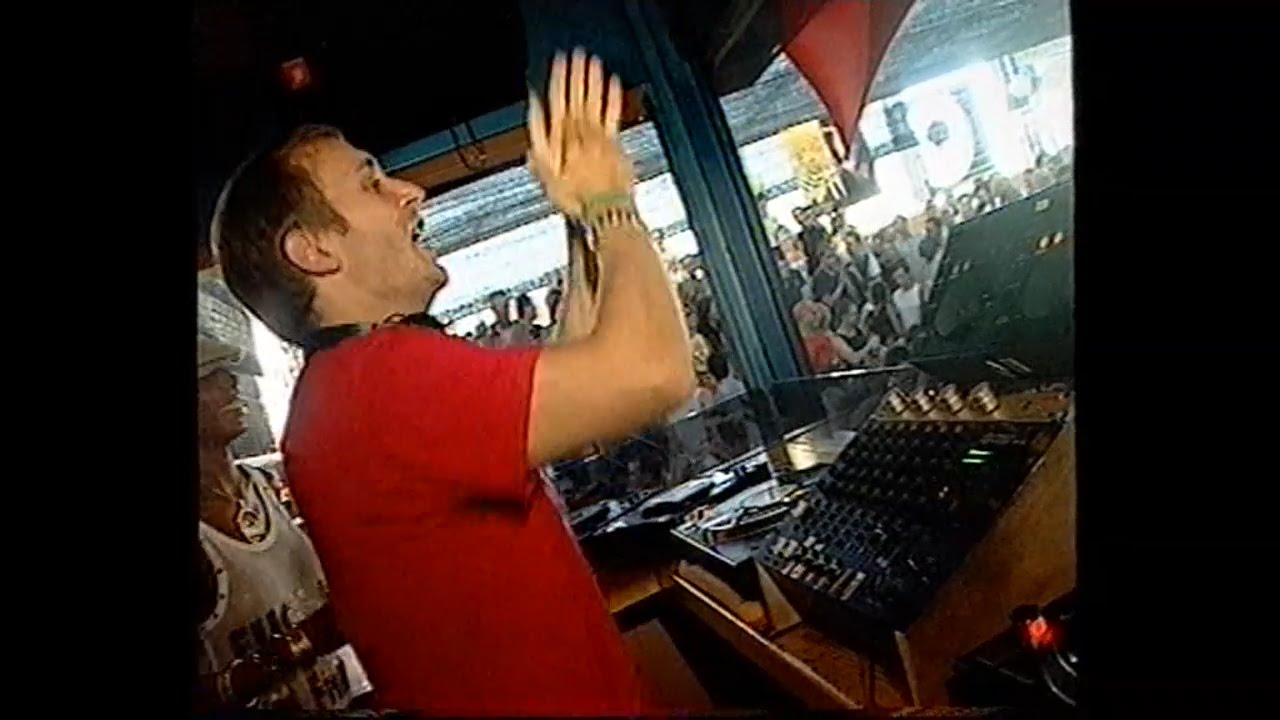
But before then, in the distant 90’s, Guetta’s sets were influential and a true representation of the house sound that permeated France, Europe and by default the iconic Balearic island of Ibiza. Below is a video of Guetta on the decks of Space Ibiza in the late 90’s, a perfect illustration of just how much things have changed in the fifteen odd years that have passed since.
Seems hard to believe? Check out Guetta’s 1992 track “Up & Away” feat. Robert Owens and released on Dance Pool. The garage-inspired house track made waves at the time, a true testament that Guetta is capable of not only playing true house music, but producing it as well.
Yet, it is perhaps Guetta’s first recorded single – a 1990 hip-hop collaboration with Sydney entitled “Nation Rap” – that best predicted Guetta’s current work with rap, hip-hop and pop artists in the form of today’s EDM, while demonstrating his versatility as a producer and DJ. Below is a video of the two musicians performing the single live on France’s FR3 TV channel back in 1991.
https://www.6amgroup.co/wp-content/uploads/2016/06/Guetta-90s.jpg7201280Marco SgalbazziniMarco Sgalbazzini2016-06-09 16:25:442019-06-20 07:28:06#TBT Series: The '90s Sound of pre-EDM David Guetta
It could have been like any other regular club, a shooting star that blinks across the sky of nightlife like a burning diamond, only to dissipate shortly after into a black hole of nothingness. It could have joined the countless others who fall victim of the short lifespan plague that permeates the nightclub scene across the globe. It could have, but it wasn’t.
Tresor Berlin made history, but no one would have expected that back on March 13th 1991 when the club first opened. Today, the techno institution is in the midst of blowing 25 candles to celebrate its life at the forefront of the electronic music movement, and is throwing a series of large parties to commemorate the special occasion. The celebrations began March 12th at the Berlin club and continued on to Milan, Denmark, Amsterdam, London and Spain before their upcoming US stop in Detroit during Movement weekend and a final flurry of dates in Australia and back in Europe.
Inside Tresor in the 90s
Back in 1991, Tresor opened shop in a shack on Potsdamer Platz, located atop the the vault of the Wertheim department store. The Berlin wall had just fallen less than two years earlier, leaving the city’s youth in search for a connection and a sense of freedom many could only find through music. They found that connection at Tresor.
Armed with an art gallery license and a three-month lease, the venue owners woke up every day expecting authorities to barge in and shut operations down. Instead, things continued and the venue carried on to make history by connecting the music and artists coming out of Detroit with the rise of Berlin’s love and burning passion for techno. As the club itself proudly recalls, it went on to be the home of Jeff Mills’ first sets on three turntables, the brain behind the grandiose Tresor Park parties, and the mastermind of the various chapters of the Loveparade with Sven Väth in the 90s.
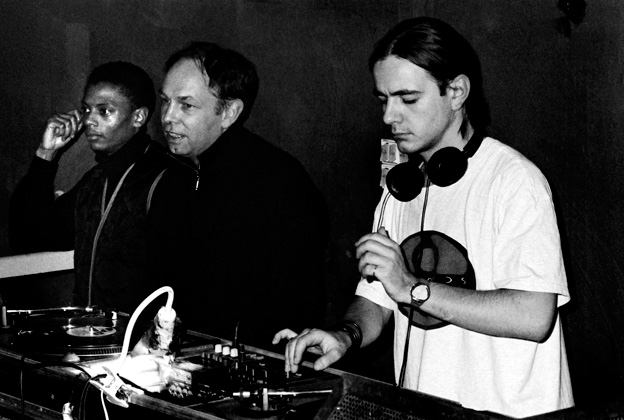
Jeff Mills, original club founder Dimitri Hegemann, and Laurent Garnier at Tresor
Despite complications, temporary closures and raids, the techno persisted and persists still to this day. Its location may have changed in 2005, but the club and its religious attachment to techno haven’t. Tresor is very much alive and well, and with it is the message of music and freedom it has been carrying for twenty-five years.
Inside the current Tresor nightclub
In 2008, a documentary directed by Tilmann Künze entitled “SubBerlin” was released. It highlighted the history of Tresor from its beginning in 1991 until the closure of its original location. The one-and-a-half hour video includes interviews with many of the artists that played at the venue, from Atkins to Sven Väth, as well as the people that made the club happen, such as original founder Dimitri Hegemann. The original documentary was released on TV, and later made available on DVD by the club in 2012.
https://www.6amgroup.co/wp-content/uploads/2016/05/TresorDJs.jpg420624Marco SgalbazziniMarco Sgalbazzini2016-05-19 00:09:112016-05-19 00:09:34#TBT Series: The Story of Tresor Berlin and Its Influence On The City's Techno Scene [Video]
In this week’s #TBT Series edition, we travel back in time to March 13th 1999 where, on the warm shores of South Beach a true festival sensation was born.
On that day, thousands traveled to Miami to attend the inaugural edition of what would eventually become Ultra Music Festival. The now three-day event was originally founded and produced as a one-day affair by Russell Faibisch and Alex Omes. Faibisch was inspired Depeche Mode’s 1997 album Ultra, which is where the event got its name from. That first year the event was held at Collins Park and coincided with the end of Winter Music Conference, attracting an estimated 10,000 people in attendance.
Despite its success, it is believed that the festival lost between $10,000 to $20,000 in its first year. Regardless, it came back the following year for its second and final edition on South Beach before expansion saw the event move in 2001 to Bayfront Park in Downtown Miami.
As the flyer for 1999 shows, first year artists included Rabbit In The Moon, who returned to Ultra this past March, drum and bass maestro LTJ Bukem, Armand Van Helden (also known as one half of Duck Sauce alongside A-Trak), Ovum boss Josh Wink, VIVa Music’s Steve Lawler as well as an onslaught of other European imports the likes of Seb Fontaine, Danny Rampling and Union Jack.
Naturally, Ultra was a much smaller affair at first. The number of sponsors on the flyer alone paint the picture of what it took for Faibisch and Omes to kick start what would become a string of the most successful and well-known electronic music festivals around the globe.
The Ultra Music Festival family has since expanded exponentially. Between 2006 and 2011 the festival moved to nearby Bicentennial Park only to move back to its home at Bayfront where it still now resides. In honor of its fifteenth anniversary, the 2013 edition of the festival was held over two weekends, but reverted back to its three-day one weekend format the following year. 2016 saw the festival sell out and coincide with the end of Miami Music Week and beginning of Winter Music Conference.
The brand has become an international symbol for electronic music, holding festivals in Ibiza, Spain; Buenos Aires, Argentina; São Paulo, Brazil; Santiago, Chile; Seoul, South Korea; Cape Town and Johannesburg, South Africa; Split and Hvar, Croatia; Bangkok, Thailand and Tokyo, Japan.
Below is a playlist containing series of interesting and revealing videos of just how it was like to be at that first Ultra in 1999. It is easy to see just how much things have changed since, both in the size and music influences of Ultra. It regardless makes for a perfect journey back in time to a world before massive electronic music festivals were a thing; to a world where Ultra was about to help lay the foundations for the future of such large-scale festivals in the United States and beyond.
https://www.6amgroup.co/wp-content/uploads/2016/05/Ultra1999.jpg371565Marco SgalbazziniMarco Sgalbazzini2016-05-12 14:18:192016-05-12 14:22:14#TBT Series: How Much Has ULTRA Changed Since The First Ultra Beach Festival in 1999? [VIDEOS]
This week’s #TBT Series installment takes us back 27 years to the heydays of Ibiza partying, and to one of the most revered clubbing destinations in the world: Amnesia Ibiza.
The 5,000 plus capacity venue opened in 1976 and is one of only two major clubs on the island located close to the village of San Rafael, half-way between Ibiza Town and San Antonio. While the infamous open-air terrace is now closed, sunrise still peeks in through clear windows to welcome some of the most memorable sunrise sets on the island today.
By the end of the 80s, Amnesia had undergone massive changes after over a decade of operation. Dance music was playing through the speakers and major clubs on the island had introduced the concept of open-air dance floors. Balearic house was gaining major traction thanks to legendary acts like DJ Alfredo Fiorito (also known simply as DJ Alfredo) and DJ Huggy MacPherson, who both held major residencies at the San Rafael nightclub . Their sound took a while to catch on with Ibiza crowd at first, but later became focal points of the club’s expansion thanks to a blend of rock, pop, soul, hip-hop and proto-house that had never been played on the island before.
While in 2016 we are seeing island government pass laws forcing clubs to stop music at 6:30am, in the late 80s Amnesia opened at 3am and went through to midday or later. British house music DJ Danny Rampling famously recalled, “Amnesia was a complete revelation. Alfredo, as a DJ, blended texture and music in a way I would compare to a Miro painting. For me, he was the Larry Levan of Europe. Interestingly, Alfredo was connected to an American who was part of the Paradise Garage group, who used to supply him records. Dancing in the open air, surrounded by an incredible mix of sexy people was mind-blowing.”
Paul Oakenfold was another famous name hooked on the Ibiza club during that time, recalling how its sound stood out in contrast to London and the rest of mainland Europe, “In England at that time, clubs only played one type of music, and London was full of attitude. But at Amnesia you had 7,000 people dancing to Cyndi Lauper. Total freedom.”
Amnesia was the destination clubbers would choose when other venues shut down, driving inland for a taste of music and experience unlike any other that existed at the time. In those years, the club was surrounded by massive white washed walls with a large mirrored pyramid in the middle of the dance floor; the bars were around the sides as was plenty of cushioned seating for party goers to chill out on. As you can imagine, this was before bottle service was truly a thing.
The open-aspect layout of the venue meant that up to 7,000 revelers flowed in to enjoy an eclectic selection of music under the Mediterranean air and stars, all the while being engulfed by exotic plants and like-minded ravers from all over the world. There were no laws, with people dressing up, drinking and rampant drug usage – anything was allowed; it was clubbing freedom at its best.
Alfredo Fiorito with his son in the Amnesia booth. 1989. Photo courtesy of Secret Life
Amnesia’s nights ultimately took a pivotal role in the future of British clubbing of the late 80s and early 90s. Oakenfold, Rampling and fellow London DJs and club promoters Nicky Holloway and Johnny Walker would visit during summer and return back to England influenced by the sounds and atmosphere of their Ibicencan experiences. Oakenfold launched invite-only “Ibiza-inspired” nights that began at 2am following his hip-hop sets at a a club in Streatham. The success was so big that each member of this crew all moved onto to establishing their own successful clubs and nights: Oakenfold started Spectrum, Rampling started Shoom and Holloway started the Trip. The sheer popularity and boom of their ventures went on to shape an entire series of raves and parties all over England and beyond – while it would be unfair to say that those wouldn’t have happened without Amnesia, it would also be unjust to not credit the locale that provided that initial artistic spark and inspiration.
Currently the club holds some of the most notable residencies on the island, including Cocoon by Sven Väth on Monday nights, Together on Tuesdays, Hyte on Wednesdays, British-run Cream on Thursday nights, Marco Carola’s Music On every Friday and Matinée on Saturdays. This major powerhouse of worlwide clubbing has changed a lot since the late 80s and early 90s – years that saw Amnesia truly impact a generation with its lawless parties. Although the club has expanded and adapted to today’s ever-changing global electronic music scene, it has remained as relevant and influential as it was back when DJ Alfredo was its only resident.
Below is a series of videos from Amnesia’s Closing Party on October 3rd of 1989. Needless to say, Alfredo Fiorito was behind the decks, with Adamski playing live on the piano and Boy George also present in the building that night.
https://www.6amgroup.co/wp-content/uploads/2016/05/Amnesia-80s-pic-1.jpg10731500Marco SgalbazziniMarco Sgalbazzini2016-05-04 23:52:092016-05-04 23:58:32#TBT Series: How Amnesia Ibiza Changed The World of Clubbing in the Late 80's [Videos]
The 31st of March is a special and bittersweet date for house music fans all over the world. I still remember exactly where I was in Chicago in 2014 when the city and the world were hit with the heart-breaking news that Frankie Knuckles, The Godfather of House, had passed away due to complications linked to a diabetes condition.
That date became significant for all House Music fans throughout the world, just as August 25th had been for a decade prior and continues to be today. In 2004, then Chicago Mayor Richard Daley declared August 25th to be Frankie Knuckles Day. The block where the Warehouse stood was renamed Frankie Knuckles Way and that evening 10,000 people poured into the city’s Grant Park to hear him play.
https://www.6amgroup.co/wp-content/uploads/2016/03/FKAlways.jpg960960Marco SgalbazziniMarco Sgalbazzini2016-03-31 10:00:332020-08-25 10:05:41#TBT Series: Relive Some Of The Best Frankie Knuckles Moments Caught on Video