Posts

DJ Set vs Live Set?

In the past, stadiums and giant arenas were mainly reserved for rock bands, rappers, orchestras, and popular singers. Yet, as the years have passed by and electronic music’s popularity has soared, DJs have found a way to be a part of these arenas, gaining the following, respect and attention that other major bands and artist have been receiving for decades.

As the electronic music scene has grown, millions of music fans around the world have taken to local nightclubs, festivals and arenas to listen to their favorite DJs. If you are a newcomer to the electronic music dance scene, however, it is possible that there are some terms used around which may be confusing to you, such as when flyers have the words “Live Set” or “DJ Set” next to an artist’s name. What do they mean exactly and what is the difference between the two?

Read more

How to Know When The Right Time to Outsource Is In The Electronic Music Industry

If you’ve ever started a business or large-scale project it is likely that you have experienced the inevitable feeling of overwhelm. At some point or another, after trying to do everything yourself, it becomes hard to keep up with all the tasks on your to-do list, and especially so when strict timelines are involved.

It has happened to almost all of that at some point in our life: we come up with a great idea, big or small, and need to convince others to believe in it and come on board for the idea to really take off. Think about it, it applies to music producers in search for a label for their latest work, or event promoters looking to launch a new event series.

This can be a dangerous situation because with every idea there are many risks involved. If you can’t get your close friends and acquaintances interested in the idea then how can you convince the rest of the world to? You can get stuck between trying to push it through yourself without the help and input of others, and outsourcing the necessary work in order for your idea to become reality.

No matter your approach, it is often recommended that creatives in both business and the arts focus not on one but on multiple ideas. If you want to grow a plant you must begin with many seeds, rather than plant just one and hope it grows into something.

Read more

Promoters, This Is How You Should Use Instagram To Sell More Tickets

Instagram is without a doubt one of the strongest promotion tools on the Internet. With its easy-to-use and pleasing to the eyes interface, it is statistically the best and most used photo sharing platforms and apps in the world. As a promoter, you want to showcase your events and sell it to potential attendees — not just in your immediate market area but far beyond it also.

Instagram let’s you do that. The right picture or video paired with matching captions and hashtags allow you to pick up more ticket-buyers than you could have previously reached. But are you using Instagram as a marketing tool correctly? We have prepared a few tips to let you maximize Instagram to its full potential, with the aim of hopefully raising more ticket sales. Promoters, this is how you should use Instagram to sell more tickets:

Aesthetics

People scroll through Instagram not to read captions but to look at photos. If you captivate their eyes with amazing event-related photographs, then they’ll take the time to read your caption and possibly buy a ticket to your upcoming event.

Make sure to upload high-quality photos, and regularly post event posters to promote what is coming. As we have mentioned, Instagram users usually look at photos, so uploading your event flyers amidst other high-quality graphics promoting your event will let your followers and potential attendees know about it and lessen the risk of them scrolling right through it.

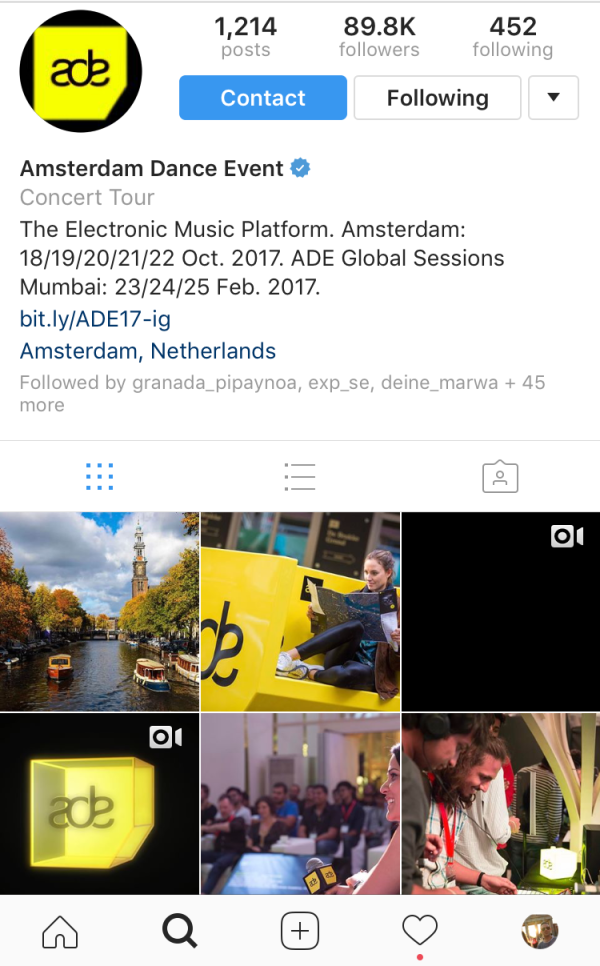
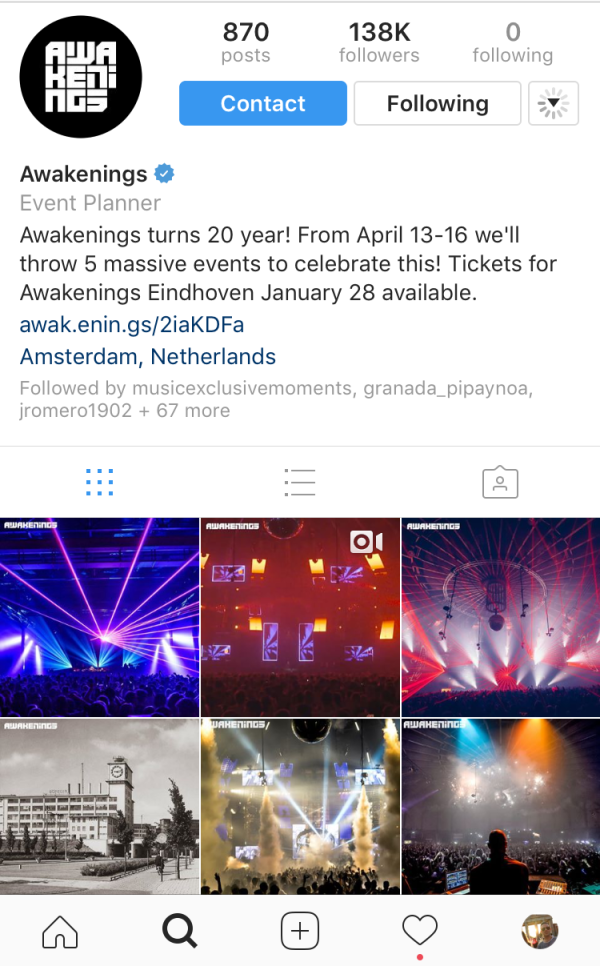
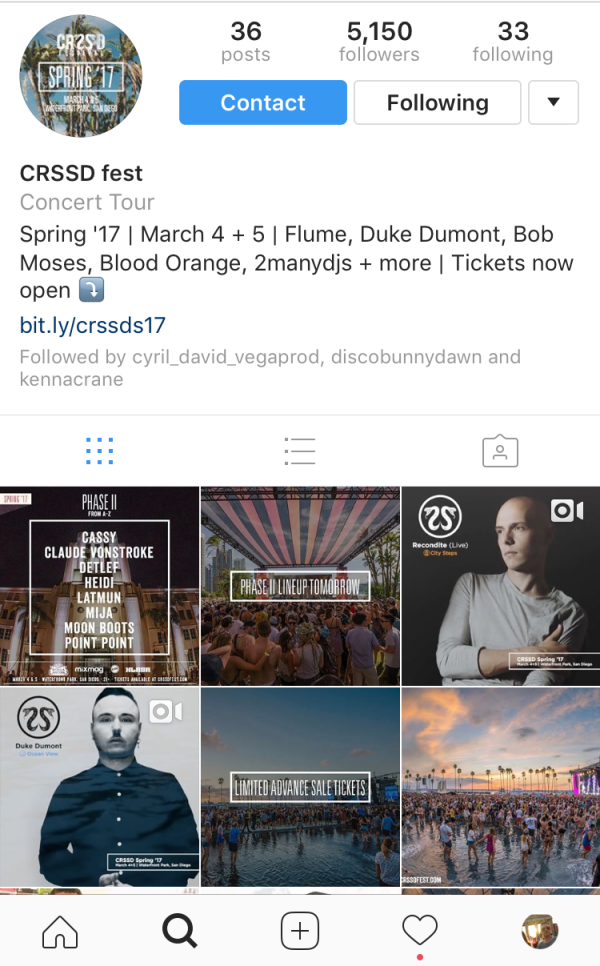
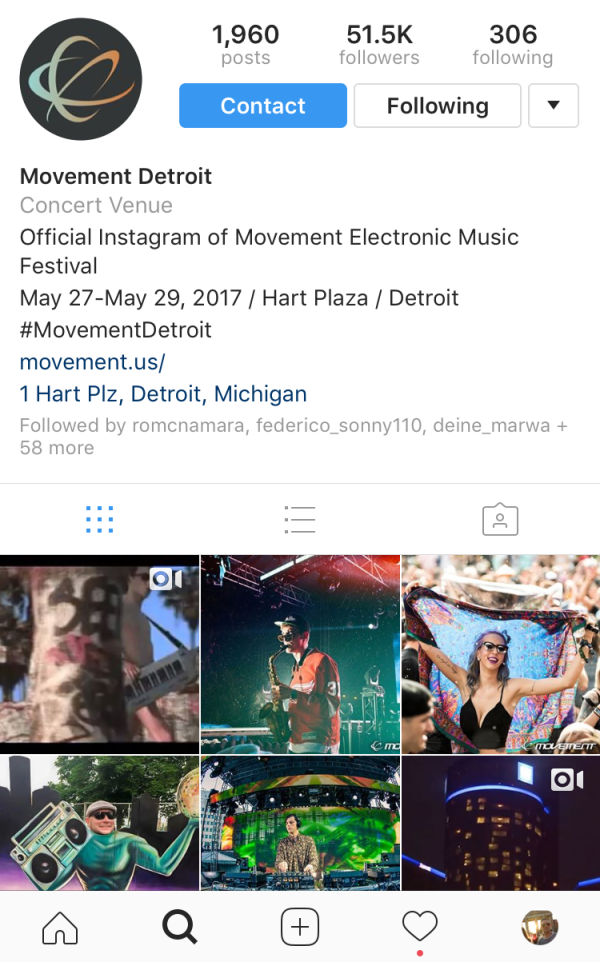
In addition, try to use less Instagram filters. You want to showcase your events to potential attendees, so the crisper and clearer your photos are the better. Most of the times, “Instagrammers” follow accounts that are artistic and attractive. So find out the aesthetics and branding that you want for your Instagram page and stick to it. It is important for your page to be consistent with your branding. See below for examples of well-branded and consistent promoter Instagram accounts, including Amsterdam Dance Event, Awakenings, CRSSD Fest and Movement Detroit.

Caption

Your photographs will capture your audience’s attention but your work does not end there. You still have to put a caption: it is the voice to your visual contents. Grab this opportunity to explain what your event is all about, what attendees can expect musically and non and relevant information on how they can purchase tickets. Depending on the particular post, you can share interesting selling points on the artists featured on your line-up or on the venue chosen for the event. It is also great to get your users engaged by asking them to tag friends where appropriate, or asking questions and inviting to leave comments on your post. The more engagement your photo gets, the more likely it is for Instagram’s algorithms to pick it and have it featured both at the top of the home newsfeed as well as the explore section.

Instagram cuts off each caption after a few sentences so be sure to put important details first, or at least something that attracts user’s attention enough so that they click to read more. Take note that you could use Instagram to sell more tickets but you have to price your event tickets correctly for a larger number of sales. Instagram does not allow for hyperlinking in captions or comments, but there are several ways you can ensure your followers still get to your ticket page — more of that later in the article.

fi_quotes_blog_2_leo_burnett

#HashtagIt

Hashtags have everything to do with how your events could get discovered through Instagram. So be sure to create an original hashtag for each of your events and let people use it when they upload photos in relation with your parties. The right use of hashtags can surely attract new followers and potential ticket buyers for your next event.

Aside from using original hashtags, use common hashtags that are trending and pertinent to your event and brand. You can view the top hashtags on Instagram’s Search and Explore tab and try to use at least three or more on each event promotion post that you upload. This will make your posts searchable thus attracting more ticket buyers.

It’s likely that once your account is built with enough followers you won’t find the need to use as many hashtags as you did originally. At that point using 4-5 works just as efficiently.

Use Your Bio URL Wisely

Since Instagram doesn’t allow clickable links on captions, regularly update your bio’s URL. Direct it to your most recent event’s page or ticket-selling website. By clicking on your bio’s URL link, your followers or guest viewers will be redirected to a page where they can find more in-depth details of your event and purchase tickets.

Add a short note on your caption to let your viewers know that they can buy tickets through your bio link. Below is our suggestion on how to go about this:

  1. Include a link to your ticket page in your bio. Using an original link works, but the use of bit.ly links can be effective in tracking how many people are accessing your ticket page from Instagram directly.
  2. Tell your followers in the photo captions that the direct ticket link can be found in your bio, but include the link anyways. If it’s easy to remember or copy, such as in the case of your festival name or a short bit.ly link, followers could end up simply typing it directly into their browser.

Instagram Ads

If you have a budget set aside for advertisements, consider create an Instagram Advertisement for your event. The idea is to target it adequately so that your posts end up being seen by potential attendees that do not follow you yet, inviting them to both follow you and to buy tickets to your event.

Instagram offers different types of advertising options including photo, carousel, and video. Photo Ads are featured with a small “Sponsored” logo on the top-right corner. You could choose different call-to-action options to go along with it like Learn More, Book Now, and others. This is a sure fire way to raise your event ticket sales and drive potential attendees to your site for ticket-purchasing.

For limited time ticket sales, Instagram offers Marquee Ads. These are single-day campaigns with assured impact and placement in the top ad area of Instagram’s feed. This type of format will showcase your event’s advertisement with different styles to the same user up to thrice a day.

The reason we suggest using Instagram Ads is that the platform features specific audience targeting through your Facebook page, which is connected to your account. This means you will have all the needed and required tools to reach your target audience.


6856ca91b9222f16d0b73f211e39b82b


There are millions of Instagram users with new sign-ups each day and there are thousands of event promoters trying to gain the attention of potential attendees in each given market. There is no better time than today to learn how you should use Instagram to sell more tickets and start defining your own promotion style in order to stand out from the competition!

If you found this article useful, sign up for our newsletter to learn more and to stay up to date with 6AM’s news and features on the world of electronic music.

Promoter Tips On How To Price Your Event Tickets Correctly


Proper pricing is one of the secrets to success in any kind of business. It can build up the sales of your products or services and create a strong foundation for your business. On the other hand, wrong and unfit pricing strategies may cause issues that can potentially ruin an otherwise good business.

In the world of live concerts and parties, ticket pricing is one of the many dilemmas that event promoters are facing on an every day basis. For this reason, we took years of experience as festival, club and warehouse party promoters to give you some effective tips on how to price your event tickets correctly:

Set Goals and Know Your Market

First and foremost, you have to set realistic goals on what you’d like to achieve with your pricing strategy. Of course, you aim to earn money and generate enough profit from your capital right? You did not plan an event and waste tons of stressful hours scheming and marketing for it just for fun. Even though passion is a great part of making it in the music event industry, business is business and should be run and considered as such. You have to shy away from underpricing and produce a revenue that can cover all your costs and expenses without overpricing. While you have to bear in mind that your first event, or first few events even, may not generate profits, it’s still key to budget everything accurately so you’re set for profit from the get-go.

Underpricing your tickets can cause a disastrous impact not just on your bank account but on your career as a promoter as well. It is true that most people would opt to attend concerts with lower ticket prices but it all depends on your ability to sell. Do not lower your ticket prices just because you’re afraid that people won’t pay for it.

Similarly, overpricing your tickets can be just as damaging. Take note that it can cause a huge decline on your ticket sales when you are pricing beyond the ability and desire of your target attendees to pay. That is why it is crucial that you constantly take into consideration your target market when setting ticket prices. Ask yourself, “would I buy a ticket for my event at this price?” and “Are my potential guests getting their money’s worth?”

When looking at your market you will want to consider how pricing for similar events that have been held recently, and how they performed. Line-up, venue and any add-ons to the experience your patrons will witness are all elements to bear in mind when determining the price that is correct for your audience.

Pricing Techniques

There are two types of pricing techniques that business people follow: cost-plus and value-based. One of the best tips on how to price your event tickets correctly is to decide which of the two works best for you.

Either you add a mark-up to your costs or find out how much value your potential customers have for your line-up.

Sum Up Your Costs

Consistently list down all your expenses. Include both direct and indirect costs: money spent planning the event and actually putting it together, your staff salaries, if you hired any, your overhead expenses like the rent of the venue, etcetera. Then add all of these costs and divide by a certain target volume to come up with a break-even figure. This is where your cost-plus technique of pricing comes in: after acquiring the break-even figure, add a mark-up. Again, don’t underprice and overprice and ALWAYS REMEMBER that cost-plus works on the assumption that you will sell ALL ticket volumes. If you do not, then your profit is lower.

After summing up your costs and producing a break-even price for your event tickets, you could also add value by knowing your market. Ask yourself: do your headliners have a lot of fans? If yes, how much are they willing to pay to see them?

In addition, be sure to remember that in most cases you need to consider taxes on top all this. Depending on the country you’re in, taxes can play a huge role in how to price your tickets.

Price Tiers

Depending on the type of event, it is likely that you will be adopting a price tier system to sell your tickets. This adds a sense of urgency and allows loyal customers that trust in you and your event to purchase at a lower price if they commit early. Regardless it’s important that you do your math accordingly so that you price and allot the right amount of tickets for each tier so that you provide the correct incentive for buyers to purchase before your event sells out.

No two attendees are exactly alike, which is why many events offer multiple price tiers. Some people want to get the most for their money, others want the best ticket money can buy. You might offer discounted tiers based on time (discounts for the first X number of buyers), quantity (discounts for people who buy X number of tickets), or loyalty (discounts for members or previous attendees). Again, reference your data: if your discounts moved mountains last time, consider offering more.

On the other end of the spectrum, you could offer a VIP tier — for a higher price, you might offer a “premium” experience that includes behind-the-scenes access or a cocktail hour with talent. If your ticketing partner offers reserved seating, try creating different ticket types based on how close the seats are to the action.


Pre-sell and Promote

Use social media to your advantage and sell your tickets online. You can run promos and urge people to buy tickets earlier. You can ask your friends and followers to promote your event as well, especially when first starting a new event brand. Let people share your links on the Internet, and come up with ways to encourage them to do so, perhaps with giveawayQuotefancy-180931-3840x2160s or contests. This will garner more audiences and sales for your event.
You should also consider redirecting buyers to a feedback page after they have experienced your event, and ask for comments and suggestions regarding your ticket prices.


Planning an event, especially your first one, takes a lot of work. Add business-talk to that and it’s a great recipe for headache and stress. But no matter how tough everything may seem, it’s important to always take a breather and enjoy. Don’t worry too much, you’ll soon get a hang of things.

The more events you handle, the easier pricing tickets becomes. You will learn from your mistakes as well as from the positive experiences as both a ticket buyer and promoter. In the meantime, make sure you use these tips on how to price your event tickets correctly as a guide. Do not forget that you, the promoter, are the one that provides value with your event, based on line-up and overall experience. It is up to you to determine that value correctly for your target demographic.

If you found this article useful, sign up for our newsletter to learn more and to stay up to date with 6AM’s news and features on the world of electronic music.