The following guest post comes from Budi Voogt, founder of Heroic, a label group and management agency, and author of The SoundCloud Bible, now in its third edition.
Understanding the Music Industry is a series that outlines the framework of the business, explaining the roles of the industry professionals, what their jobs entail, when it’s important to involve them and deal specifics that you want to be aware of. Artist managers, booking agents, music publishers, labels, A&Rs and others – we’ll treat them all.
In this part we will expand on the different types of record labels, the role of A&Rs, distribution deals and music promotion (via radio pluggers and PR agencies). In other words, things you should know when you’re looking to get signed by a label or are currently negotiating a deal.
Death of the Gatekeepers.
Let me take you back in time to the 1970s.
Those were the days when music was played from vinyl discs and cassette tapes, and when the discovery of music was limited to listening to the radio, going to a venue to see a live-show or by browsing your favorite section in the record store.
Popular opinion was formed was very different – people could only consume and discover music in a few ways, so those who controlled those channels had major influence over what became hot, or not.
The radio stations determined what music was broadcast. The event promoters and venue owners chose which bands were allowed to perform live and the distributors curated and pushed music to stores.
They were the tastemakers… and the gatekeepers.
As the music industry developed from infancy to maturity, in the 70s the radio stations, event promoters, major concert venues and distributors had become intricately involved with the labels.
They could push records through to radio, stores and stage tours – making them able to engineer the success of most of their acts. Effectively, the labels controlled the spread of music.
Driven by the margins of physical sales, music became a multi-billion dollar industry. Some labels grew out into large corporations, earning the nickname majors. The rest of the industry grew with them. Many radio stations, concert promoters and distributors scaled immensely.
Things changed rapidly in the 90s, with the introduction of the internet.
First the MP3 format was introduced, allowing music files to be compressed to a share-able size. Hard drive storage grew and then everyone got a cable connection. When in 99 Napster came out, it spread like wildfire.
Technologies such as peer-to-peer file sharing, torrents and sites such as YouTube and SoundCloud reinvented how media was shared and distributed, including music. It made the distribution of content more efficient – but also reduced the demand for physical products.
Record sales plummeted and the industry lost millions. The Recording Industry Association of America (RIAA) started a whole series of lawsuits against companies such as Napster, Kazaa and Morpheus – even suing thousands of people that downloaded a few songs.
The music industry was in shock and had to adapt to survive, but couldn’t do it close to the rate at which the tech industry kept developing. The majors had become big corporations, bureaucratic and slow in nature – whereas these tech start-ups were driven by young coders that innovated at rapid rates.
Everyone had underestimated the threat of digital and the speed with which the common user would adopt it.
To this date, the industry has still not caught up. It hit its peak in 1998 with a global trade revenue estimated at $27.8 billion US dollars, but has only seen one year of growth in 2012 and is still shrinking in size since.
Yet the future is promising. In 2014, global industry revenues from digital matched those of physical, both accounting for 46% of the then $14.9 billion US dollar industry.
I expect it will take another decade before the music business has internalized and optimized its business models to digital; optimizing payouts for streaming, satellite radio and online websites such as YouTube and SoundCloud.
That time will also be needed for a change in culture. Many label policies are archaic and based on outdated ‘company culture’ – such as USA radio and TV broadcasters still not paying for performance royalties over use of a master, or labels offering a meager 15-20% artist royalty in deals, even when records are only distributed digitally.
The big change is this: control over the distribution of content has shifted from a selected few, to everyone. The death of the gatekeepers.
Now more than ever, independent creators, artists and labels are empowered.
With good music, grit and an understanding of the internet, anyone can build a core audience of superfans to sustain one-self, or to leverage for deals and get signed to a record label.
In the rest of this article I will outline the role and function of record labels, A&Rs, music distributors, radio pluggers and publicists. Because as you better understand this framework, it’ll be easier to win at the game.

Record Labels.
The job of a record label is to represent and exploit sound recordings. These are also known as master recordings, or masters in short.
Whenever a song is recorded, a sound recording is created. The name explains it all – it is a recording of sound, usually the performance of a song.
It is possible for one person to write a song (also known as a composition, or a work), while another performs and records it. Or the same person could both write and record it.
This leads to two types of intellectual property, called music copyrights. One for the song, another for the sound recording. The song is typically represented by a publisher, whereas the sound recording is represented by a record label. For a better understanding, read my guide on music copyright.
Back in the day, it was uncommon for songwriters to also own the copyright to sound recordings – they rarely recorded their own songs. Instead, songwriters or their publishers pitched songs to the managers and labels of recording artists, such as Elvis Presley and Frank Sinatra, who picked those they liked and recorded them.
The labels would pay for and facilitate these recordings, manufacture copies, distribute to stores and market to radio and press. A capital intensive operation, as the costs for recording a full-length album with a five-piece band could run into the tens or hundreds of thousands of dollars – let alone costs of pressing and shipping thousands of LPs.
Labels operated as banks for musicians; investing in artists and recordings up front, with the high margins on physical sales allowing them to recoup costs and make a profit. And because they controlled the distribution channels, they were able to influence which artists became successful, thus making more of their investments profitable.
Today, most songwriters are also recording artists, and vice versa. They are empowered to be both via education and tools available to them. Electronic music artists can compose a song within a digital audio workstation (DAW) such as Fruity Loops or Ableton, perform it with samples and plugins, then generate a master by exporting.
Labels have to invest less to facilitate recordings now. Most artists do it themselves. And with the sales format shifting from physical to digital, costs of manufacturing and distribution have been minimized too.
Distribution of digital music hardly imposes costs at scale. A track uploaded to Spotify or iTunes can be consumed continuously without more effort on the label’s behalf. The only cost imposed is the one charged by the store for extra use.
This has lead to a change in the purpose of labels.
They still have to curate great music, but their involvement is more essential on the marketing and promotional side, than anywhere else. They have the bank to make this happen; securing feature placements on iTunes and Beatport, inclusion in Spotify playlists, press coverage on blogs and magazines and plugging to radio. That’s where the difference is made.
A&Rs – Artist & Repertoire.
Surely you have heard the term of ‘label A&R‘. It stands for ‘Artist and Repertoire‘.
An A&R is the person that works at a label and is responsible for communicating and signing new acts, developing them and their music until they are ready to be marketed, and initiating their involvement with the label.
A big part of an A&R’s job is A&Ring, which is industry slang for the act of curating music to the point of becoming commercially viable. The A&R has to make sure that the music will do well with an audience, so that the investment of time and money by a label pays off. After all, they are businesses.
This is always like walking on thin ice. Artists never want to be shaped into something they are not. That never works out in the long term. However the music needs to meet all the quality standards and needs to be commercially sensible.
From my experience, slight A&R involvement is always beneficial. Guaranteeing a certain standard of quality within the arrangement, mix and master of a record. And to help artists find artistic direction if they’re lost on a track or visual branding.
It’s important that artists are open to this and willing to collaborate. Over at Heroic, we do not sign artists that can’t take constructive criticism. Few labels do.
If you’re looking to get signed with a record label, the A&R is the person you should reach out to. Find out who they are. Build relationships. Only pitch the best of your material.
Music Distribution.
Professional record labels have deals with distribution companies that send their records to stores, whether physical or digital.
With digital becoming the primary format and the huge cost reduction of not having to create physical product, most labels release new records on digital only.
An exception is for records that are put on compilation albums (such as ‘Ibiza Summer Deep House Hits’ etc), made in small batches for sale via merchandise shops, or have proven to do very well in radio charts or sales figures. In those cases, the prospective sales justify the investment of making and shipping physical.
The process of making physical product involves copying the records onto CDs or pressing vinyls and having booklets, sleeves and cases made. Bigger labels usually manufacture via larger distributors or production plants, whom service multiple labels and are able to reduce costs at scale.
CDs or vinyls are then shipped to different distributors per region, whom each spread it to stores within their area of expertise. Bigger labels often work with distributors on a territory basis; North America (USA + Canada), Europe, Australia + New Zealand and Asia.
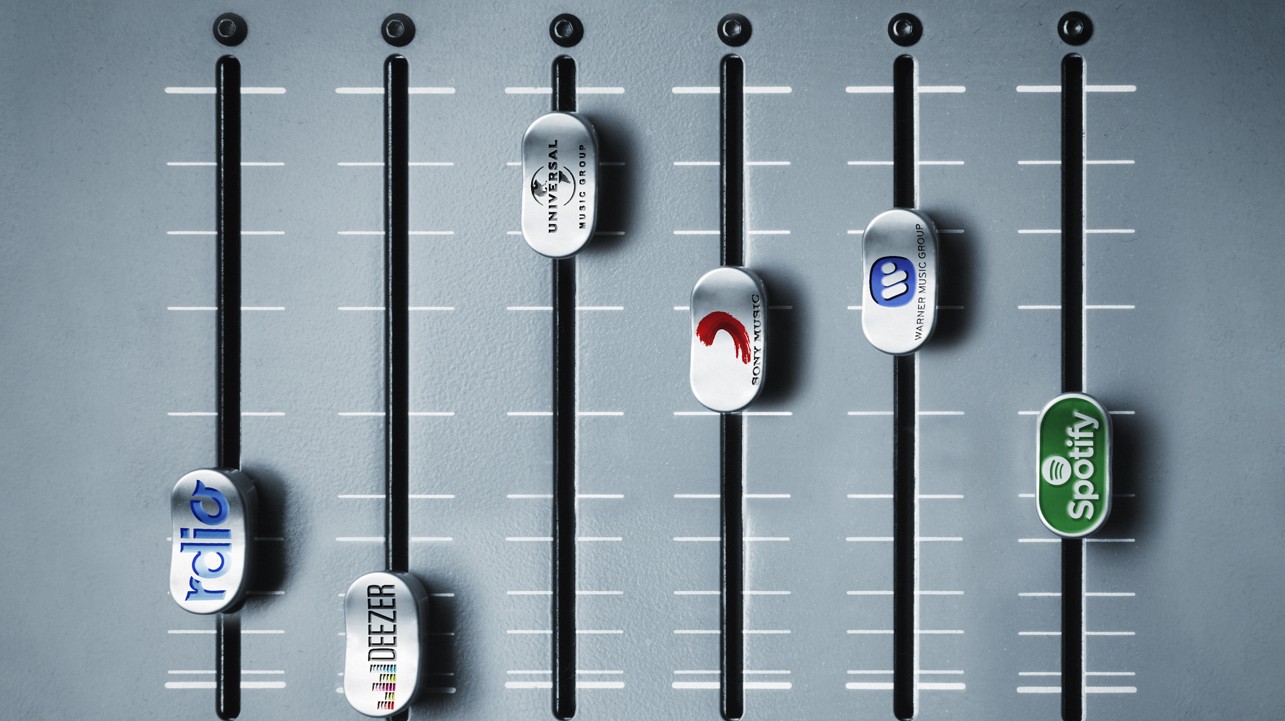
Digital records are distributed differently. They have to be supplied to digital service providers (DSPs) such as iTunes, Spotify and Beatport. For Heroic, these three stores generate the most revenue, in that order.
Physical distribution rights can licensed to one company and digital distribution rights to another.
Distribution of digital product can be done a few ways; via the same distributor that also handles your physical product, by negotiating individual deals with each store (for example Heroic delivering straight to iTunes or Spotify), or by working with a digital distributor.
The majors have direct deals with the largest DSPs (iTunes, Spotify, Beatport, etc.) and work with multiple distributors for physical. Most indies distribute digitally via their main distribution company (for the world) with the bigger ones also having distributors per territory for physical.
Many small independents and net-labels only distribute digitally. They use automated digital distribution companies such as TuneCore or DistroKid. These take a flat-fee per year for records distributed, instead of the percentage commission that regular distributors take (typically between 10-15%).
A label’s distribution deal has a lot of impact on the deals they can offer artists.
Larger distributors often account on a quarterly basis – providing statements and payouts only four times a year. Services such as TuneCore account on a monthly basis. This restrict a label’s ability to account to the artist, as it is impossible to provide quarterly accounting to an artist when statements from distribution only come in twice a year.
In turn, the distribution commission (percentage or flat-fee) reduces the income an artist will receive. And time needed for a distributor to deliver content to stores determines how long in advance a label will need to receive final masters.
Whether you’re looking to get signed or want to distribute independently, it is important to understand the complexities of music distribution.
Music Promotion.
Marketing drives sales.
Plugging a record to radio in the hopes it will be put in constant rotation, securing coverage on music blogs and magazines, feature placements on iTunes and Spotify… All ways to generate exposure.
To learn more about how to get on music blogs, check out my new guide.
When negotiating a record deal, always inquire about the label’s marketing efforts – for social media, online and offline press and radio.
Most labels have in-house facilities to cover marketing and radio, with the majors having full departments and the independents usually having a few team members on board for marketing services.
It’s not uncommon for labels to allocate a budget for marketing, beyond the efforts of their internal team, which is spent on hiring third party publicists and radio pluggers. Small indies that do not have marketing departments hire these third parties for their high-priority releases.
Publicists and PR Agencies.
Music publicists and PR (public relations) agencies are responsible for generating press, both online and offline. They do this for record labels, artists, event promoters and venue owners.
Their services include pushing releases or an artist to online blogs and offline magazines, securing interviews, feature placements, reviews and other forms of press. Many bigger PR agencies such as Your Army also provide radio plugging services, which we’ll expand on later.
Good publicists are well-networked people who have built relationships within the music industry (usually specific to a niche – say electronic music, or indie dance) over time. Through these relationships and being more professional in dealing with publications (online blogs, magazines) than artists and labels, most press prefers to work with experienced PR people – they make their life much easier.
Good publicists know how to deliver clean press releases, submit content for review feature far in advance and are punctual and detailed about providing ‘premiere’ and ‘exclusive’ opportunities.
They are usually hired per-territory, with a label or management working with different agencies in North America, Europe, Australia / New Zealand and Asia. For very specific campaigns, they are hired per country (one in The Netherlands, another in France etc).
PR agencies provide their services on either a continuous or per-project basis.
For continuous projects, they are responsible for representing a client over time – helping them shape their public image and building their brand. For these services, a retainer (continuous) fee is paid, typically between the $500 – 2500 per month range. Big artists that need support in maintaining their public persona enlist these services, such as Martin Garrix, Tiesto and Mumford & Sons.
Many independent labels work with PR agencies on a per-project basis, enlisting their support to help push online and offline press. For these services a flat-fee is paid, around $750 – 1500 per online or offline campaign with a decent agency.
Our experiences with PR agencies have been two-sided. One the one hand, nothing beats developing relationships yourself – because when you service a single release with a publicists, you’re forced to do it again with the next one if you want to achieve the same results. After all, you haven’t built the relationships yourself. On the other hand, you can only do so much yourself and if you’re convinced you have a great release on your hands, it can be worthwhile. Just make sure to work with the best, not the cheapest party.

Radio Pluggers.
Radio pluggers also go by the name of radio promoters or song pluggers. These are the people that convince the radio stations to play records.
Their job is to take a record to the program makers or show-hosts and to pitch them on playing the track. It’s all based on the plugger’s reputation and relationships. The end goal is to get a track put in rotation – meaning that a record is getting consistent spin (play).
When a track is in ‘light rotation’ it gets around 5-15 weekly plays, ‘medium rotation’ is 10-25 and ‘heavy rotation’ is 20+. Consistent radio play leads to exposure, radio chart positions, which in turn drive sales and an artist’s demand.
Pluggers operate either independently or are employees of record labels (in the radio department) or PR agencies. The majors labels always have a one or multiple pluggers servicing radio within a given territory, who push their current high-priority content.
Just like PR and distribution, radio is divided in territories. Different relationships and expertise is needed to generate radio play in different areas. A Dutch plugger is needed to penetrate Dutch radio, another for the French market, so on.
A plugger can not service more than a few records at the same time. After all, they have to reach out to their contacts, often done via weekly radio sit-ins, where show hosts, programmers and pluggers come together to review music – this is when the plugger physically ‘plugs’ records. A lot of it also happens digitally, with the plugger pitching to relationships via email and feeling their responses to particular records.
Pricing for pluggers differs. Major labels often have specific pluggers on a recurring retainer fee, as they are constantly pushing their material. For one-off projects, fees range from a $1.000-3.000 starting fee, with additional costs whenever a song gets spin (say $500 per spin on a major station) or is included in a chart, up to a specific cap (somewhere between $5.000 – $10.000).
This fee is totally justified when you get consistent play. The exposure drives sales, increases an artist’s profile and leads to public performance royalties for the songwriters (collected via PRS’ like ASCAP) and for the recording artists and record label (collected via PRS’ like SoundExchange, almost everywhere in the world except for the USA, where radio / TV do not have to pay master-right holders for using their records).
When negotiating a record deal for a track that has radio potential, always have the label clarify their radio marketing efforts. If dealing with majors, have them add a clause that guarantees plugging efforts, for each market. With independents, if they do not have an internal plugger, ask for a budget that may be allocated to a mutually approved independent radio plugger.
When reviewing pluggers to work with, ask for their previous successes, what records and clients they are currently serving and to agree about the pricing structure (with bonuses and caps) up front.
Want to learn more about SoundCloud? Check out The SoundCloud Bible. The Third Edition has just come out and includes over 400 pages on growing your audience, SoundCloud trading, copyright and monetizing your music on SoundCloud, YouTube and elsewhere.
If you found this article useful, sign up for our newsletter to learn more and to stay up to date with 6AM’s news and features on the world of electronic music.[brew_cta id=”5″]