Posts

Ensuring Nightlife and Event Safety

Security is and has always been an item of first importance that every nightclub, festival or event needs to address appropriately. This is even more so in this day and age with terrorism at the forefront of today’s global concerns, and with incidents unfortunately taking place at nightclubs and music venues throughout the world. It is alarming and frankly saddening that this year alone we have witnessed more of these violent acts being carried out than ever before, costing many lives in the process.

Unfortunately, there are venues and events that do not have a formidable security system in place, making them more vulnerable than others. And given the situation today, having lax security measures simply doesn’t cut it anymore. While it is understood that venue owners and event organizers have a lot of things to worry about, that should not be a reason to skimp on the security details, especially when lives are at stake.

Robert Smith, a security consultant, shared some simple ideas and actions for clubs to consider so they can better prevent or address any unfortunate incidents that could occurs in their premises.

Video Surveillance

image by Brighton CCTV

When it comes to closed circuit TV systems, Smith follows a simple motto: if you think you have enough cameras, you don’t. So when installing a video surveillance system, be sure that an expert assists. This means you should not just take the word of the CCTV system company regarding where to place the cameras since they may have no clue what you need to capture.

It is important that the video system cover all exits, with extra coverage of the front door. Most importantly, your video system should not just record events but also save them. Use the system to not just diligently record but also to document the good and bad practices being done by personnel that work for your establishment, thus enabling you to make the necessary correction or commendation, whatever the case may be. In essence, everything that goes on in the club should be recorded, documented and be subject to a regular review.

Employee Background Checks

image by HR Daily Advisor

It pays to be very diligent in checking out the background of anyone applying for a job in the nightlife industry. You should ensure that the applicant has a clean background, with no criminal records nor history that will be a problem when they work at your venue, since they will represent the business and deal with customers very often. Hiring the wrong person can cause you embarrassment and ultimately could result in failure for your entire establishment.

Given the social media age we find ourselves in, it is wise to look into the social media accounts of those you are looking to hire into your team. Hiring someone with a history of inflammatory, racist, xenophobic and homophobic posts on social media can backfire in ways you cannot imagine, ultimately causing major PR disasters that could even lead to your venue shutting down. It has happened before.

Daily Safety Inspection

image by Vigilant Security Services

Holding safety inspections before the workday begins to proactively find and eliminate problems beforehand should be a given. After all, as they say, “prevention is better than cure.” This is particularly important in bigger venues, concert halls, etc

Having a Policy and Procedure Manual

It should be a requirement for every business to have policy and procedure manuals. This will be a great help for management and employees so they know what to do in preventing and, when necessary, addressing incidents. It is also helpful so to show that the business has an established set of rules being followed at all times.

This is key considering the different kind of scenarios that could suddenly pop up on any given night. Your security staff needs to be ready to tackle any situation that may arise, ranging from fire to potential terrorist and everything in between.

Have an Appropriate Number of Guards

One of the problems many nightclubs and venues face is that they hire and deploy too few security personnel than what is actually needed. This is one of the worst-managed areas within the entire hospitality industry. Hotels, nightclubs and bars all look at the position of a security guard as a necessary evil. Because of this, when things get tough for the business, security is the first to be cut. And that should not be the case. No matter what happens in the business, security must always make sure to cover the venue’s full capacity, entrances and exits, restrooms, dance or entertainment areas, VIP service areas, etc. Having enough security guards in one area is just not enough, every part of the venue must be covered and the number of guards should be adequate to handle any emergency that may come up.

Proper Report Writing

Smith stresses that documenting any incident that could lead to litigation is crucial. “Emergency responders only will document what they need for a criminal investigation, if any. Besides, they might not ask the questions that can defend an operator during civil litigation, and frankly, they don’t care about any later civil investigation,” he explains.

For this reason it is very important to have a procedure and the proper tools to properly and immediately document any incidents that occur, as well as all the relevant details surrounding it.

Training

Lastly, it is a must that every employee is given due and extensive training in various aspects that pertain to their duties. For example, the bartender should know how to handle a customer who consumed too much alcohol and should know how to defuse conflicts. Have your bartending staff complete a New York on-premise alcohol training to make sure they have the knowledge they need.

The security staff must know how to safely and legally detain and escort a guest from the venue. Training makes them better prepared for any situation and enables them to prevent them from escalating further, saving lives in the process.

Implementing these measures may be costly for the business in the short term. But it is a worthy investment that one cannot afford to skimp on. After all, lives are at stake and being able to ensure safety is not only for their benefit but for that of the business as well.


[brew_cta id=”4″]

Why Data is Important for a Nightlife Venue or Business to be Profitable

Today we live in the information age and data has become a vital tool in the way business is being done. Even for those whose business is managing clubs, bars, or other event/music venues, the use of data has become an important and vital element in determining how well their business is faring, or what needs to be changed to improve the bottom line and thus business sustainability. Read more

Marijuana and the Nightlife Industry

It would have been unthinkable 30 years ago, but as marijuana legalization continues to make inroads in some form or another in many parts of the world, many businesses are looking at the possible opportunities it offers. This is especially so in the United States, where different states find themselves progressing at differing speed toward full legalization.

One example highlighting this is the recently celebrated cannabis “holiday”, the unofficial celebration held every April 20th. Fortune reported that it was not just the marijuana business that enjoyed major returns around that day, but that even other businesses like bars and clubs enjoyed major gains from the celebration of 4/20. In sheer terms of foot traffic, reports show that there was a marked 8% increase among nightlife spots and 36% for liquor stores that day, all directly connected to the holiday.

Read more

NYC Looks To Appoint Night Mayor to Regulate Nightlife and DIY/Warehouse Parties

Following on the footsteps of cities the likes of Amsterdam, Paris and London, New York City is now looking toward appointing a Night Mayor to overlook the metropolis’ nightlife.

New York City Councilman Rafael Espinal began putting together a proposal for legislation that calls for an entire section of local government to protect and manage the nightlife industry.  According to Espinal’s plan the Office Of Nightlife would oversee the regulation of the city’s DIY art and warehouse spaces, and would be the liaison point between City Hall and New York’s bustling $10 billion nightlife economy.

The Office of Nightlife would be overseen by a Night Mayor, in a very similar manner to metropolises in Europe such as Zurich, Amsterdam, Paris and London. With the recent attention on safety and licensing regulation, the city has suffered a loss with regards to the DIY art community. The Night Mayor would come in to oversee, preserve and protect the DIY scene and other smaller-scale venues.

H/T: Gothamist

The Abandoned Building That Used to Be A Batman-Themed Nightclub

As a popular resort city in Thailand, Pattaya has its share of nightclubs that tourists frequent. But at one time, there was this one particular nightclub which stood out because of its unique concept, as shared by photographer Dax Ward in his photo blog.

In the 1990s, one of the most prominent nightclubs to open in the city was one that had a theme inspired by the DC Comics superhero Batman. While the concept behind it may have some sense since Batman mostly operates at night, he’s also not known to be the type of guy who enjoys parties, and would prefer to intimidate and chase down criminals to justice instead. Though it could be argued that his alter ego Bruce Wayne is seen as someone who loves to have fun, but that’s another story for another time.

Photo by Dax Ward via Mixmag

Photo by Dax Ward via Mixmag

Despite the oddness of it, the Batman-themed nightclub quickly gained a following as one of the city’s hottest nightspots. It went all out on the Dark Knight-inspired theme. It even had its own “bat signal” to “signal” that the club was open.

Photo by Dax Ward via Mixmag

Photo by Dax Ward via Mixmag

Photo by Dax Ward via Mixmag

Photo by Dax Ward via Mixmag

Unfortunately, it had a short lifespan. After just a year and a half in business, a circuit board overload caused a fire in the premises. Worse, the circuit board also handled the operation of the club’s electronic doors, causing the doors to shut with many still locked inside. Inevitably, many died as a result.

Photo by Dax Ward via Mixmag

Photo by Dax Ward via Mixmag

The tragedy sealed the fate of the once-popular landmark. It prompted an immediate shutdown of the establishment, never to reopen again.

Photo by Dax Ward via Mixmag

Photo by Dax Ward via Mixmag

Photo by Dax Ward via Mixmag

Photo by Dax Ward via Mixmag

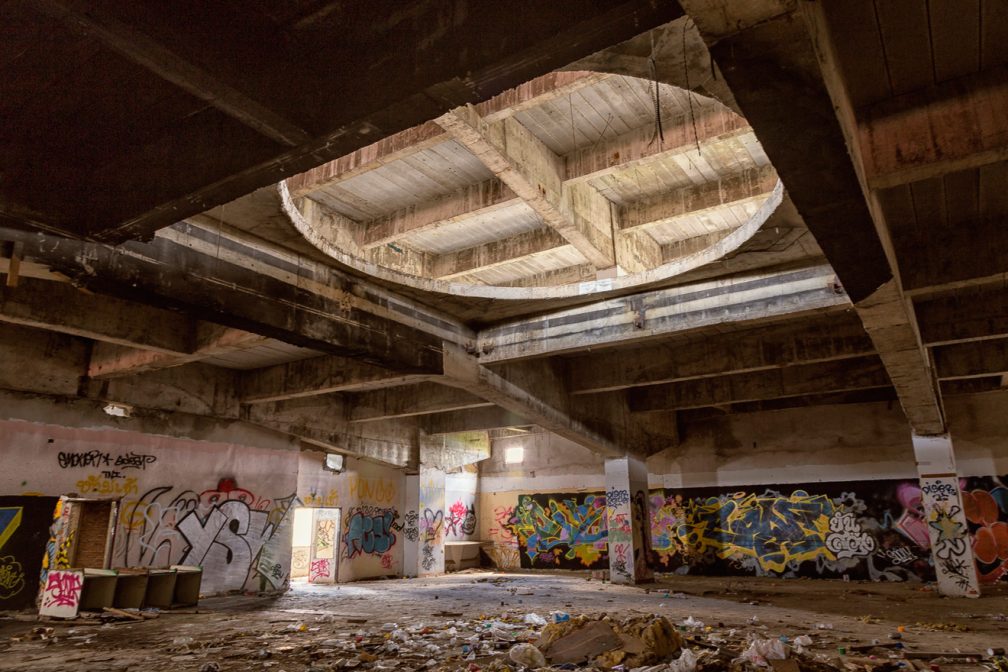
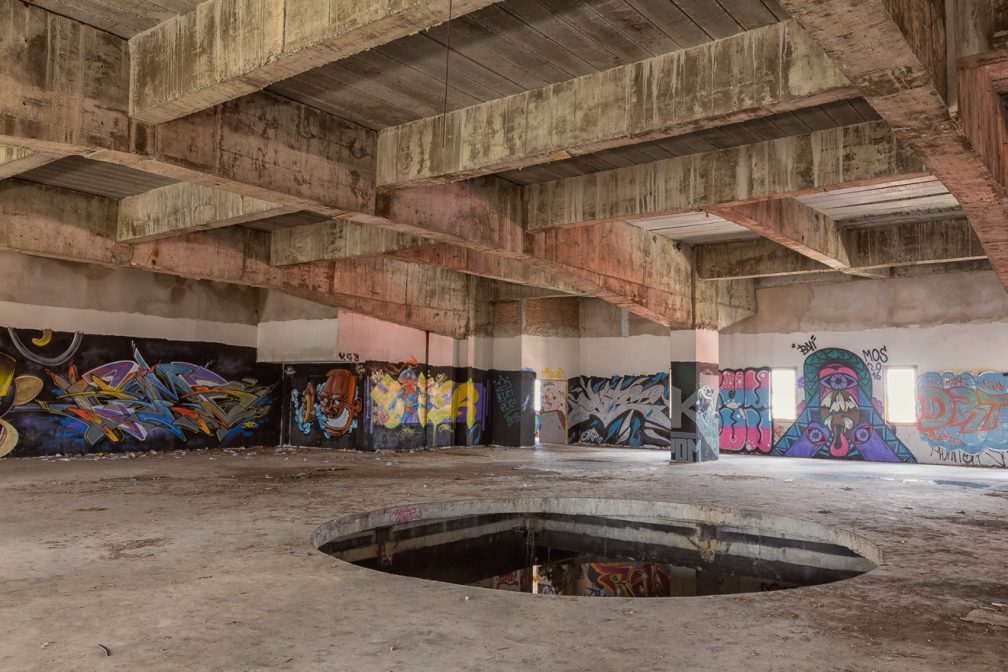
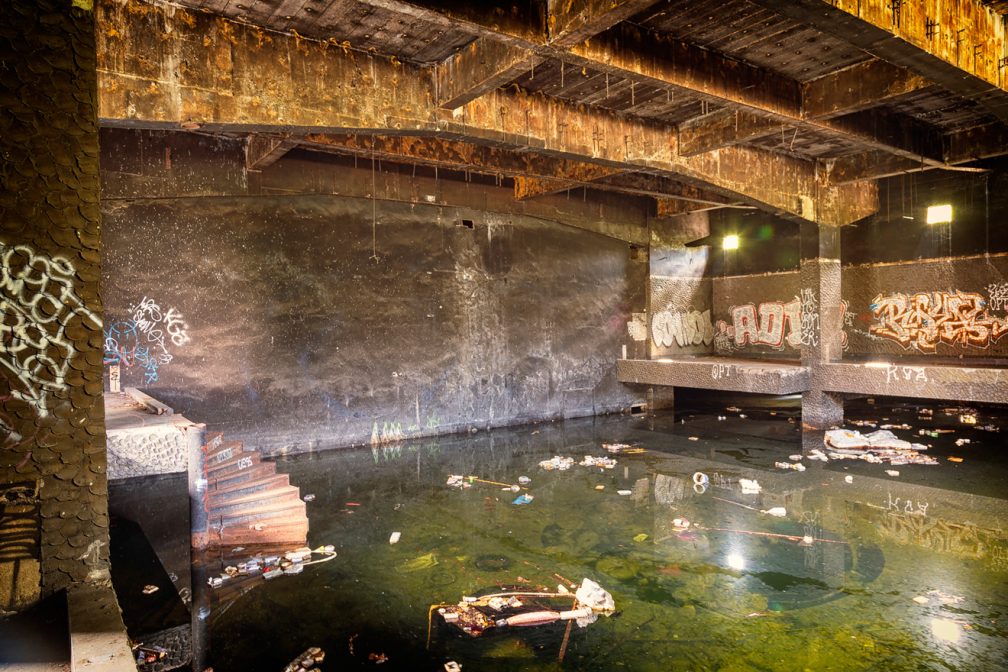
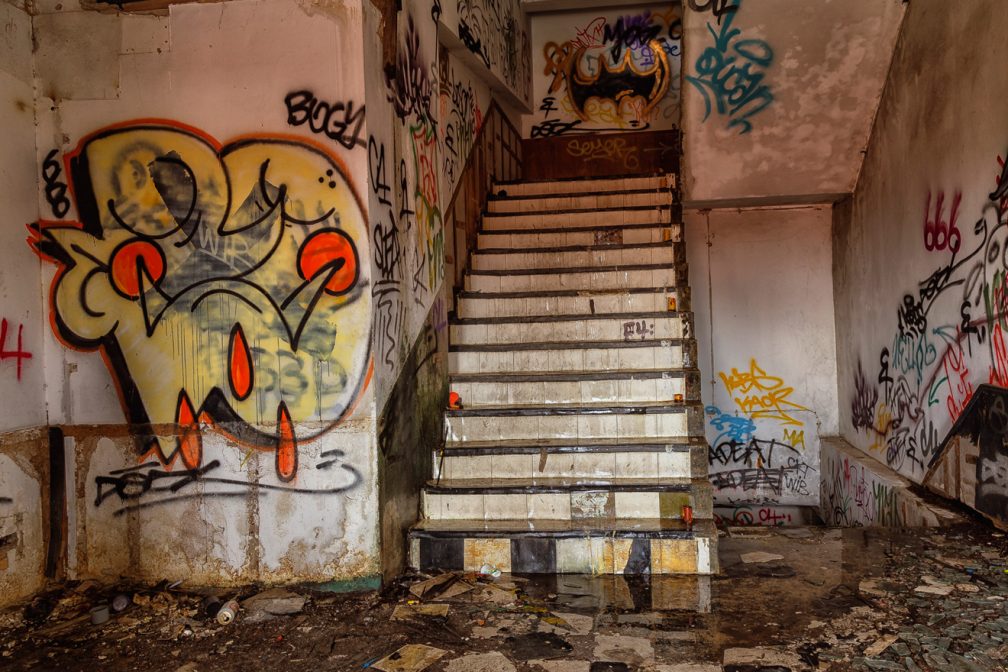
Today, the old nightclub lies in an abandoned and decaying, at times haunting, state. The presence of numerous graffiti now replaced the people that used to hang out here. Nevertheless, it has managed to survive to this day as a memory of a wild and colorful past as well as its tragic, premature end.

“Club Kid Killer” Michael Alig Busted For Drug Possession

michael alig


Some will say that it was inevitable, others will say that it is just a momentary lapse in judgement. The truth remains that today police busted the infamous “Club Kid Killer” for drug possessions right outside Yankee Stadium.

Alig served 17 years for manslaughter in the high-profile 1996 slaying of Andre Melendez, an episode that shocked New York City, the country and ultimately the entirety of the nightlife industry in the United States. Cops spotted him around Joyce Kilmer Park in the Bronx at approximately 1:30 a.m. on Feb 2nd, well past park closing time, and then noticed a pipe hanging out of his pocket. When questioned Alig admitted using it to smoke meth.

Following the police stop, Alig was booked for trespassing and possession of a controlled substance before he was issued a summons and released. The arrest this week came two weeks after he finished his parole, meaning that had it occurred earlier he would have been sent to prison.

Alig was a high-profile club promoter in the ’90s, living a life filled with partying and drugs that ultimately culminated in the gruesome murder and dismemberment of Melendez during a fight over drug debts. The entire NYC nightlife scene of that time and the murder were subject of a documentary called Glory Daze: The Life and Time of Michael Alig, where the  cast of characters who made up the infamous Club Kids speak candidly about that era, culminating with Alig’s release from incarceration. Alig’s drug-fueled life was was dramatized in the 2003 flick “Party Monster.”

If you found this article useful, sign up for our newsletter to learn more and to stay up to date with 6AM’s news and features on the world of electronic music.

25 Essential Clubbing Destinations for House and Techno in Asia

Whether you are a tourist looking for a way to enjoy your weekend or a local who doesn’t know where to go, we’ve summed up twenty essential clubbing destinations for house and Techno in Asia that you should check out if you happen to be in the right city.

We have arranged them by country in alphabetical order, making this an easy guide for you to refer to any time you find yourself looking for good quality house and techno in the Asian continent.

Read more

How To Become A Resident DJ: Tips & Tricks by Jack Wins


The following guest post comes from Jack Wins. He served his DJ apprenticeship at some of London’s key venues, leading him to become a resident at the bigger clubs and building a huge following along the way. 

Let me first say that there is no quick and easy way to become a resident at a club night. Also there is no set way to do it. Below are just 5 tips based on my own experience – tips I hope will help you become a resident at the club or venue of your choice.

Read more

Why Are So Many Nightclubs in Europe Closing Down?

XOYO

It appears that European nightclubs are not benefiting from the very same rebirth and surge in popularity that we are witnessing with electronic music as a whole industry.

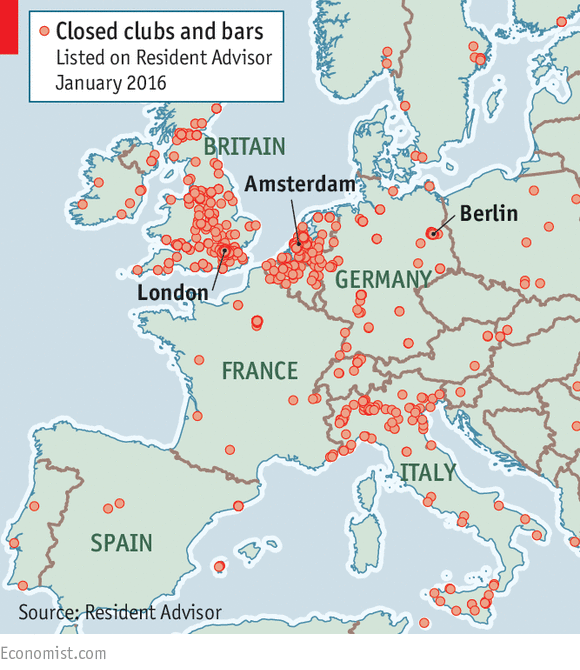
Based on data collected from Resident Advisor, the Economist published a study that dives into the decline in numbers of nightlife venues throughout Europe.

The accompanying map of Europe below tells a specific tale, one of a clubbing industry in the wane. Red dots delineate the European nightclubs that are listed as closed down in 2016 by Resident Advisor. The principal cause, you may have guessed, is gentrification. The term specifically refers to the transformation of an urban area caused by the purchase and renovation of houses by upper or middle-income families or individuals. While of course property value increases, this often results in displaced low-income families as well as the closure of small businesses and, as we are now seeing, businesses that cater to a lifestyle in contrast with that of the neighborhood’s new occupants.

Closing Down MapThe Economist lays out some key figures:

  • Between 2001 and 2011 the numbers of so called discotheken in the Netherlands fell by 38%.
  • In Britain there were 3,144 clubs in 2005 but only 1.733 ten years later (Source: Association of Licensed Multiple Retailers).
  • Again in Britain, in 2015 revenue were ÂŁ1.2 billion ($1.7 billion), down from ÂŁ1.5 billion in 2010.
  • In Berlin the number of music venues remains stable at 350 (120 clubs), although several long-established night spots have closed down.

Increased rent prices, lack of available venue space and the muffling effect of gentrification has hit the nightlife industry hard. This is no more evident than in London and, specifically, with the high-media case surrounding the revocation of fabric’s license. It takes one neighbor to complain for others to join suit, beginning a sort of power-war that sees local councils often swayed to keep “many voices” happy rather than to protect the late-night establishments in the area.

“If there’s one complaint, then the whole circus starts,” said Eelko Anceaux of De Marktkantine, one of the handful of clubs that bucked the trend and opened in Amsterdam in 2014. It is possible to build good relations with neighbors, he claims, also buying on a business strategy that sees his club double as a restaurant, thus adding a more acceptable value proposition to the eyes of families and middle-class residents. Yet, complaints about noise and drunk or stoned club-goers are hard to avoid, rendering the life of any club owner tricky to deal with.

Again, it must be understood that it’s these complaints that put local officials and politicians smack in between a rock and a hard place. We agree, of course, that the solution is never to shut down a night club just to second the whim of local yuppies who look down on the nightlife industry as a disease. The truth remains, however, that politicians get stricter about licenses, code violations, and complaints, often leading to accusations by venue owners and patrons of officials purposely targeting nightclubs as a result of pressure from commercial or residential neighbors. We have seen this happen to fabric prior to the recent closure, when the club won a year-long court battle against Islington Council, which wanted to introduce drug-sniffing dogs among other strict security measures. We have been seeing this happen with Ibiza clubs, who are being targeted with early sound curfews, fines, temporary closure for code violations or complete party shut-downs. We have seen this happen with the closure of u60311 in Frankfurt, and that of two Berlin clubs in 2015 for fire code violations. And there are plenty more such examples.

There is no point in denying the inevitable: despite the action by some cities to prevent the decline from continuing further, we are likely to keep seeing this trend in the near future. Amsterdam has had a Night Mayor since 2002, a position that lobbies on behalf of night-time club and entertainment venue owners. Recently the City of London announced that it is recruiting for the position of Night Czar, charged with transforming the city into a true 24-hour destination. In Germany, Mr. Lutz Leichsenring of the Club Commission sits on a working group for the Berlin chamber of commerce, while Berghain/Panorama Bar was recently bestowed the honor of being recognized as a “high-culture venue“. The idea is for these night-time positions to increase and improve relations between governments, neighborhoods and of course clubs and other type of late-night music venues.

Despite the above, there are other factors responsible for the slump of the nightlife industry in Europe: the decline of 24-hour party people. There are social changes that are in themselves changing the way the current youth generation thinks and behaves. Firstly, the European Monitoring Centre for Drugs and and Drug Addictions is reporting a marked decline in MDMA consumption with 15-34 year olds in Germany, Britain, Denmark and Spain. While trends in the use of other drugs less closely linked to clubbing, such as cannabis and cocaine, vary by country, the statistics relating to ecstasy indicate that the European youth of today may surprisingly me more abstemious than that of 10-20 years ago. This idea is further strengthened by statistics that point to a fall of heavy alcohol consumption among young people. In Britain alone, between 2005 and 2013 the proportion of 16-24-year-olds who were frequent drinkers (defined as drinking alcohol on five days in the previous week) fell from 7% to 2%. The price of drinking has also increased, which, coupled with 2008’s economic crisis and resultant years of austerity, is having a say on how much young people leave their house to party at nightclubs.

Drug Closing Down GraphThe second factor to impact on club prosperity is the surge in popularity of music festivals. In 2014 around 130 festivals took place in Amsterdam alone, while in Britain around 250 take place annually, up from 80 in 2004. Croatia is another country that has seen tens of festivals spring up out of nowhere in the last 5-8 years. Dance music fans are finding themselves saving up to attend these big-scale expensive weekend affairs, thus choosing not to visit nightclubs at home. Further, festivals can often drive up the price of booking big-name talent, making it hard for competing local venues to feature them on their weekend lineups.

This year the global nightlife scene has woken up to the aforementioned changes, launching initiatives to combat the problems causing this downward trend. The Opening Debate at this year’s Amsterdam Dance Event will featuring some of the brightest, highly passionate and most dedicated people the dance music industry has to offer giving their hotly sought opinions on important topics including the direction of nightlife in the UK and Europe in general.

While the movers and shakers in the scene keep working to ensure that nightlife remains protected, we encourage every single dance music fan in the world to support their local scene, venues, promoters, artists and record stores. Only united can we truly show local governments and communities that nightlife does matter.

Think You Have What It Takes to be Night Czar of London?

Ministry of Sound in London

Ministry of Sound in London

Following on his promise to focus on and highlight his city’s nightlife, the Mayor of London is looking to appoint the UK’s first Night Czar to shape London’s future as a 24-hour city. This comes on the heels of the recent controversy with fabric London, which remained closed at the orders of the Metropolitan Police and Islington Council following two recent drug overdose deaths. Sadiq Khan, London’s Mayor, stepped in encouraging officials involved to get to the root to the problem without keeping the venue closed.

Now, the Mayor has launched a search for the UK’s first Night Czar, a new position that will be charged with championing the value of London’s night time culture whilst developing and diversifying London’s night time economy.

The official job insert specifies that the following duties will be required of this new position:

“Working with the Mayor, the Night Time Commission, local authorities, businesses, the Metropolitan Police Service, Transport For London and other agencies, the Night Czar will create a vision for London as 24-hour city and a roadmap showing how the vision will be realised. The Night Czar will have proven leadership ability, public profile and convening power, plus a thorough understanding of the night time economy and the ability to work in a political environment.

This is initially a one-year officeholder post with a time commitment of up to 2.5 days per week.

London’s diversity is its biggest asset and we strive to reflect London’s diversity in all GLA appointments. We welcome applications from everyone regardless of age, gender, ethnicity, sexual orientation, faith or disability.”

You can apply for the position, which pays £35,000, until Monday 12 September at 23:59 GMT. Interviews will take place at: City Hall on Wednesday 21 September 2016.