Posts

Chemical burns

12 People Suffer Chemical Burns in London Nightclub Acid Attack

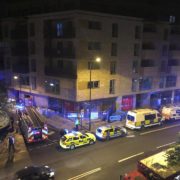
On April 17th, 2017 shocking news about an acid chemical burn attack at nightclub Mangle E8 (Wringer & Mangle) began making the world rounds. The nightclub is an ex-industrial laundry basement now converted into a multi-use events space in London Fields, home to a 720 capacity basement event space, a canteen/bar on the ground floor and numerous music and arts workspaces. Mangle is advertised to be a new venue for music enthusiasts who want to party in the heart of London.

The Sun reports that the venue had been hosting the Lovejuice Warehouse Party, a nine-hour house music night when the attack broke out injuring 12 and requiring 400 partygoers to be evacuated into the street. The Police Department, London Fire Brigade and London Ambulance Service arrived at around 01:10 BST. A tenant that lives in a space overlooking the club explained the confusing scene: “It happened so fast – they rushed people out. I thought it was a stabbing because all I heard was ‘move, move, move – move out of the area’. The security was telling the crowd to go down that way – people on this side were waiting to go home but they couldn’t go home because the road was closed. People were confused.”

Read more

How Clubs and Other Event Venues Can Be More Sustainable and Profitable

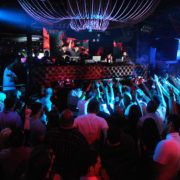
Clubs and other music venues have benefited greatly in recent years with the increasing patronage of live and electronic music fans. In the United States in particular, business has been great for many of these venues as electronic music continues to boom and spaces are now being filled to the brim during events of all sizes and types.

However, there are challenges that still remain. The main one remains instability, essentially the fact that the revenue that these venues depend on is as unpredictable as ever. Thus, on top of ensuring events are successful by using the Industry Resources we provide on our site, we also highly encourage venues take alternative action to ensure continued operation.

Brendon Anthony, the director of the Texas Music Office, suggests a couple of steps that venues should undertake to make their business more sustainable and profitable.

Read more

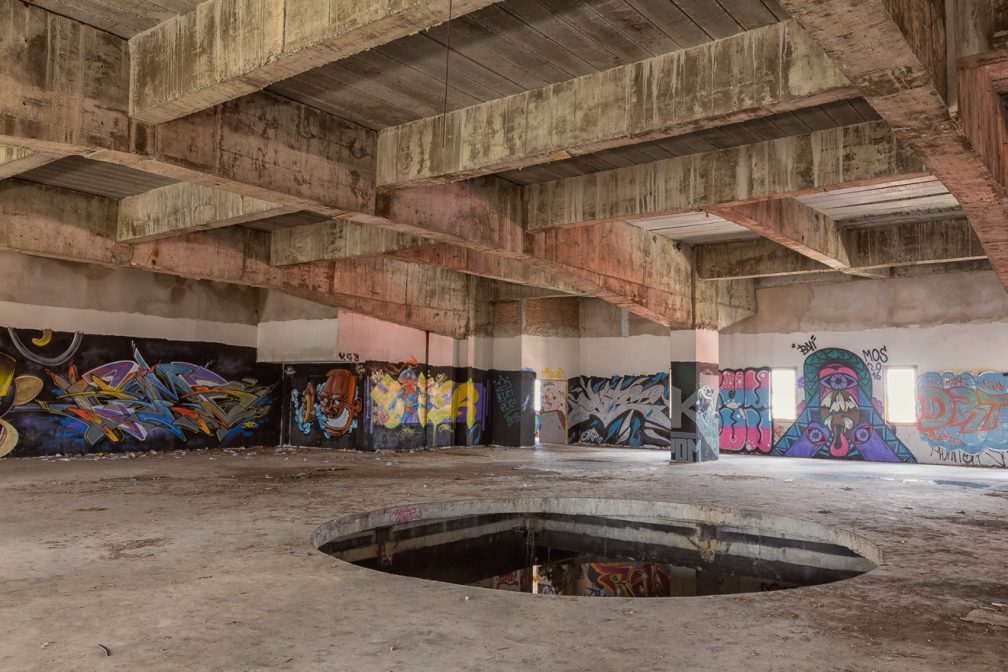
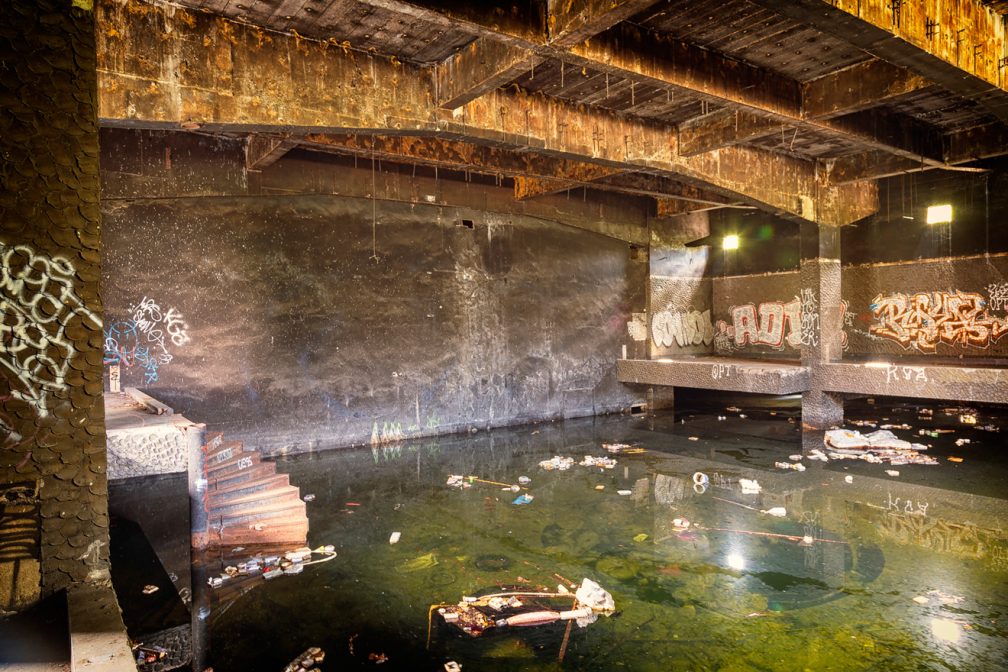
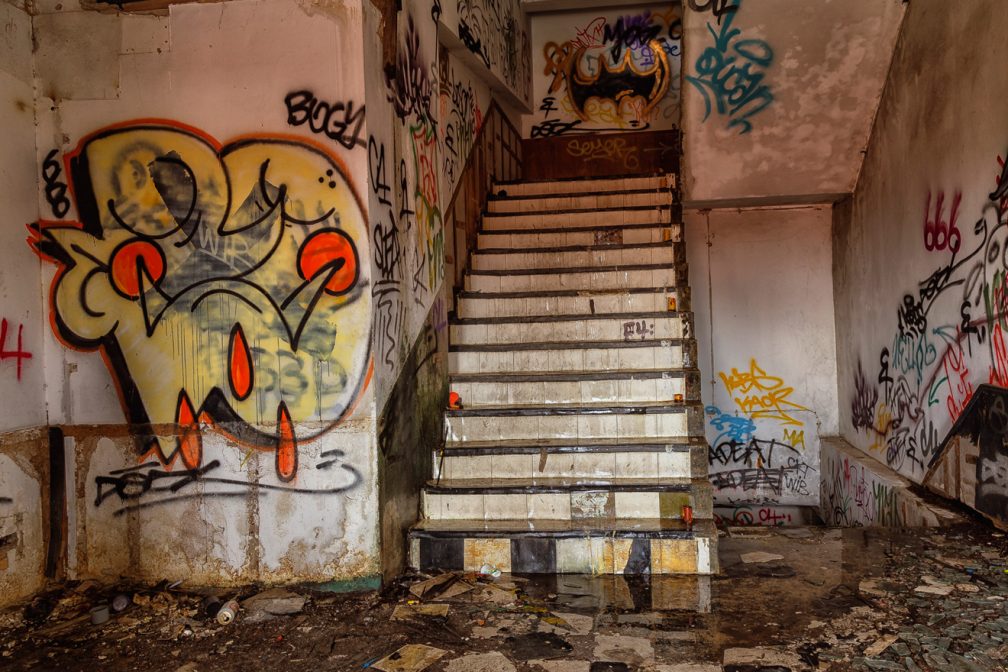
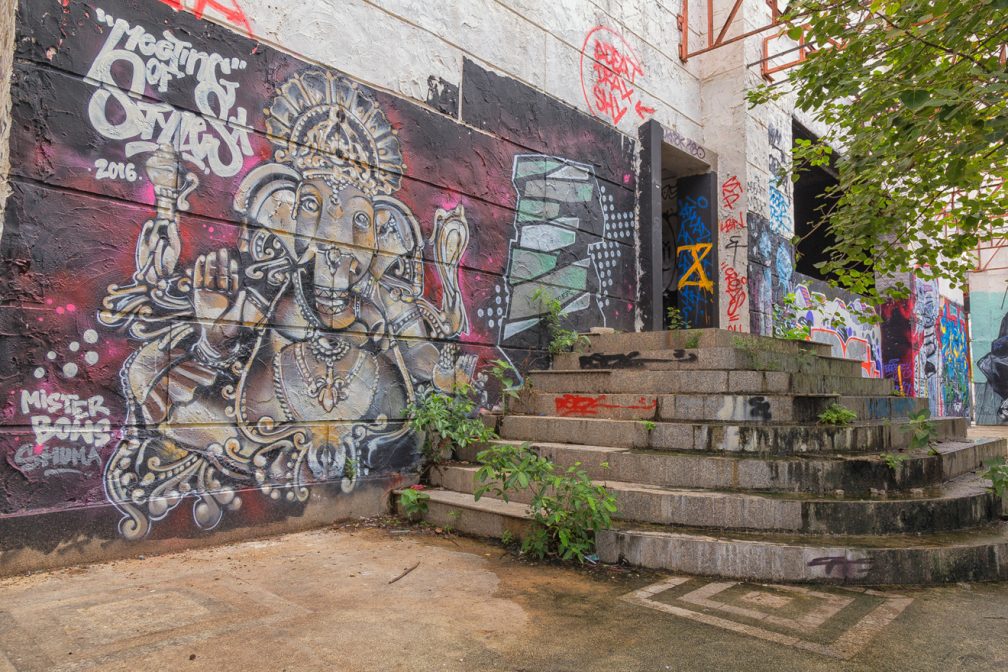
The Abandoned Building That Used to Be A Batman-Themed Nightclub

As a popular resort city in Thailand, Pattaya has its share of nightclubs that tourists frequent. But at one time, there was this one particular nightclub which stood out because of its unique concept, as shared by photographer Dax Ward in his photo blog.

In the 1990s, one of the most prominent nightclubs to open in the city was one that had a theme inspired by the DC Comics superhero Batman. While the concept behind it may have some sense since Batman mostly operates at night, he’s also not known to be the type of guy who enjoys parties, and would prefer to intimidate and chase down criminals to justice instead. Though it could be argued that his alter ego Bruce Wayne is seen as someone who loves to have fun, but that’s another story for another time.

Photo by Dax Ward via Mixmag

Photo by Dax Ward via Mixmag

Despite the oddness of it, the Batman-themed nightclub quickly gained a following as one of the city’s hottest nightspots. It went all out on the Dark Knight-inspired theme. It even had its own “bat signal” to “signal” that the club was open.

Photo by Dax Ward via Mixmag

Photo by Dax Ward via Mixmag

Photo by Dax Ward via Mixmag

Photo by Dax Ward via Mixmag

Unfortunately, it had a short lifespan. After just a year and a half in business, a circuit board overload caused a fire in the premises. Worse, the circuit board also handled the operation of the club’s electronic doors, causing the doors to shut with many still locked inside. Inevitably, many died as a result.

Photo by Dax Ward via Mixmag

Photo by Dax Ward via Mixmag

The tragedy sealed the fate of the once-popular landmark. It prompted an immediate shutdown of the establishment, never to reopen again.

Photo by Dax Ward via Mixmag

Photo by Dax Ward via Mixmag

Photo by Dax Ward via Mixmag

Photo by Dax Ward via Mixmag

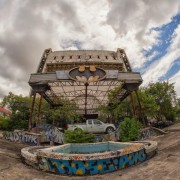
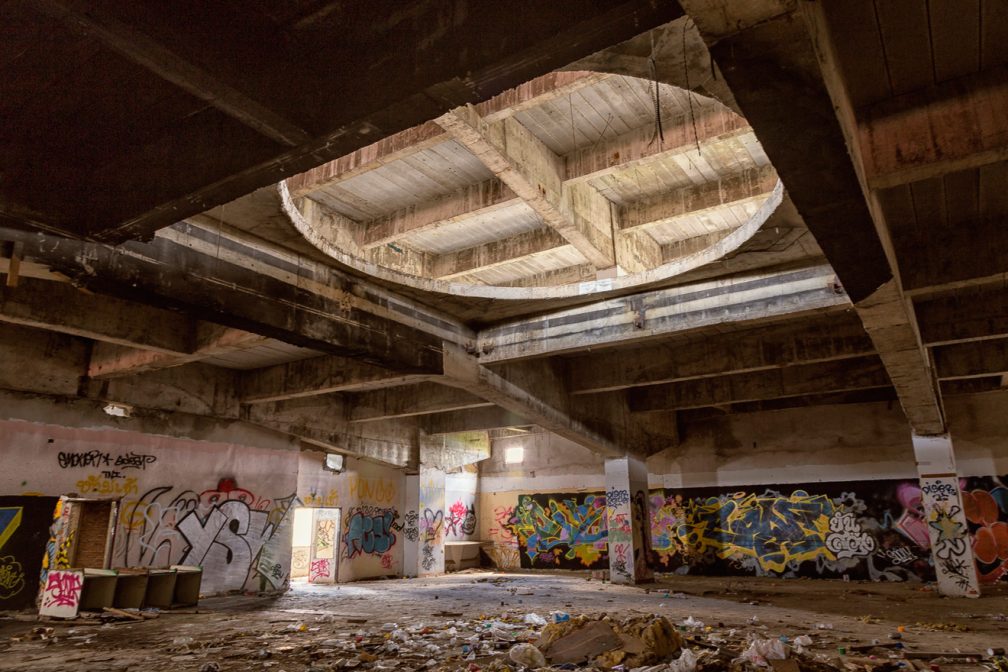
Today, the old nightclub lies in an abandoned and decaying, at times haunting, state. The presence of numerous graffiti now replaced the people that used to hang out here. Nevertheless, it has managed to survive to this day as a memory of a wild and colorful past as well as its tragic, premature end.

The Lincoln Speakeasy: A First Anniversary Milestone

It’s been one year since The Lincoln Speakeasy first opened its doors in the West Los Angeles area. Despite being a relative newcomer compared to the other nightclubs in Los Angeles, it didn’t take long for it to make quite the impact in the LA nightlife scene. In such a short period, the club has made a name for itself thanks to its exceptional service, exclusive access, and, most especially, showcasing some of LA’s finest local and international underground artists, musicians,  and DJs. Names such as Matthew Dekay, Francesca Lombardo, Hoj, Powel, Marques Wyatt, Lars Behrenroth, Lonely Boy and MightyKat  have performed in the club and treated guests to some unforgettable party nights.

Despite being relatively young, the Lincoln Speakeasy, or TLS for short, was built on years of experience and tradition set in place by its owner, Jamesen Re. In fact, Jamesen himself has made history in his home country of Australia for having started what would become the longest running club night in Australia dance history. That party was Sunny Side Up, a brand and party series he began 20 years ago. Fast forward to today and comparisons are being made now between Sunny Side Up and the TLS here in Los Angeles.

While there are plans now underway to bring TLS to other locations in the U.S. and beyond, for now all energies are focused on the preparations for TLS’ 1 year anniversary party happening on Friday, March 24th. We recently caught up with TLS founder Jamesen Re to provide more details on the event, the first year of TLS, as well as his 20-year history of throwing parties down under and beyond.

Read more

How To Become A Resident DJ: Tips & Tricks by Jack Wins


The following guest post comes from Jack Wins. He served his DJ apprenticeship at some of London’s key venues, leading him to become a resident at the bigger clubs and building a huge following along the way. 

Let me first say that there is no quick and easy way to become a resident at a club night. Also there is no set way to do it. Below are just 5 tips based on my own experience – tips I hope will help you become a resident at the club or venue of your choice.

Read more

Schimanski NYC Nightclub Opening in Brooklyn on Site of Old Verboten

Schimanski NYC

The rumors have been confirmed: the site that once used to host Verboten nightclub in Brooklyn’s Williamsburg neighborhood will soon be home a brand-new venue. And by soon we mean starting with this upcoming Halloween night on Monday!

Schimanski is scheduled for a soft opening on October 31st with a special Halloween Party featuring Special Guests TBA. Info and RSVP is available on the venue’s official website. The official fun will begin the following weekend when the club is set to host Edu Imbernon, Eli & Fur and Jon Charnis on Friday November 4th; and Tiger & Woods, Morgan Geist and Jacques Renault the following day on Saturday November 5th.

The building at 54 N 11th St. used to be the home of Verboten and has been empty since spring when the state seized the property after an investigation that revealed $360,000 worth of unpaid sales tax and arrested owner Jen Schiffer on fraud charges. Schimanski, which is named after a fictional character from a 1981 German crime series, began a round of rumors when posters were spotted across Brooklyn promising quality lineups catering to the underground dance music scene.

The spotted Schimanski poster, which you can see below, includes the officially announced artists mentioned above, as well as other scheduled for the remainder of the Fall 2016 season including Radio Slave, wAFF, Breakbot, Lauren Lane,  Mat.Joe, Monoloc, Delta Functionen, Volvox, Paul Raffaelle, Sascha Dive and Veronica Vasicka.

Schimanski Poster


Connect with Schimanski: Online | Facebook | Twitter | Instagram

Opinion: Transgender Rights and Bathroom Access in Nightclubs

Inclusive restroom

2016 has arguably seen America’s politics as divided as ever thanks to hotly contested Presidential primaries that then spilled into the major election battle the entire world is witnessing at this very moment.

One of the many hot issues of this election campaign has been that of transgender rights, a subject that certainly exploded into the mainstream over the course of the year with the issue of bathroom access at the forefront. Specifically the states of Mississippi and North Carolina ignited a lot of anger in the LGBT community and its supporters earlier in the year by passing legislation restricting access based on gender identification.

In America 18 states and Washington, D.C. ban discrimination in public accommodations based on gender identity. Numerous cities also have passed legislation or policies prohibiting discrimination in public accommodations on the basis of gender identity. You can see the exact information on where each state stands here.

Dance music’s gay DNA is one that can be traced back to the early days of disco and the very roots of the movement that morphed into the global night-time industry that it is today. In 1973 Vince Aletti wrote a piece for Rolling Stone describing the disco evolution in New York City as “After-hours clubs and private lofts open on weekends to members only — a hard-core dance crowd — blacks, Latins, gays”. Aletti was of course talking about David Mancuso’s parties at The Loft, the real ground zero of the disco parties that were taking the city by storm those early years.  DJ Tallulah—a Studio 54 resident DJ—further cemented the pivotal role of the gay community in shaping the nightlife world that we know today saying “The rave lifestyle of Ibiza in the late ‘80s was just a vanilla version of the New York gay lifestyle of the ‘70s.” We must also remember that it was the blacks, gays and latinos in Chicago that took on disco and built house from it — the history of dance music is embedded with the influence of the gay community no matter which decade we decide to examine.

Despite this known history, however, it was in Chicago out of all places that I heard of a disturbing incident that occurred last weekend. Ariel Zetina—a prominent member of both the transgender and nightlife communities in the city—was denied access to a female bathroom at a Northside nightclub, even while having a legal “F” on her ID. When the incident was communicated to her friend and DJ Jarvi who was in the middle of spinning a set at the venue, the latter took a stand against the discrimination and ended her performance. News of the incident which was posted on Facebook began to do the rounds and naturally sparked up several discussions about the subject. It was encouraging to see that an overwhelmingly vast majority of those commenting on social media denounced the incident.

For one, we must presume that the law is on Zetina’s side. Chicago’s City Council has affirmed that transgender people are allowed to access the bathroom that matches their gender identity, as covered by point (e) in Section 2-160-070 of the Chicago Municipal Code (Human Rights Ordinance), which was amended in summer of 2016 to address this exact issue so as to leave no loopholes or ambiguity:


Screen Shot 2016-10-12 at 3.44.04 PM

But beyond that, the incident raises questions that every club owner and staff member must confront with regard to the use of bathroom by transgender individuals. Local establishments should follow the law of course, and unless legislation specifically prohibits the practice of allowing transgender people from accessing bathrooms that match their gender identity, every venue ought to adopt internal policies to ensure that anyone that enters their building is not prohibited access to facilities for reasons of color, race, sex, gender or sexual orientation. Such policies must be communicated to all venue staff, including and especially security and bathroom attendants. Further, venue staff must be adequately trained to handle any patrons who object to the implementation of this policy or otherwise actively discriminate patrons who are abiding by it. It should never occur that a transgender club-goer is refused entry to a bathroom based on their gender identity. No patron should ever be subjected to this type of discrimination, period.

It may very well be that what occurred in Chicago was an isolated incident resulting from lack of training on behalf of the specific security member that denied Zetina access to a bathroom she had every right to use. Regardless, it is the responsibility of club owners and their management to ensure that this does not happen and failure to do so inevitably results in PR disasters that can bring an entire venue into disrepute — and with reason. If you work in nightlife you have the moral obligation to not only follow the law, but also to do what is right by a community that was and is such an integral part of the industry you are a part of.

There is no doubt about one thing: as dance music continues to command pop culture, it is key that we never forget where we came from. We must remind ourselves of the roots and ideals that shape our scene, and of the socio-political struggle and outspoken queerness that was and still is so key to the DNA of yesterday’s, today’s and tomorrow’s dance music.

We Need to Act, Two Other Clubs are Facing the Same Fate as Fabric London

MODE Ldn

In the past several weeks, fabric London’s woes and ultimate closure at the hand of the local Islington Council received coverage far beyond music outlets and blogs, with major news sites of the world taking it upon themselves to report on what has now become the closure of one of the most respected dance music venues in the world.

Yet, as the London club prepares to fight for its life with the support of a strong and well-numbered nightlife community at its side, there’s other venues in the world facing similar problems. In Chicago, small venues are being attacked by local Cook Country officials who are attempting to levy heavy back taxes and penalties claiming that electronic music, and also rock, rap and country music, should not be considered “fine art.” Strangely, the world’s most iconic techno institution, Berghain/Panorama Bar in Berlin, received the exact opposite treatment in a court of law in just the past few days when it was labeled as “high culture” and allowed to pay a smaller tax bracket than pure entertainment venues.

In London fabric is sadly not alone. West London nightclub MODE has also announced that their license came under review by the Kensington & Chelsea Council, with pressure by the Met Police for the club to close down:

Despite reaching out to the venue, no information has yet arrived on the outcome of yesterday’s review. Regardless, fabric’s closure has set a dangerous precedent, one that we could see replicated not only with other venues in London, but also beyond in other cities of the country and Europe.

In Germany, Frankfurt nightclub U60311 is also facing hard times. A formal underground pedestrian walkway in downtown Frankfurt, the venue opened its doors in October 1998 and hosted some of the most illustrious names in underground and house techno for the better part of two decades, including some of the most famous Cocoon parties hosted by Sven VÀth. Sadly, the club is now battling to re-open after it was shut down when a guest was killed during a fight with external contractors who were hired to work security at the venue. Naturally, the venue immediately terminated the contract with the security company and collaborated with authorities in ensuring that they could investigate the incident and take the necessary measures needed. Yet, officials have gone on to refuse proposals for a new manager to take over running the club and, after 26 separate raids at the venue in 2012 alone, have kept the venue closed.

u60311 Frankfur

u60311 Frankfur

The truth is that the club is surrounded by retail stores and there’s belief that its forced closure is a direct result of pressure and complaints from other business owners in the area. Last year a petition was launched to save this unique small venue, and a Facebook group created to support the re-opening of the club.

While MODE’s future seems uncertain, supporters of U60311 continue to clamor for a re-opening, insisting that the venue was unfairly targeted and closed down for political reasons rather than just ones. As fabric London embarks on the arduous road toward overturning its license revocation, we hope that other venues facing similar problems with local authorities can find the strength and support to fight for their rightful place in the local nightlife scene.

Opinion: America, This Weekend Go Out and Dance

crowd-1056764_1920On a week where racial tension, violence and hate divides the United States, music lovers on all four corners of this beautiful country can find solace, refuge and warmth through the musical rendition of their favorite artists.

This has become a weekend where unity matters more than ever. Although we may be afflicted by fear, worry and confusion, there is arguably nothing more unifying, liberating and American than sharing dance floors with people of all walks of life, gender, sexual orientation, race, ethnicity or socio-economic background.

Whether you live in a metropolis the size of New York City, Chicago or Los Angeles, a seemingly sleepy pocket of American suburbia or surrounded by the majestic diverse nature that is so unique to this country, I encourage every member of the electronic music community to turn up the volume and unite under a common umbrella of acceptance, love and solidarity. Visit your local club, go to a show, attend a festival or spend the early hours of Sunday morning in a dark warehouse listening to techno. And if none of those are options, invite friends over and throw your own party – be your own DJ.

Sharing music is sharing love. At a point where almost every tweet, Facebook post and meme seems to divide, perhaps the gift of music can help bring people together.

America, this weekend please go out and dance.

Nightlife Matters: A Call for Governments To Respect Our Scene As Part Of Local Culture

NightlifeMatters

Electronic music is an indelible part of the world’s nightlife scene. Our music represents the soundtrack and backbone of an industry that is alive in all four corners of the globe, and almost every country in between.

Yet, it is only in a select amount of countries that nightlife is truly respected as part of culture, as an expression of art and freedom. In the Netherlands and Germany, in particular, legislators, politicians and officials recognize nightlife and electronic music as a valuable piece of both the local and national economy. The appreciation for our industry goes a step further in cities like Amsterdam or Berlin, where those participating in nightlife are not only respected but celebrated as part of a movement that promotes tolerance, art and freedom.

Unfortunately, this isn’t the case in other countries. Australia, and in particular Sydney’s New South Wales state , has been facing uphill battles with local officials who have gone so far as to impose strict lockout laws effectively curbing the existence of nightlife in some of the country’s most populous cities. England is facing similar problems, in no small part due to gentrification and the significant change with which venues, nightclubs and bars interact with local neighborhoods and communities.

In the United Kingdom, the NTIA (Night Time Industries Association) has now launched a #NightlifeMatters campaign to increase awareness on the importance of our scene as part of local art and culture. The aim is to educate and change the viewpoints of the many on the other side of an irrational “us-versus-them” argument which constantly pits nightlife as unethical, quasi-criminal, uncultured and even dangerous.

Naturally, the campaign is backed by a great selection of high-profile artists the likes of Carl Cox, Eats Everything, Jackmaster, and Sasha, as well as venues and promotion companies. The always outspoken and active Seth Troxler has personally weighed in via Clash Music, underscoring just how important this message is for the longevity and prosperity of nightlife as we’ve all come to love it. The movement encourages everyone to sign their petition, and to tweet using the hashtag #nightlifematters to join and support this vital campaign.

“There are always multiple factors to consider when it comes to club closures. It’s hard to keep a business like that going for 10 years, just look at places like Plastic People or Dance Tunnel, even when a club is successful it’s hard work to keep it alive. But who’s responsible for these closures? Is it developers? Local councils? Licensing boards? Has club culture changed fundamentally, are kids today too boring? Or is it the government?


Of course it’s a combination of all those things but there’s one obvious way for us to change it. Vote.

We’re living in a time where the government likes to create media sensations around one topic or another. It’s not about them trying to save lives or change culture, it’s about who can keep themselves in the spotlight for the longest. Decisions are being made by people who are too old or too out of touch with what’s happening in the modern world. And it’s not just in the UK, it’s part of a global problem.

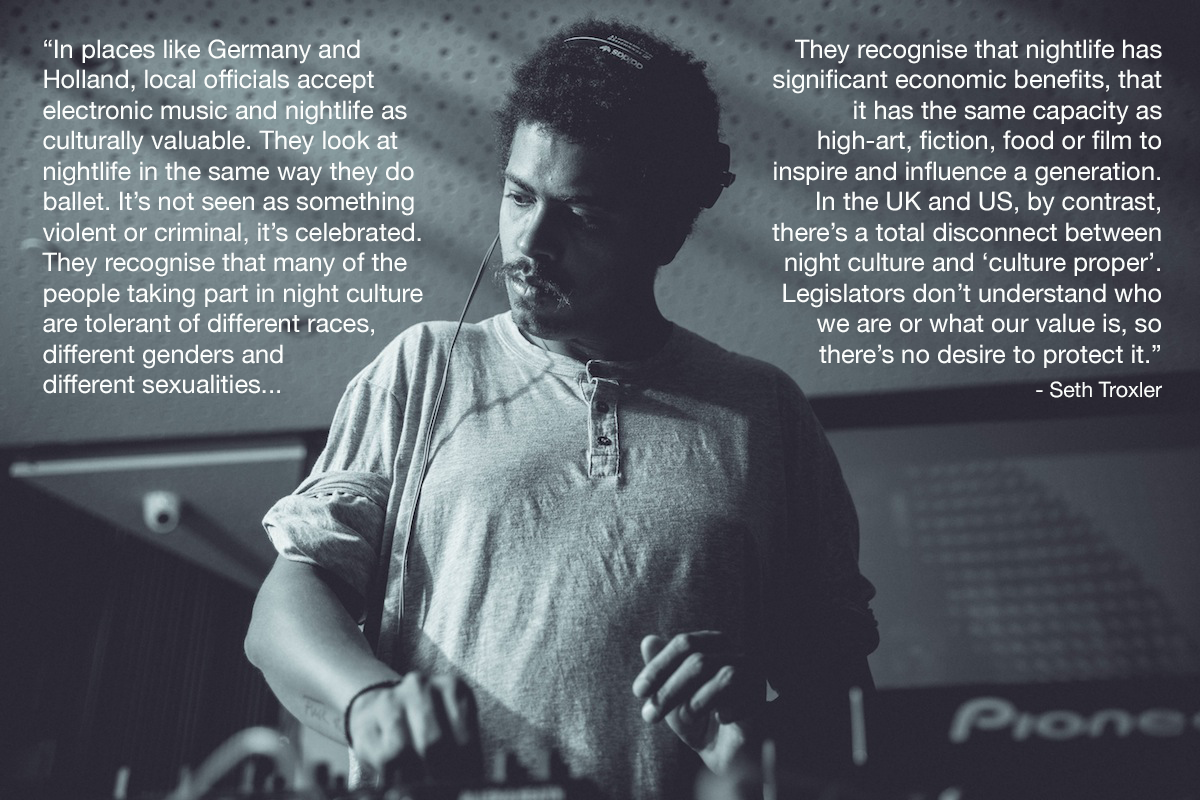
In places like Germany and Holland, local officials accept electronic music and nightlife as culturally valuable. They look at nightlife in the same way they do ballet. It’s not seen as something violent or criminal, it’s celebrated. They recognise that many of the people taking part in night culture are tolerant of different races, different genders and different sexualities. They recognise that nightlife has significant economic benefits, that it has the same capacity as high-art, fiction, food or film to inspire and influence a generation. In the UK and US, by contrast, there’s a total disconnect between night culture and ‘culture proper’. Legislators don’t understand who we are or what our value is, so there’s no desire to protect it.

If we’re to change these attitudes, we can’t just talk about them, we need to have more young people start participating. If we want to change perceptions about club culture we need to act. Part of the reason I launched Acid Future, part of the reason I’ve spent my life playing underground music, is to try and keep the dream alive, to try and fight the fight by educating people about electronic music.
Seth Troxler Music Matters

#NIGHTLIFEMATTERS is addressing the same issues, albeit from a different angle. They’re going direct to policy makers, showing them who we are, showing them that we’re valuable, showing them that we aren’t the stereotype that they think we are or that we might have been in the 90s. Their giving young people a platform to make their voice heard, in just a few clicks on nightlifematters.com you can email local councillors and MPs to let them know why nightlife is important to you.

It’s a first step but it’s only the beginning. We’re at a point where the old structures of society are losing their grip, there’s a huge opportunity for young people to change both the government and its policies for the better. Take for example this guy Will Thompson, he used to work for our management company, he was incredibly brilliant, very cool. He quit so he could go back to school and start working in politics because he wanted to change the situation he found himself in. He realised that the only way to really change things is to get involved.

The only reason these conservative councillors get in is because the only people who vote in local elections are 65 year old tea ladies, if you had everyone in Shoreditch get involved in the political process you’d be able to protect bars and clubs in the area.

It’s not hard, all we need to do is participate. That’s how we’re going to protect our night life. That’s how we’re going to save club culture.”

Source: Clash Music