Posts

Helpful Tips to Getting Recognized as a Music Artist in the U.S.

It is every music artist’s dream to make it in the American music industry. Even big music artists from elsewhere in the world dream of building a fan base in the United States and being able to tour there. That should not come as a surprise since it remains the world’s biggest recorded-music market and, in the eyes of many, the focal entertainment country of the world. However, it’s also one of the most challenging countries for an overseas artist to crack.

This was the point of discussion at a panel in the recent Midem conference. Moderated by the Bloom Effect’s Fiona Bloom, the panel included Michele Amar, director of the US Office, Bureau Export; John Katovsich, VP of theatrical music at Lionsgate; Andreas Katsambas, recording executive at BMG; and Andrea Da Silva, global team leader, media and entertainment at the US Department of Commerce.

The panel provided some key takeaways that overseas artists should take note of:

Read more

social media

The Correlation Between Social Media and Record Sales

Before the turn of the century, when an artist recorded a song, you had to buy the music before you got to listen to it at will. The more record sales, the more successful the artist and the music was. People loved buying records; there was the vinyl LP, the cassette tape, the compact-disc and then the evolution of mp3s. While before you have to have a special player to hear the record you bought, today things are very different. Now you can just log on to social media or streaming sites and listen to the newest tunes.

But is there a connection between social media popularity and a track or album’s final sales? Check out the following graphs from hypebot.com to see the correlation between the two works:

Read more

How Much Does Working In The Music Industry Really Pay?

When people hear about the music industry, they immediately think about rock stars or DJs rolling around in millions. While that could be the case, artists aren’t the only ones with all the dough. Comparing salaries in the music business tends to be second nature to those involved, but the average Joe often forgets the other side of the DJ booth, music studio or performing stage. Behind the scenes is where the crew is and people don’t factor in the difficulty of their jobs and just how much money they can make.

There are a lot of people who are part of the music industry. Below we will be showing you the various salaries of the artists and their crew through a series of graphics posted by Billboard.

Read more

15 Music Startups to Watch Out For

There has been quite some mixed opinion as to whether 2017 will be a good year for music/tech startups. Some feel this year does not hold much promise with the seeming lack of excitement with what these startups have to offer. There are also those who feel pessimistic as far as their chances for sustainability are concerned, given the current issues facing the music industry in general.

The truth is that these negative sentiments do not reflect the whole picture. For one, there are a number of options already available for startups to secure the needed funding and investments. Also worth noting is the fact that many of these startups have what you could refer to as more “low-key” ambitions, making them more sustainable. While there are some who seek to be the next Spotify, many of them look to leverage existing platforms and build on them to create some innovative services and technologies.

Music Ally has recently come up with a list of the most interesting music startups to watch out for. We will be highlighting 15 of them here as we showcase what each startup has to offer in the music industry.

BandLab

Launched in November 2015, this Singapore-based startup pitches itself as a “social music maker and recording studio.” Its app offers a 2-track recording capabilities for musicians, a built-in editor, collaboration features, post video clips, and, just recently, mastering features as well.  It has also been aggressive in acquisitions. In the past year, it has acquired rival Composr, US design studio Mono, and even a 49% stake on Rolling Stone Magazine’s publisher Wenner Media. In an interview, BandLab’s CEO Meng Ru Kuok said, “We are focused on the consumer and the supply chain of music, and innovative business models around music that exist today…BandLab’s goal is to be a global music business.”


Disciple Media

Started in the UK by musician Benji Vaughan and music executive Leanne Sharman in June 2016, Discple Media develops the platform for artist apps. It aims to help musicians connect to their audiences via smartphones while allowing audiences to push content back to the musicians as well. In an interview, Sherman explained that the platform helps provide an incremental revenue stream for artists, record companies, publishers, and collecting societies. Despite being a newcomer, it has managed to snag some high profile clients with the likes of The Rolling Stones, Luke Bryan, and KSI using their platform.


Dot Blockchain

Unlike many startups, and especially in the music industry, Dot Blackchain stands out for being a “public benefit corporation”, which means it is not established as a for profit operation. What this startup aims to achieve is to develop a new media format and architecture where artists, songwriters, and their shareholders can “express their rights and wishes” regarding the commercial use of their work. It was launched in August 2016 with the introduction of its file-bundling technology, a registry of ‘minimum viable data’ for works, and plug-ins for users. This project is expected to begin its second and third planned phases later this year. with more input from the music industry. At the same it time, it looks at contributing between 5% and 25% of its revenues towards education and music-focused charities.


Dubset

Dubset began as “DJ-defined radio service” in 2011 that offered streaming mixes from DJs and used music fingerprinting to identify tracks and pay music rights holders. It has evolved over the years as it introduced new technologies. Notable of these is MixBank, launched in 2016, which identifies music used in remixes and mixes and clear the music’s use through deals with labels and publishers before it is distributed. Through MixBank, it has managed to enter into relationships with high-profile clients such as Apple Music and Spotify. Already, the service has shown signs of promise when it released its first licensed remix in October 2016: DJ Jazzy Jeff’s remix of Anderson Paak’s “Room In Here”.


Gearbox Records

While Gearbox is mainly a UK-based independent label that releases its music on vinyl, it employs a good deal of technology, especially for its music. It owns an analogue vinyl-cutting facility which cuts its records with no digital process being employed to create an authentic vinyl sound. In 2017, the company is going further in its vinyl technology with the introduction of Gearbox Automatic, which is described as an “autostreaming hifi turntable” that not only plays vinyl but also add tracks to streaming playlists. Make no mistake though, it is not ripping vinyl tracks into digital files but rather matches the records with their digital versions on Apple Music or Spotify that people can add in their digital libraries and play them on the move.


Grammofy

Grammofy is one of the few music services that is focused on the classical music genre. Through its app, it offers a subscription service of weekly curated collections of classical music, guiding its users to the different works, musicians, and composers in the genre. In addition, it employs expert curators from BBC Music and Gramophone Magazine and offers both compressed and premium audio quality. Since its launch in Germany and the UK in May 2016, it has expanded to other countries in Europe, as well as in the United States. For now, its app is only available on iOS.


Grooveo

grooveo

Grooveo is an artist-centric live streaming platform for DJ’s with unique tools to engage audiences and allow for monetization through direct fan donations. The recently-launched Grooveo aims to disrupt this market with a distinctive quality: those using it can get paid during their stream.

Grooveo works the same way most streaming services do, requiring DJs to provide only a soundcard and webcam to use to sync their performance with the app. It works on multiple systems, from vinyl to digital, and even can be used with multiple cameras so viewers can get a full breadth of the “live” experience. Then, during the set, viewers have a chance to tip DJs as their performing using “beatcoins.” Later, they can even be paid for their own royalties.


Instrumental

Instrumental may be just an independent label (albeit partly owned by Warner Music Group), but it has a powerful technology at its employ. This technology is a specially built software that explores YouTube’s API for data on new music content creators and helps identify those who have the fastest growing engagement for the label to sign a record deal with. One example of this strategy is the label’s signing of Johnny Orlando, a 13-year old Canadian with a million fan following on Musical.ly, Instagram, and YouTube. In August 2016, Instrumental added a non-music division called DSCVRY, which identifies emerging social stars and connect them to brands for marketing campaigns.


Jaak

Jaak is one of the startups exploring blockchain technology and music, in which it breaks down the anatomy of a song: songwriters, producers, artists, publishers and labels.“As its founder Vaughn McKenzie explained the idea behind the technology, “It’s just a way to design things that can work exactly how you want them to…it’s business logic, in an app.” This smart contract connects apps, websites, games and anything else that wants access to a certain song, thus providing a more interactive music experience. It has been working on the technology since 2014 and is due to announce its first product this year. For the meantime, it has been talking with various players in the music industry about what it could do for the industry.


JoinMyPlaylist

Behind JoinMyPlaylist are two Danish entrepreneurs with experience in the music/tech realm. Leveraging from their experiences, they went on to create an app that encourages users to “experience music live with others” through live playlists that can be shared from jukebox to office radio. Even artists can join in as well by creating their own live playlists that they can share. As the industry is feeling the need to foster more conversations around music on platforms such as Apple Music and Spotify, JoinMyPlaylist strives to show how this can be done.


Jukedeck

UK-based startup Jukedeck offers an interesting premise: utilizing AI or, to be specific, neural-network technology to compose music. Since the original prototype was introduced in 2012, its system went through significant improvements and is now being used mainly by video creators. While the technology itself is still in its early stages, its CEO Ed Newton-Rex foresees some potential uses for the technology, including the ability to teach music.


Landmrk

i0hTIihu[1]

Another British startup in the list, Landmrk is considered to be music’s equivalent to Pokemon Go as far as technology is concerned. It is built on a location-based and augmented reality platform that can be utilized to run campaigns where digital content is dropped in physical locations for users to find, working the same way as Pokemon Go. It has already found success in the campaigns for Alt-J, Keith Richards, and CNCO. Beyond music, it also made its way into the TV industry through the campaign it ran for Showtime’s TV series Homeland.


Mbryonic

gyNhZ4-W[1]

London’s Mbryonic offers a visual approach in promoting artists and brands. In this case, it’s the use of virtual reality, game graphics, and live visuals that immerses people into the world of the artist. In addition, it has also created another product that transforms old music videos into 360-degree VR presentations that reacts to music and other commands as well. For its founder Tom Szirtes, this technology provides an opportunity for new revenue streams as well. “Why go to the expense of staging a gig
when you could stage an entirely virtual gig,” he pointed out.


MelodyVR

melody-VR-1250x500[1]

Another British startup that is looking to tap into virtual reality for music is MelodyVR. Its focus is providing a total VR experience by providing both the hardware (through its range of headsets to be launched this year) and the content, with a catalogue of live performances shot specially for VR. It is set to be launched this year and has been able to secure partnerships with a number of artists, labels, venues, and festivals. It also recently launched a closed beta for Samsung Gear VR, targeting about 1000 users in Europe and the U.S.


Mind Music Labs

AAEAAQAAAAAAAAbfAAAAJGZhY2RiZDQyLWViNDMtNDhkMC04ZDljLWE3ZWRkZmI1ZmRmZQ[1]

Sweden’s Mind Music Labs is the startup behind what is considered the first real smart guitar in the world, the Sensus Smart Guitar. This guitar is a fully-functioning guitar with a digital audio workstation (DAW) that can modify the guitar’s sounds during looping or mixing. It also can be connected to the internet to play streaming music, which the user can play along. While this can be seen as part of a greater trend towards connectivity in instruments, Mind Music Labs’ Sensus stands out for its emphasis on the physical musical instrument that people can play with.


Source: Music Ally

If you found this article useful, sign up for our newsletter to learn more and to stay up to date with 6AM’s news and features on the world of electronic music.

The Music Business Has a Gender Problem and This Is What Everyone in the Industry Can Do About It


You are lying to yourself if you think that the music business does not have a gender problem. Whether you’re a DJ, producer, promoter or work for a record label, the signs and evidence are all around you: female DJs are grossly under-represented on lineups (and not due to lack of skill), mansplaining occurs even at the highest level with international touring acts, stories of sexual assault and misogyny continuously pop up left, right and center and of course the typical rebuttal to all of this sounds something along the lines of, “she fucked her way to the top and doesn’t even make her own music.”

Having been involved with the dance music industry in the United States for the past five years, I have noticed the uneasy and lopsided pressure on women in music. In the fall of 2016, at the SĂžrveiv conference in Norway, a panel was conducted on the subject of gender in music that led to a revealing discussion that highlighted several key points on the subject. A man, interestingly enough, took a stance and argued that women simply need more role models, once again putting blame on women for the gender plight that is so pervasive in this industry. The gender problem is not just a woman problem, it’s a problem every single member of the music community is responsible for in one way or another, and shifting the blame back to women is not only irresponsible and short-sighted, but only serves to cement the status quo that we find ourselves debating in the first place.

Read more

Understanding the Music Industry: Record Labels, A&Rs, Distribution, Pluggers and PR

Record labels
The following guest post comes from Budi Voogt, founder of Heroic, a label group and management agency, and author of The SoundCloud Bible, now in its third edition.

Understanding the Music Industry is a series that outlines the framework of the business, explaining the roles of the industry professionals, what their jobs entail, when it’s important to involve them and deal specifics that you want to be aware of. Artist managers, booking agents, music publishers, labels, A&Rs and others – we’ll treat them all.

In this part we will expand on the different types of record labels, the role of A&Rs, distribution deals and music promotion (via radio pluggers and PR agencies). In other words, things you should know when you’re looking to get signed by a label or are currently negotiating a deal.

Death of the Gatekeepers.

Let me take you back in time to the 1970s.

Those were the days when music was played from vinyl discs and cassette tapes, and when the discovery of music was limited to listening to the radio, going to a venue to see a live-show or by browsing your favorite section in the record store.

Popular opinion was formed was very different – people could only consume and discover music in a few ways, so those who controlled those channels had major influence over what became hot, or not.

The radio stations determined what music was broadcast. The event promoters and venue owners chose which bands were allowed to perform live and the distributors curated and pushed music to stores.

They were the tastemakers
 and the gatekeepers.

As the music industry developed from infancy to maturity, in the 70s the radio stations, event promoters, major concert venues and distributors had become intricately involved with the labels.

They could push records through to radio, stores and stage tours – making them able to engineer the success of most of their acts. Effectively, the labels controlled the spread of music.

Driven by the margins of physical sales, music became a multi-billion dollar industry. Some labels grew out into large corporations, earning the nickname majors. The rest of the industry grew with them. Many radio stations, concert promoters and distributors scaled immensely.

Things changed rapidly in the 90s, with the introduction of the internet.

First the MP3 format was introduced, allowing music files to be compressed to a share-able size. Hard drive storage grew and then everyone got a cable connection. When in 99 Napster came out, it spread like wildfire.

Technologies such as peer-to-peer file sharing, torrents and sites such as YouTube and SoundCloud reinvented how media was shared and distributed, including music. It made the distribution of content more efficient – but also reduced the demand for physical products.

Record sales plummeted and the industry lost millions. The Recording Industry Association of America (RIAA) started a whole series of lawsuits against companies such as Napster, Kazaa and Morpheus – even suing thousands of people that downloaded a few songs.

The music industry was in shock and had to adapt to survive, but couldn’t do it close to the rate at which the tech industry kept developing. The majors had become big corporations, bureaucratic and slow in nature – whereas these tech start-ups were driven by young coders that innovated at rapid rates.

Everyone had underestimated the threat of digital and the speed with which the common user would adopt it.

To this date, the industry has still not caught up. It hit its peak in 1998 with a global trade revenue estimated at $27.8 billion US dollars, but has only seen one year of growth in 2012 and is still shrinking in size since.

Yet the future is promising. In 2014, global industry revenues from digital matched those of physical, both accounting for 46% of the then $14.9 billion US dollar industry.

I expect it will take another decade before the music business has internalized and optimized its business models to digital; optimizing payouts for streaming, satellite radio and online websites such as YouTube and SoundCloud.

That time will also be needed for a change in culture. Many label policies are archaic and based on outdated ‘company culture’ – such as USA radio and TV broadcasters still not paying for performance royalties over use of a master, or labels offering a meager 15-20% artist royalty in deals, even when records are only distributed digitally.

The big change is this: control over the distribution of content has shifted from a selected few, to everyone. The death of the gatekeepers.

Now more than ever, independent creators, artists and labels are empowered.

With good music, grit and an understanding of the internet, anyone can build a core audience of superfans to sustain one-self, or to leverage for deals and get signed to a record label.

In the rest of this article I will outline the role and function of record labels, A&Rs, music distributors, radio pluggers and publicists. Because as you better understand this framework, it’ll be easier to win at the game.

SCB-728x90

Record Labels.

The job of a record label is to represent and exploit sound recordings. These are also known as master recordings, or masters in short.

Whenever a song is recorded, a sound recording is created. The name explains it all – it is a recording of sound, usually the performance of a song.

It is possible for one person to write a song (also known as a composition, or a work), while another performs and records it. Or the same person could both write and record it.

This leads to two types of intellectual property, called music copyrights. One for the song, another for the sound recording. The song is typically represented by a publisher, whereas the sound recording is represented by a record label. For a better understanding, read my guide on music copyright.

Back in the day, it was uncommon for songwriters to also own the copyright to sound recordings – they rarely recorded their own songs. Instead, songwriters or their publishers pitched songs to the managers and labels of recording artists, such as Elvis Presley and Frank Sinatra, who picked those they liked and recorded them.

The labels would pay for and facilitate these recordings, manufacture copies, distribute to stores and market to radio and press. A capital intensive operation, as the costs for recording a full-length album with a five-piece band could run into the tens or hundreds of thousands of dollars – let alone costs of pressing and shipping thousands of LPs.

Labels operated as banks for musicians; investing in artists and recordings up front, with the high margins on physical sales allowing them to recoup costs and make a profit. And because they controlled the distribution channels, they were able to influence which artists became successful, thus making more of their investments profitable.

Today, most songwriters are also recording artists, and vice versa. They are empowered to be both via education and tools available to them. Electronic music artists can compose a song within a digital audio workstation (DAW) such as Fruity Loops or Ableton, perform it with samples and plugins, then generate a master by exporting.

Labels have to invest less to facilitate recordings now. Most artists do it themselves. And with the sales format shifting from physical to digital, costs of manufacturing and distribution have been minimized too.

Distribution of digital music hardly imposes costs at scale. A track uploaded to Spotify or iTunes can be consumed continuously without more effort on the label’s behalf. The only cost imposed is the one charged by the store for extra use.

This has lead to a change in the purpose of labels.

They still have to curate great music, but their involvement is more essential on the marketing and promotional side, than anywhere else. They have the bank to make this happen; securing feature placements on iTunes and Beatport, inclusion in Spotify playlists, press coverage on blogs and magazines and plugging to radio. That’s where the difference is made.

A&Rs – Artist & Repertoire.

Surely you have heard the term of ‘label A&R‘. It stands for ‘Artist and Repertoire‘.

An A&R is the person that works at a label and is responsible for communicating and signing new acts, developing them and their music until they are ready to be marketed, and initiating their involvement with the label.

A big part of an A&R’s job is A&Ring, which is industry slang for the act of curating music to the point of becoming commercially viable. The A&R has to make sure that the music will do well with an audience, so that the investment of time and money by a label pays off. After all, they are businesses.

This is always like walking on thin ice. Artists never want to be shaped into something they are not. That never works out in the long term. However the music needs to meet all the quality standards and needs to be commercially sensible.

From my experience, slight A&R involvement is always beneficial. Guaranteeing a certain standard of quality within the arrangement, mix and master of a record. And to help artists find artistic direction if they’re lost on a track or visual branding.

It’s important that artists are open to this and willing to collaborate. Over at Heroic, we do not sign artists that can’t take constructive criticism. Few labels do.

If you’re looking to get signed with a record label, the A&R is the person you should reach out to. Find out who they are. Build relationships. Only pitch the best of your material.

Music Distribution.

Professional record labels have deals with distribution companies that send their records to stores, whether physical or digital.

With digital becoming the primary format and the huge cost reduction of not having to create physical product, most labels release new records on digital only.

An exception is for records that are put on compilation albums (such as ‘Ibiza Summer Deep House Hits’ etc), made in small batches for sale via merchandise shops, or have proven to do very well in radio charts or sales figures. In those cases, the prospective sales justify the investment of making and shipping physical.

The process of making physical product involves copying the records onto CDs or pressing vinyls and having booklets, sleeves and cases made. Bigger labels usually manufacture via larger distributors or production plants, whom service multiple labels and are able to reduce costs at scale.

CDs or vinyls are then shipped to different distributors per region, whom each spread it to stores within their area of expertise. Bigger labels often work with distributors on a territory basis; North America (USA + Canada), Europe, Australia + New Zealand and Asia.

Digital records are distributed differently. They have to be supplied to digital service providers (DSPs) such as iTunes, Spotify and Beatport. For Heroic, these three stores generate the most revenue, in that order.

Physical distribution rights can licensed to one company and digital distribution rights to another.

Distribution of digital product can be done a few ways; via the same distributor that also handles your physical product, by negotiating individual deals with each store (for example Heroic delivering straight to iTunes or Spotify), or by working with a digital distributor.

The majors have direct deals with the largest DSPs (iTunes, Spotify, Beatport, etc.) and work with multiple distributors for physical. Most indies distribute digitally via their main distribution company (for the world) with the bigger ones also having distributors per territory for physical.

Many small independents and net-labels only distribute digitally. They use automated digital distribution companies such as TuneCore or DistroKid. These take a flat-fee per year for records distributed, instead of the percentage commission that regular distributors take (typically between 10-15%).

A label’s distribution deal has a lot of impact on the deals they can offer artists.

Larger distributors often account on a quarterly basis – providing statements and payouts only four times a year. Services such as TuneCore account on a monthly basis. This restrict a label’s ability to account to the artist, as it is impossible to provide quarterly accounting to an artist when statements from distribution only come in twice a year.

In turn, the distribution commission (percentage or flat-fee) reduces the income an artist will receive. And time needed for a distributor to deliver content to stores determines how long in advance a label will need to receive final masters.

Whether you’re looking to get signed or want to distribute independently, it is important to understand the complexities of music distribution.

Music Promotion.

Marketing drives sales.

Plugging a record to radio in the hopes it will be put in constant rotation, securing coverage on music blogs and magazines, feature placements on iTunes and Spotify
 All ways to generate exposure.

To learn more about how to get on music blogs, check out my new guide.

When negotiating a record deal, always inquire about the label’s marketing efforts – for social media, online and offline press and radio.

Most labels have in-house facilities to cover marketing and radio, with the majors having full departments and the independents usually having a few team members on board for marketing services.

It’s not uncommon for labels to allocate a budget for marketing, beyond the efforts of their internal team, which is spent on hiring third party publicists and radio pluggers. Small indies that do not have marketing departments hire these third parties for their high-priority releases.

Publicists and PR Agencies.

Music publicists and PR (public relations) agencies are responsible for generating press, both online and offline. They do this for record labels, artists, event promoters and venue owners.

Their services include pushing releases or an artist to online blogs and offline magazines, securing interviews, feature placements, reviews and other forms of press. Many bigger PR agencies such as Your Army also provide radio plugging services, which we’ll expand on later.

Good publicists are well-networked people who have built relationships within the music industry (usually specific to a niche – say electronic music, or indie dance) over time. Through these relationships and being more professional in dealing with publications (online blogs, magazines) than artists and labels, most press prefers to work with experienced PR people – they make their life much easier.

Good publicists know how to deliver clean press releases, submit content for review  feature far in advance and are punctual and detailed about providing ‘premiere’ and ‘exclusive’ opportunities.

They are usually hired per-territory, with a label or management working with different agencies in North America, Europe, Australia / New Zealand and Asia. For very specific campaigns, they are hired per country (one in The Netherlands, another in France etc).

PR agencies provide their services on either a continuous or per-project basis.

For continuous projects, they are responsible for representing a client over time – helping them shape their public image and building their brand. For these services, a retainer (continuous) fee is paid, typically between the $500 – 2500 per month range. Big artists that need support in maintaining their public persona enlist these services, such as Martin Garrix, Tiesto and Mumford & Sons.

Many independent labels work with PR agencies on a per-project basis, enlisting their support to help push online and offline press. For these services a flat-fee is paid, around $750 – 1500 per online or offline campaign with a decent agency.

Our experiences with PR agencies have been two-sided. One the one hand, nothing beats developing relationships yourself – because when you service a single release with a publicists, you’re forced to do it again with the next one if you want to achieve the same results. After all, you haven’t built the relationships yourself. On the other hand, you can only do so much yourself and if you’re convinced you have a great release on your hands, it can be worthwhile. Just make sure to work with the best, not the cheapest party.
SCB-1972x633

Radio Pluggers.

Radio pluggers also go by the name of radio promoters or song pluggers. These are the people that convince the radio stations to play records.

Their job is to take a record to the program makers or show-hosts and to pitch them on playing the track. It’s all based on the plugger’s reputation and relationships. The end goal is to get a track put in rotation – meaning that a record is getting consistent spin (play).

When a track is in ‘light rotation’ it gets around 5-15 weekly plays, ‘medium rotation’ is 10-25 and ‘heavy rotation’ is 20+. Consistent radio play leads to exposure, radio chart positions, which in turn drive sales and an artist’s demand.

Pluggers operate either independently or are employees of record labels (in the radio department) or PR agencies. The majors labels always have a one or multiple pluggers servicing radio within a given territory, who push their current high-priority content.

Just like PR and distribution, radio is divided in territories. Different relationships and expertise is needed to generate radio play in different areas. A Dutch plugger is needed to penetrate Dutch radio, another for the French market, so on.

A plugger can not service more than a few records at the same time. After all, they have to reach out to their contacts, often done via weekly radio sit-ins, where show hosts, programmers and pluggers come together to review music – this is when the plugger physically ‘plugs’ records. A lot of it also happens digitally, with the plugger pitching to relationships via email and feeling their responses to particular records.

Pricing for pluggers differs. Major labels often have specific pluggers on a recurring retainer fee, as they are constantly pushing their material. For one-off projects, fees range from a $1.000-3.000 starting fee, with additional costs whenever a song gets spin (say $500 per spin on a major station) or is included in a chart, up to a specific cap (somewhere between $5.000 – $10.000).

This fee is totally justified when you get consistent play. The exposure drives sales, increases an artist’s profile and leads to public performance royalties for the songwriters (collected via PRS’ like ASCAP) and for the recording artists and record label (collected via PRS’ like SoundExchange, almost everywhere in the world except for the USA, where radio / TV do not have to pay master-right holders for using their records).

When negotiating a record deal for a track that has radio potential, always have the label clarify their radio marketing efforts. If dealing with majors, have them add a clause that guarantees plugging efforts, for each market. With independents, if they do not have an internal plugger, ask for a budget that may be allocated to a mutually approved independent radio plugger.

When reviewing pluggers to work with, ask for their previous successes, what records and clients they are currently serving and to agree about the pricing structure (with bonuses and caps) up front.

Want to learn more about SoundCloud? Check out The SoundCloud Bible. The Third Edition has just come out and includes over 400 pages on growing your audience, SoundCloud trading, copyright and monetizing your music on SoundCloud, YouTube and elsewhere.

If you found this article useful, sign up for our newsletter to learn more and to stay up to date with 6AM’s news and features on the world of electronic music.[brew_cta id=”5″]


What This Week’s Brexit Vote Means to the Electronic Music Industry

Brexit

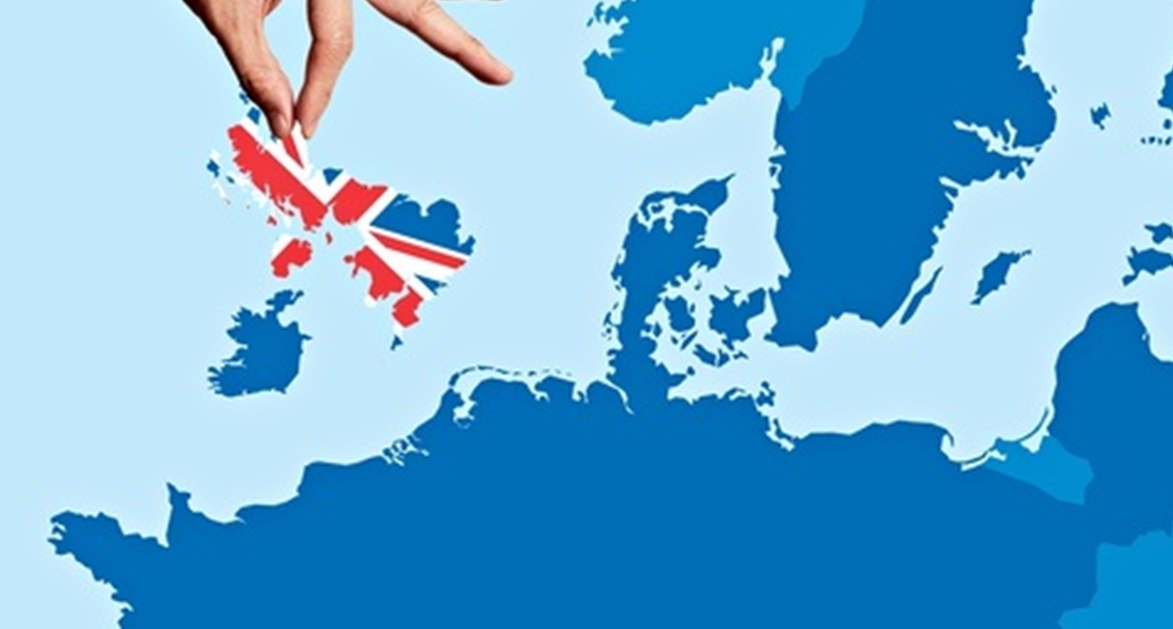
Last night, while Britain was still sleeping, results on the recent Brexit referendum started to pour in, with major British news outlets such as BBC, ITV and SkyNews announcing that Britain had voted for the political movement championing for a separation from the EU.

Now that the Leave campaign has been crowned as victors, we can begin to look at how this vote will change the spectrum of the electronic music industry. Although the focus of leaving Europe was on immigration, a Europe without Britain will also result in massive changes when it comes to manufacturing and trade. Britain’s exit from the EU will not be immediate, with most experts predicting the leave to occur in 2019 following years of new agreements and changes between the British and European governments.

Regardless of how long it will take for the move to finally and fully take place, it is inevitable that these changes will indeed happen, impacting the lives of many in the music industry. As Pitchfork reported, a spokesperson for the British Phonographic Industry (BPI) emphasized the importance of the EU and Europe “to UK recorded music and to the music sector generally, particularly when you consider the importance of live music and touring.”

The biggest concern is for touring DJs. With Britain leaving Europe, it is entirely possible that British artists will be restricted from openly touring Europe, while European artists may find similar changes when attempting to tour Britain. This could result in expensive and time-consuming complications, such as individual visas to enter the EU, as well as the need of a carnet, a document which delineates each piece of equipment on deck,]preventing the import or export of products without paying Value Added Tax. This will cost £1000—£2000 (approximately $1400—$2900), and will need to be renewed every 12 months.

Read more

The Black Madonna Opens Up About Sexual Assault in the Electronic Music Industry

The Black Madonna

More often than not, my attachment to a particular producer or DJ is born out of simple respect and admiration of their music. In most cases, this has little to do with them as a person and their online personality, but rather is a connection built solely on music.

That isn’t so with The Black Madonna. I first discovered her by pure chance when attending one of my first nights at Smart Bar in Chicago – her infectious and high-energy set had me dancing non-stop for hours. I was hooked. By that time in my electronic music path, I had stopped wanting to meet and talk with every DJ I liked, preferring to maintain a pure DJ-to-dance-floor connection. I began following her on Twitter however, and soon found out that I looked up to her as more than just a musician.

It didn’t take me long to realize that, in what is undoubtedly a male-biased scene, she provides a strong voice for the countless number of talented female artists of the world, as well as other more marginalized members of our industry.

Recently, she lent that voice to highlight the sexual harassment, abuse and discrimination that females, gays, transfolk, and people of color constantly face in the world of electronic music. In an interview with Traxmag, she provided personal anecdotes underscoring just how prevalent sexual assault, inappropriate behavior and personal violations can be. Sadly, she noted that this type of despicable behavior is so widespread, that many have “taken [it] for granted as ‘the cost of doing business’ in this industry”.

In the interview, Marea stresses the importance of “empathy,” which she defines as, “listening to what someone who is different from you has to say about their own experiences, and doing your best to respond in a way that is kind and makes them as comfortable as possible.” Having had the courage to speak up about subjects that are, to say the least, controversial, Marea is often at the receiving end of intimate messages from young women who reach out to discuss their negative experiences and to ask for advice. She makes it clear that she always takes the time to give these messages her upmost attention and importance – Marea not only truly understands the struggles others face, but does her best to put her background to use in a way that can really make a difference in helping those going through similar situations she has faced.

The article’s title comes in the form of perhaps the most hard-hitting quote from the interview, “I am a woman who learned about Underground Resistance from the first guy that ever put a bruise on me.” It is after mentioning an instance that saw her almost get sexually assaulted by a peer at an after-party, that she points out just how common these episodes are. Originally published in French, the article has only just been translated to English, and comes out in the middle of a week where the world has learned that a convicted rapist has only been sentenced to 6 months behind bars because, according to judge, a longer sentence would have “a severe impact on him.” While perhaps the timing is just a coincidence, it provides a perfect voice for episodes both within and outside of the industry she is in.

Marea’s words have a profound impact not only in the dance music industry, but on the world as a whole. Years after discovering her as an artist, I have come to admire her outlook and courage even more than the brilliant music she produces and plays.

Read the full interview on Traxmag.

Connect with The Black Madonna: Resident Advisor | Facebook | Twitter | Instagram