
Man Took “40,000 Ecstacy Pills Over Nine Years” and Survived, According to Resurfaced Report
The story of a raver who took an estimated 40,000 ecstasy pills and survived has recently resurfaced. Read more

The story of a raver who took an estimated 40,000 ecstasy pills and survived has recently resurfaced. Read more

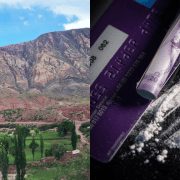
A secret cocaine bar, Route 36, is currently traveling around the mountains of Bolivia to stay out of sight of the authorities. People are traveling to the world’s highest city, La Paz in the Andes Mountains, battling altitude sickness just to find this hidden spot.

The Australian Capital Territory (ACT) has become the first jurisdiction in Australia to decriminalise the personal possession of illicit drugs such as cocaine, MDMA, heroin, crystal meth and amphetamines. Read more

Glastonbury Festival could be asked to lower its capacity rates in a bid to combat illegal drug use at the annual event, as local councillors and police look to review its current license. Read more

MDMA may not be the cause of your “Blue Mondays” after all, according to a new clinical trial.
The study, titled Debunking the myth of ‘Blue Mondays’: No evidence of affect drop after taking clinical MDMA, tracks the moods and reactions of 14 people who were enlisted into an MDMA-assisted psychotherapy course to treat an alcohol disorder. Read more

Researchers have found high levels of MDMA in Glastonbury’s water and are studying its effect on the local wildlife. Studies are showing high levels of drug contamination in the river that runs through the site of the Glastonbury Festival. Dan Aberg, a Masters’s student at the School of Natural Sciences at Bangor University, and Dr. Daniel Chaplin from the Centre for Environmental Biotechnology (CEB) measured levels of drugs found in the Whitelake River before, during, and after Glastonbury Festival 2019.

Veteran DJ and producer David Morales has been released without charge following his arrest earlier this month at Japan’s Fukoka Airport for alleged drug possession.
Morales was detained “for allegedly violating the law on narcotics and psychotropics control” on October 7 after a customs official found 0.3g of MDMA in his carry-on baggage.

A new study by American Addiction Centers has revealed that only 34.7% of ecstasy pills in circulation in the United States contain MDMA.
The study is an important one as far as drug safety concerns go, as explained by the AAC in their introduction:
“Pure ecstasy includes a single ingredient: MDMA. Anything else has been modified to include other, sometimes deadly, chemical components. To understand how the purity of ecstasy has changed over the years, we analyzed more than 25,700 test reports of ecstasy from around the world to see how often these pills are cut with other substances.”

Tinnitus, the condition that is characterized by ringing or uncontrollable noise disturbance in the ears, could possibly be cured with MDMA. The revelation comes from a scientific study being conducted in New Zealand, which has already completed trials showing promise of proving that the common rave/party drug could be used to cure the troubling hearing condition.
As reported by Stuff, the joint study between the University of Auckland and the University of Otago began two years ago as a result of enough reports from those with tinnitus who had taken ecstasy and felt benefits, urging researches to dig into it further.
So far, the last two years of MDMA studies involved a small number of participants in placebo-controlled trials, where they were given a small dose of MDMA or a placebo and monitored over a four-hour time period. It’s important to not that they were not given enough MDMA to feel high”, yet many reported an easing of tinnitus after just three hours. Reportedly, those who experienced the benefits stated that the same effects maintained for a week or even more. The research conducted thus far was divided into two separate trials, where researchers administered doses of 30 mg or 70 mg of MDMA imported under strict controls and dispensed by pharmacists working as part of the research team.
The leading professor behind the research, University of Auckland professor Grant Searchfield, did note that the operation is moving slow due to the high risks associated with MDMA, “Our goal is to try and find a medication for tinnitus. It can have catastrophic effects. Whether MDMA is it or whether it’s a trial for us to identify what is going on in the brain is still an open question.”
In order for the study to continue, as well as to know which exact next steps are needed, Scientists are reviewing all data and brain imaging from the trials thus far conduced, which could take months. Further funding will also need to be raised in order to progress beyond the current stage of the trials.


