Posts

MDMA Glastonbury's water

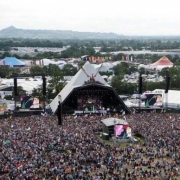
High Levels Of MDMA & Cocaine In Glastonbury’s Water Impacting Wild Life

Researchers have found high levels of MDMA in Glastonbury’s water and are studying its effect on the local wildlife. Studies are showing high levels of drug contamination in the river that runs through the site of the Glastonbury Festival. Dan Aberg, a Masters’s student at the School of Natural Sciences at Bangor University, and Dr. Daniel Chaplin from the Centre for Environmental Biotechnology (CEB) measured levels of drugs found in the Whitelake River before, during, and after Glastonbury Festival 2019.

Read more

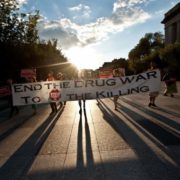
Drugs won the War on Drugs

How Drugs Won The U.S. War On Drugs

It’s time we be honest with each other: drugs won the U.S. War on Drugs.

While President Trump is inexplicably still contesting the election results, there isn’t even a shadow of a doubt on the fact that drugs are a sure winner of the 2020 elections.

Read more

Virtual Raves & Drug Usage

New Study Links People Attending “Virtual Raves” and Unsafe Use of Drugs

With festivals, nightclubs, warehouse parties and raves on lockdown due to the COVID-19 pandemic, many have turned to “virtual raves” to satisfy their party needs, often choosing to consume drugs at home, even in front of a webcam.

On top of featuring live streams, these “virtual raves” often consist of friends joining video conferencing platforms such as Zoom, Google Hangouts and Skype to connect with friends and others while simultaneously watching a live stream of DJs performing during “happy hours” or later at night, replacing traditional nightlife experiences.

Read more

Veteran DJ and Producer David Morales Released Without Charge Following Japan Drug-Related Arrest

Veteran DJ and producer David Morales has been released without charge following his arrest earlier this month at Japan’s Fukoka Airport for alleged drug possession.

Morales was detained “for allegedly violating the law on narcotics and psychotropics control” on October 7 after a customs official found 0.3g of MDMA in his carry-on baggage.

Read more

Home Offices Announces That UK Government Will Not Interfere With Drug Testing at Festivals and Clubs

Great news coming out of the United Kingdom, with the Home Office stating that it wouldn’t “stand in the way” of drug testing at clubs and festivals.

The decision comes after calls from experts and campaigners for music events to provide the all-too-important service following two deaths and 13 hospitalizations at Hampshire’s Mutiny festival.

Although statistics show that drug usage itself is not increasing, eleven people have died at UK festivals in the last two years, indicating that the illegal substances itself have a higher level of toxicity and may be used without knowledge of what they actually are.

Read more

Addiction and Sobriety In The Music Industry

The lifestyle of a successful electronic music artist or DJ may seem like a dream to an outsider, but in reality, it isn’t always what it seems. You get into it because of a deep love for your music and the scene, but chronic, acute insomnia, jet lag, anxiety, and loneliness are problems that come along with the job. These are problems for any musician, but in the electronic music industry they can be even more destructive thanks to constant touring uninterrupted by the album cycle, and the late night showtimes that are the staple of the scene.

Whenever you’re through for the night, at 3:00am, 4:00am, or later, it’s really not possible to immediately collapse into sleep in a strange room, no matter how tired you are. But come 8:00am or 9:00am, it’s time for a drive or flight. These kinds of crushing schedules can worsen problems like depression and anxiety, not to mention pain and illness.

Read more

Only 34.7% of Pills Sold in the U.S. Contain MDMA

A new study by American Addiction Centers has revealed that only 34.7% of ecstasy pills in circulation in the United States contain MDMA.

The study is an important one as far as drug safety concerns go, as explained by the AAC in their introduction:

“Pure ecstasy includes a single ingredient: MDMA. Anything else has been modified to include other, sometimes deadly, chemical components. To understand how the purity of ecstasy has changed over the years, we analyzed more than 25,700 test reports of ecstasy from around the world to see how often these pills are cut with other substances.”

Read more

Can an LSD Overdose Really Be Fatal? DanceSafe Speaks Out

As reported here previously, this year’s Lightning in a Bottle festival was marred by an unfortunate incident in which an attendee died due to what has been officially ruled as an LSD overdose. The coroner statement has prompted some serious discussions not only about LSD but also about the perceived dangers of this substance.

Since, DanceSafe Executive Director Mitchell Gomez wrote a lengthy post on the DanceSafe website tackling this issue. Gomez’s input is more than appropriate given that DanceSafe was at the event as well, providing free condoms, ear plugs, and educational materials on drug use as well other health and safety topics.

In the post, Gomez calls the coroner’s assessment with regards to the attendee’s death as “improbable.” He further explains that LSD is a drug not known to cause short-term or long-term harm in recreational doses. Even in higher doses, he contends that there is no evidence for LSD toxicity causing death, personally categorizing the chance of that happening as “slim to none.” However, he does say that there are now dozens of different drugs that can cause deaths, with 25I-NBOMe in particular being singled out in the piece.

Gomez goes further, “One of the clearest pieces of evidence of the lack of acute toxicity for LSD comes from the long and well documented history of people both intentionally and unintentionally consuming massive doses without adverse medical incidents or death…Since the discovery of its psychoactive effects in 1943, there have been a grand total of four documented cases of supposed ‘LSD toxicity’. Two are poorly documented. One was likely due to police abuse, not LSD. And the other is the recent tragedy at Lightning in a Bottle.”

No blood concentration of LSD was given, nor details about other drugs the Medical Examiner may or may not have tested for. We have filed a public records request to obtain the Medical Examiner’s report.”

He then raises an interesting question: could 25i-NBOMe be the culprit?

“In 2010, there have been dozens of deaths linked to 25I-NBOMe and related NBOMe and NBOH drugs. Additionally, new molecules are being invented by overseas labs all the time in an attempt to circumvent existing drug laws. Many of these substances are often misrepresented as LSD. Unless specifically looked for, these substances are extremely difficult to detect in the blood of a decedent, and with 25I-NBOMe in particular adverse medical incidents often progress at an incredible speed, with individuals presenting no medical signs at all until they rapidly decompensate,” Gomez explains.

“Prohibition driven misrepresentation kills people all the time, but it’s not at all clear if ‘LSD toxicity’ ever has…Did the medical examiner in her case even test for it? We know from our work investigating MDMA-related fatalities that there are no standards across the country for forensic toxicology screenings,” he added.

In the end, Gomez says it is up to each medical examiner to decide which drugs to test for. “(We) know that adding more toxicology panels can get expensive, but in today’s world, with so many misrepresented ‘research chemicals’ flooding the market, it is important that they are done.”

We can only hope that this helps pave the way for better and more effective drug testing, especially for events and venues where drug consumption are discouraged but inevitable nonetheless.

Our deepestOur condolences go out to the family and friends of the young woman who lost her life at LIB.

You can read Mitchell Gomez’s full post here.

[brew_cta id=”4″]

The RAVE Act: What You Need To Know And Why It’s Still a Weight on Our Industry

In the fight against illegal drugs in the United States, one of the most significant measures that was put forward in recent years is the Reducing Americans’ Vulnerability to Ecstasy (RAVE) Act. It is also quite a controversial piece of legislation, as the bill itself did not manage to pass Congress until it was retooled as the Illicit Drug Anti-Proliferation Act of 2003.

Even after the passage, if you can call it that, the RAVE Act has been eliciting strong reactions from both sides of the spectrum until today. In particular, the sentiments against it have been strong and vocal as it is being criticized for its ineffectiveness in the illegal drug campaign, oftentimes touted as one of the causes for the lack of drug safety in today’s electronic music scene.

So what has made the RAVE Act a contentious law? Today, we look more closely at the RAVE Act, its provisions and the controversies surrounding it.

Read more

Medical Care at Electronic Music Festivals

While medical care is not spotlighted much in any electronic dance music festival, this does not discount its critical importance. In fact, medical care is, and should be, a constant in events such as this and others as well.

The critical importance of medical care is all the more apparent given the unique environment present at an music festival where electronic music is focus. The fact that most attendees belong to a younger, healthier demographic and there is the danger of drugs and alcohol lurking around makes medical care in such events even more challenging. As such, it is important that the medical facilities and personnel assigned to such events are able to address the possible situations that may arise in such events.

Read more