
Drug-checking services improve safety of festivals, UK study finds
Drug-checking services at festivals lead to a reduction in drug-related casualties, according to a new UK study. Read more

Drug-checking services at festivals lead to a reduction in drug-related casualties, according to a new UK study. Read more

London Assembly’s Health Committee published a report arguing that drug checking services should be provided at clubs and music events in London to combat drug fatalities in the city. Drug-related deaths in England and Wales are at their highest level since comparable statistics began.
Caroline Russell AM, Chair of the Health Committee, said in a press statement:
Too many people are still dying from drug-related causes in London. We investigated how to address this tragedy and find out what practical, life-saving interventions could be used to reduce drug harm in our city.
Our investigation found that naloxone could save someone’s life if it’s used quickly after an opioid overdose. That is why we are urging the Mayor to ensure the Met routinely carry naloxone, a simple and proven way to reduce opioid deaths.
Additional measures recommended in our report, such as a pilot for safe drug consumption rooms and the introduction of drug checking services, can start to bring down the growing numbers of people sadly losing their lives due to problematic drug use.
The report urges the Government to adopt a national naloxone program in England already adopted by Northern Ireland, Scotland, and Wales. It also asks that the Metropolitan police station provide officers with nasal naloxone spray when they come in contact with drug users who are in danger of overdosing.

Great news coming out of the United Kingdom, with the Home Office stating that it wouldn’t “stand in the way” of drug testing at clubs and festivals.
The decision comes after calls from experts and campaigners for music events to provide the all-too-important service following two deaths and 13 hospitalizations at Hampshire’s Mutiny festival.
Although statistics show that drug usage itself is not increasing, eleven people have died at UK festivals in the last two years, indicating that the illegal substances itself have a higher level of toxicity and may be used without knowledge of what they actually are.

We here at 6AM Group have long talked about the ineffectiveness of the current “zero tolerance” policy against drugs. As the figures have shown thus far, it has only served to exacerbate the drug problem in the United States and other countries. Being involved in the nightlife and electronic music scene for a long time, we have had the unfortunate chance to witness this stark reality many times.
Unfortunately, and despite improvements, the U.S. government has ignored the failure of this policy by continuing to forward the same approach in the way it passes legislation and enforces it on a federal level. At best, the zero tolerance policy is merely a “stop gap” measure that does not address the root of the issue. Worse, it is actually detrimental to the people who are supposed to be given help and support in the first place.
This raises a question: is there a better way to deal with the drug problem in the electronic music scene? We believe there is one: allow drug testing.
First things first, let’s get the misconception out of the way. Not all drugs are created equal. There are the “safe” drugs like marijuana as well as the more lethal ones like crack cocaine and heroin, among others. Unfortunately, not everyone knows there is such a distinction and, in some cases, this leads at times to avoidable fatalities.
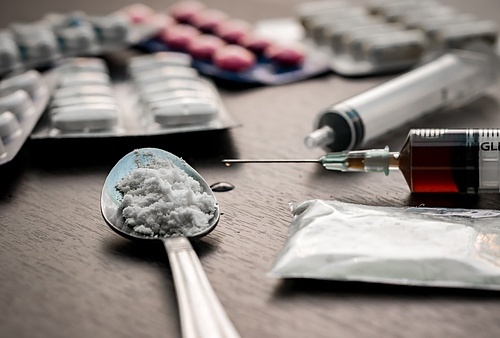
image courtesy of Counterpunch
As such, is important to educate people about these types of drugs. Not the ineffective “zero-tolerance” education implemented in those D.A.R.E. programs in schools, but a more “direct” approach. Setting up a facility in clubs and festivals for drug testing where people can freely approach to see how safe or dangerous is the substance they may have is an example of such education. Learning firsthand the different effects each drug provides or which ones are fatal in an environment they are somewhat comfortable in not only raises awareness about drugs, but also allows for the lessons to be ingrained deeper in one’s mind than any classroom lesson offered by today’s federal programs.
The problem with the government’s current approach on the drug problem lies in the fact that it fosters unwarranted fear on the part of the user. In many cases, the fear of being jailed for taking drugs does not encourage the user to stop. Rather, it provides the excuse to continue taking drugs, this time in secret, and it compounds the problem even further. So if the purpose of the “war on drugs” is to save the user, doesn’t this approach defeat the purpose of saving the and individual?
If striking fear is not working in the context of this problem, maybe fostering positive encouragement will. An environment where one can test for drugs willingly, without the fear of being arrested or prosecuted, and does not in any way deter people from enjoying themselves can provide such positive reinforcement that will encourage them to do what is proper and be able to avoid those that would cause greater harm. Ultimately, the goal to save lives is realized in a more effective approach like this one.
It’s not there are no examples backing up this approach. In fact, we have reported a number of instances that this positive approach worked. More recently officials such as a prominent British Police Chief have come out with the belief that this approach helps curb the drug problem, especially in clubs and events. It is now time for the government to seriously reconsiders its current policies and think of more effective ways to deal with the drug problem.
Encouraging voluntary drug testing may not be the magic pill that will solve the drug problem for good, nor do we think this is an applicable solution in all cases. However, we believe we must seriously consider this approach in dealing with the drug problem in our scene.
The stark truth is that people have been and are consuming drugs everywhere. It is irresponsible to assume Zero-Tolerance and criminalization will completely curtail consumption. Consequently, criminalization has caused a massive incarceration problem in our country, despite most of the drug offense arrests being non-violent offenders.
It is important to understand that local United States official are perennially under the influence and burden of the Illicit Drug Anti-Proliferation Act, a law similar to the previously proposed RAVE Act that has been criticized for disincentivizing venues from implementing harm reduction measures for fear of prosecution. As covered in the legislation, it is illegal for people to knowingly open, lease, rent, or maintain − whether permanently or temporarily − any place for the purpose of using, distributing or manufacturing any controlled substance. It also made it unlawful for a manager, employee or owner, to profit from, or make available for use, any place for the purpose of storing, distributing, manufacturing, or using a controlled substance. Similar bills have been passed at a local level throughout the United States, adding to the burden that promoters and venue owners already feel.
What this essentially means is that any venue or festival housing drug education or harm reduction initiatives such as DanceSafe can be targeted for “allowing” drugs to be used or distributed. Due to the penalties involved it has become not only easier but practically imperative for club owners and festival promoters to operate a Zero-Tolerance approach to avoid prosecution by local, state and federal officials.
As evidence strongly proves, drug consumption should be destigmatized through open conversations about what and how much to consume. It should be treated as a public health issue and not a criminal one.
It may be virtually impossible to do this until local and federal laws such as the Illicit Drug Anti-Proliferation Acts are repealed, but in order to combat drug culture and related deaths we must focus local, state and federal campaigns on education and harm-reduction initiatives.

The debate surrounding how to best tackle the issue of drugs in nightlife has been going on for decades now, with no foreseeable end in sight. There are different schools of opinions on the matter, although the two main contrasting ones usually see national and local officials on one side pushing for a “Zero Tolerance” policy, while on the other side others advocate for a policy of education and safety.


This past weekend, UK’s The Secret Garden Party became the first festival to introduce Drug-Testing Services in Britain, spearheading a movement that should become an industry standard world-over.
The festival launched the service, allowing attendees to test their drugs before taking them, in coordination with Cambridgeshire council, local police and charity The Loop. The festival weekend ran from July 21st through 24th at a farm in Abbots Ripton, Cambridgeshire, drawing thousands of music fans from all over the island and beyond.
The Loop has in the past worked on similar initiatives, gaining access to drugs dropped in amnesty bins by festival-goers or confiscated by police, security or paramedics but never from attendees themselves. This past weekend’s initiative was the first of its kind, as Loop co-founder Fiona Measham told The Guardian, “For the first time we’ve been able to offer the testing service to individual users as part of a tailored advice and information package provided by a team of experienced drugs workers. This can help people make informed choices, raising awareness of particularly dangerous substances in circulation and reducing the chance of drug-related problems occurring.”
Once the festival was over and the service’s results came in, it became apparent that it was not only welcomed with open arms by attendees, but also achieved impressive results. It is estimated that around 200 people used the tests available to them, with roughly 80 substances of concern found including super-strength ecstasy pills, several amounts of dicey MDMA and ketamine.
Photo courtesy of The Secret Garden Party
“Around a quarter of people who brought in their drugs then asked us to dispose of them when they discovered that they had been mis-sold or were duds. We were taking dangerous substances out of circulation. Until the laws are reformed, testing and encouraging safer drug use is the least we can do. We hope this groundbreaking service becomes the norm for all such events. It is now up to others to follow, to protect the health and safety of their customers. In truth it would be negligent for them not to,” said Steve Rolles, a senior policy analyst for Transform Drug Policy Foundation whose work was influential in sealing the drug-testing deal with local authorities.
Similar initiatives have been spearheaded throughout the United States by Dance Safe and other groups, aiming to provide personal testing kits to attendees as well as making them available on festival grounds. Dance Safe’s message with regard to drug checking is a simple one, “Drug checking, also known as pill testing or adulterant screening, is a harm reduction service that helps drug users avoid ingesting unknown and potentially more dangerous adulterants found in street drugs.”
It is practically impossible to enforce a no-drug police at music festival, whereas drug testing can be immensely effective in saving lives. Unfortunately, the drug market – and the MDMA one in particular – is a highly adulterated illicit drug market, hence why drug checking services have proven to add an important layer of safety for those who may otherwise be partaking in particularly dangerous usage of drugs that have been cut up with a myriad of adulterants.
There is hope that other festivals will soon follow The Secret Garden Party’s initiative in creating a safer festival experience for all attendees. This is hugely dependent on agreements between local officials, police and councils together with festival owners, promoters and organizations such as The Loop.


