Despite officials of other major cities such as Los Angeles, San Francisco, New York City and Chicago publicly announcing that they will remain sanctuary cities, Miami-Dade Mayor Carlos Gimenez has ordered county jails to comply with federal immigration detention requests in fear of a loss of millions of dollars from federal funding. This is effectively erasing the county’s position as a “sanctuary” for immigrants in the country illegally, a response to an executive order signed Wednesday by President Donald Trump that threatened to cut federal grants for any counties or cities that don’t cooperate fully with Immigration and Customs Enforcement.
“In light of the provisions of the Executive Order, I direct you and your staff to honor all immigration detainer requests received from the Department of Homeland Security,” stated Gimenez’s three-paragraph memo address to the interim director of the corrections and rehabilitation department.
While Miami never accepted the label of “sanctuary city,” it has continued to act like one by refusing to indefinitely detain inmates who are in the country illegally and wanted by ICE since 2013. Now, however, the county does not want to lose its federal funding and is changing its stance on the matter, even though Miami-Dade county officials have insisted that their policy was not one dictated by principle but rather simply because the federal government doesn’t reimburse for the expenses.
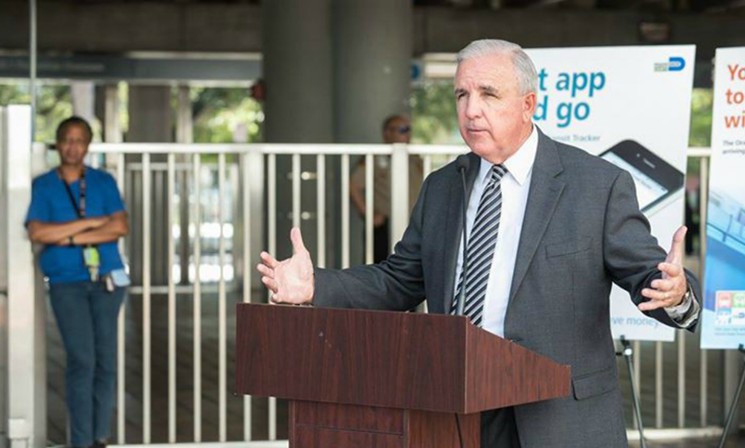
via Office of the County Mayor
“I want to make sure we don’t put in jeopardy the millions of funds we get from the federal government for a $52,000 issue,” said Gimenez. “It doesn’t mean that we’re going to be arresting more people. It doesn’t mean that we’re going to be enforcing any immigration laws.” Trump’s response came, of course, via Twitter.
Howard Simon, executive director of the Florida chapter of the American Civil Liberties Union, went on record to speak against Gimenez’s move, claiming that it “flies in the face of Miami’s long history as a city of immigrants” and predicting it will “drive a wedge of distrust between law enforcement and our immigrant community.”
But what does this mean for the dance music community of one of the country’s most vibrant cities, and for the countless thousands who land in Miami for major annual dance music events the likes of Miami Music Week, Winter Music Conference, Ultra Music Festival, iii Points, Art Basel and more?
The cornerstones of dance music are ones of undeniable inclusiveness and pervasive acceptance. A first descendent of disco, house music found its beginnings in Chicago, thanks to the iconic parties that featured the music of pioneers such as Frankie Knuckles, Leonard Remix RRoy, Chip E and of course Farley “Jackmaster” Funk. There is absolutely no doubt that spiritually and aesthetically house music, and by default all dance music that came later, developed in the U.S. out of the need of oppressed people, African Americans, gays and Latinos, to build a community through dance. The same was true later in the UK, when the need of young people dissatisfied with the meaningless materialism of Thatcher’s England to build an alternative community of music gave birth to the Acid House movement there. The aim was to unify people of all races, backgrounds and sexual orientations, not to divide.
And now, a week since Donald Trump has taken the oath of office, we are seeing an America that is as divided as ever, with Miami going against current as the first major city and dance music hub to comply to Trump’s threat with regard to “sanctuary cities”. Miami has long been a city built by immigrants, and immigrants have for decades played a fundamental role in shaping the city’s culture into what it is today. Statistically speaking, Miami-Dade is a county where more than half of the population is foreign born, and it is safe to assume that the same can be said of the dance music community that resides there.
Then there’s the case of the visitors that roll into the city annually for the aforementioned major music events. As things stand now, with Mayor Gimenez unable to find any sort of backbone to stand up to the Trump administration for more than a single day before rolling over, if you’re in the city because you either live there or are in town for a festival, you are no longer offered sanctuary protection. If arrested and wanted by the feds for immigration-related purposes, you will face deportation or long, indefinite stints in detention centers under Trump’s new plan.
More broadly, however, there is no denying that Trump’s executive order and general rhetoric goes against the very fabric of dance music culture. The city’s new policy is hurting the dance music community rather than listening to the people of Miami and to those who come to the city every year to celebrate diversity. In Chicago, Mayor Rahm Emanuel declared: “I want to be clear: We’re going to stay a sanctuary city. There is no stranger among us. Whether you’re from Poland or Pakistan, whether you’re from Ireland or India or Israel and whether you’re from Mexico or Moldova, where my grandfather came from, you are welcome in Chicago as you pursue the American dream.”
“We’re going to defend all of our people regardless of where they come from, regardless of their immigration status,” Mayor Bill de Blasio of New York said at a news conference with other city officials. But perhaps no official went as far as Boston’s mayor, Martin J. Walsh. “To anyone who feels threatened today, or vulnerable, you are safe in Boston,” Mr. Walsh said at a news conference. “We will do everything lawful in our powerful to protect you. If necessary, we will use City Hall itself to shelter and protect anyone who’s targeted unjustly.”
The same cannot be said of Miami now that it has effectively turned its back on the very same immigrant population that had always been considered to be the backbone of the city. It’s perhaps a little too early to predict how the immigrant community in the city will respond, and certainly it’s hard to know how the dance music community that calls Miami home will react to the events transpired just yesterday.
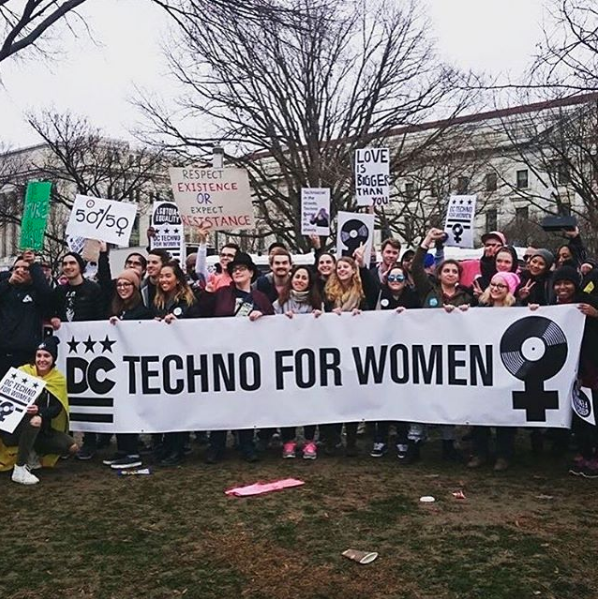
On Saturday January 21st, the day after Trump’s inauguration, millions across the United States and the world took to the streets to participate in the Women’s March, a worldwide protest in support of women’s rights and other causes including immigration reform, health care reform, protection of the natural environment, LGBTQ rights, racial justice, freedom of religion, and workers’ rights. Discwoman, a New York-based platform, collective, and booking agency representing and showcasing cis women, trans women and genderqueer talent in electronic music, took part in the march with a clear message for Trump: the techno community will be fighting against his divisive agenda.
As a member of the dance music community I cannot help but find myself at odds with Trump’s divisive immigration policy, including his absurd plan to build a wall on the Mexican-U.S. border, the constant “alternative promises” he is making that Mexico will be paying for it, and his attempts to coerce sanctuary cities into turning in immigrants under the threat of vital federal funding being pulled in case of non-compliance.