Posts

Baba Beach Club in Thailand Gears Up For High Season With Asia’s Most Powerful Funktion-One Sound System

A small slice of Ibiza arrived on the sunny shores of southern Thailand with the opening of Baba Beach Club in October of last year, a luxury lifestyle hotel for music lovers created by the owners of renowned luxury resort Sri panwa and powered by an impressive Funktion-One sound system, making it the most powerful in all of Asia. The beach club is just 20 minutes north of the Phuket International Airport and offers direct access to the unspoiled white sand Natai Beach thus boasting sublime sunsets and spectacular views of the Andaman Sea.

The owner, inspired by summers spent in the Mediterranean, created an opulent and open concept beach club where palatial villas and ­­suites surround the pool area and its occupants become one with the beach club vibe. The line-up has so far seen names like Nicole Moudaber together with BE-AT.tv, Be Svendon, Maxxi Soundsystem, Shaded and Yokoo as well as collectives like Colours of Love, Neverest, and Die Empathie as well as Wonderfruit Decompression.

Read more

See The Nightclub Built Right Out of An Abandoned DC-10 Airplane

Nightclubs come in all shapes and sizes, so to speak, while others have a particular theme or are built in a “unique” location.

Gate88 is the latest of these unique nightclubs, made special because it has been build right out of an abandoned airplane.

Located in Bali, Indonesia, Gate88 was built right of an abandoned DC-10 aircraft atop a building in the area. It is actually a longtime Bali landmark but was left abandoned for a long time before being repurposed and redesigned as a nightclub that just opened on July 1.

Read more

How To Become A Resident DJ: Tips & Tricks by Jack Wins


The following guest post comes from Jack Wins. He served his DJ apprenticeship at some of London’s key venues, leading him to become a resident at the bigger clubs and building a huge following along the way. 

Let me first say that there is no quick and easy way to become a resident at a club night. Also there is no set way to do it. Below are just 5 tips based on my own experience – tips I hope will help you become a resident at the club or venue of your choice.

Read more

Opinion: Transgender Rights and Bathroom Access in Nightclubs

Inclusive restroom

2016 has arguably seen America’s politics as divided as ever thanks to hotly contested Presidential primaries that then spilled into the major election battle the entire world is witnessing at this very moment.

One of the many hot issues of this election campaign has been that of transgender rights, a subject that certainly exploded into the mainstream over the course of the year with the issue of bathroom access at the forefront. Specifically the states of Mississippi and North Carolina ignited a lot of anger in the LGBT community and its supporters earlier in the year by passing legislation restricting access based on gender identification.

In America 18 states and Washington, D.C. ban discrimination in public accommodations based on gender identity. Numerous cities also have passed legislation or policies prohibiting discrimination in public accommodations on the basis of gender identity. You can see the exact information on where each state stands here.

Dance music’s gay DNA is one that can be traced back to the early days of disco and the very roots of the movement that morphed into the global night-time industry that it is today. In 1973 Vince Aletti wrote a piece for Rolling Stone describing the disco evolution in New York City as “After-hours clubs and private lofts open on weekends to members only — a hard-core dance crowd — blacks, Latins, gays”. Aletti was of course talking about David Mancuso’s parties at The Loft, the real ground zero of the disco parties that were taking the city by storm those early years.  DJ Tallulah—a Studio 54 resident DJ—further cemented the pivotal role of the gay community in shaping the nightlife world that we know today saying “The rave lifestyle of Ibiza in the late ‘80s was just a vanilla version of the New York gay lifestyle of the ‘70s.” We must also remember that it was the blacks, gays and latinos in Chicago that took on disco and built house from it — the history of dance music is embedded with the influence of the gay community no matter which decade we decide to examine.

Despite this known history, however, it was in Chicago out of all places that I heard of a disturbing incident that occurred last weekend. Ariel Zetina—a prominent member of both the transgender and nightlife communities in the city—was denied access to a female bathroom at a Northside nightclub, even while having a legal “F” on her ID. When the incident was communicated to her friend and DJ Jarvi who was in the middle of spinning a set at the venue, the latter took a stand against the discrimination and ended her performance. News of the incident which was posted on Facebook began to do the rounds and naturally sparked up several discussions about the subject. It was encouraging to see that an overwhelmingly vast majority of those commenting on social media denounced the incident.

For one, we must presume that the law is on Zetina’s side. Chicago’s City Council has affirmed that transgender people are allowed to access the bathroom that matches their gender identity, as covered by point (e) in Section 2-160-070 of the Chicago Municipal Code (Human Rights Ordinance), which was amended in summer of 2016 to address this exact issue so as to leave no loopholes or ambiguity:


Screen Shot 2016-10-12 at 3.44.04 PM

But beyond that, the incident raises questions that every club owner and staff member must confront with regard to the use of bathroom by transgender individuals. Local establishments should follow the law of course, and unless legislation specifically prohibits the practice of allowing transgender people from accessing bathrooms that match their gender identity, every venue ought to adopt internal policies to ensure that anyone that enters their building is not prohibited access to facilities for reasons of color, race, sex, gender or sexual orientation. Such policies must be communicated to all venue staff, including and especially security and bathroom attendants. Further, venue staff must be adequately trained to handle any patrons who object to the implementation of this policy or otherwise actively discriminate patrons who are abiding by it. It should never occur that a transgender club-goer is refused entry to a bathroom based on their gender identity. No patron should ever be subjected to this type of discrimination, period.

It may very well be that what occurred in Chicago was an isolated incident resulting from lack of training on behalf of the specific security member that denied Zetina access to a bathroom she had every right to use. Regardless, it is the responsibility of club owners and their management to ensure that this does not happen and failure to do so inevitably results in PR disasters that can bring an entire venue into disrepute — and with reason. If you work in nightlife you have the moral obligation to not only follow the law, but also to do what is right by a community that was and is such an integral part of the industry you are a part of.

There is no doubt about one thing: as dance music continues to command pop culture, it is key that we never forget where we came from. We must remind ourselves of the roots and ideals that shape our scene, and of the socio-political struggle and outspoken queerness that was and still is so key to the DNA of yesterday’s, today’s and tomorrow’s dance music.

Nightlife Matters: A Call for Governments To Respect Our Scene As Part Of Local Culture

NightlifeMatters

Electronic music is an indelible part of the world’s nightlife scene. Our music represents the soundtrack and backbone of an industry that is alive in all four corners of the globe, and almost every country in between.

Yet, it is only in a select amount of countries that nightlife is truly respected as part of culture, as an expression of art and freedom. In the Netherlands and Germany, in particular, legislators, politicians and officials recognize nightlife and electronic music as a valuable piece of both the local and national economy. The appreciation for our industry goes a step further in cities like Amsterdam or Berlin, where those participating in nightlife are not only respected but celebrated as part of a movement that promotes tolerance, art and freedom.

Unfortunately, this isn’t the case in other countries. Australia, and in particular Sydney’s New South Wales state , has been facing uphill battles with local officials who have gone so far as to impose strict lockout laws effectively curbing the existence of nightlife in some of the country’s most populous cities. England is facing similar problems, in no small part due to gentrification and the significant change with which venues, nightclubs and bars interact with local neighborhoods and communities.

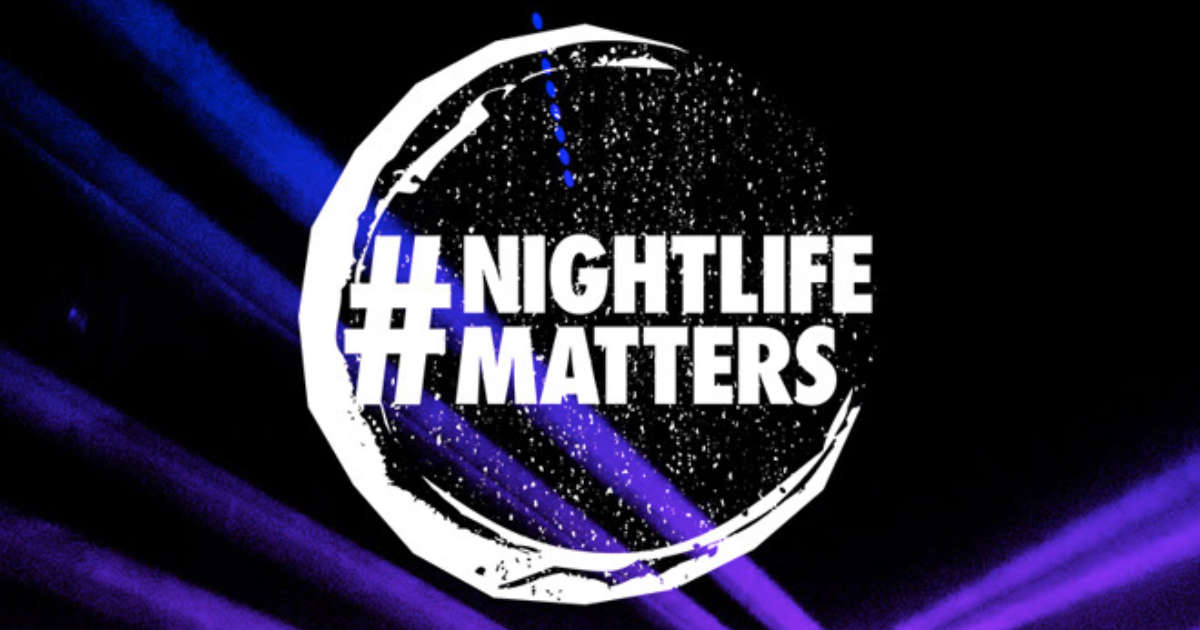
In the United Kingdom, the NTIA (Night Time Industries Association) has now launched a #NightlifeMatters campaign to increase awareness on the importance of our scene as part of local art and culture. The aim is to educate and change the viewpoints of the many on the other side of an irrational “us-versus-them” argument which constantly pits nightlife as unethical, quasi-criminal, uncultured and even dangerous.

Naturally, the campaign is backed by a great selection of high-profile artists the likes of Carl Cox, Eats Everything, Jackmaster, and Sasha, as well as venues and promotion companies. The always outspoken and active Seth Troxler has personally weighed in via Clash Music, underscoring just how important this message is for the longevity and prosperity of nightlife as we’ve all come to love it. The movement encourages everyone to sign their petition, and to tweet using the hashtag #nightlifematters to join and support this vital campaign.

“There are always multiple factors to consider when it comes to club closures. It’s hard to keep a business like that going for 10 years, just look at places like Plastic People or Dance Tunnel, even when a club is successful it’s hard work to keep it alive. But who’s responsible for these closures? Is it developers? Local councils? Licensing boards? Has club culture changed fundamentally, are kids today too boring? Or is it the government?


Of course it’s a combination of all those things but there’s one obvious way for us to change it. Vote.

We’re living in a time where the government likes to create media sensations around one topic or another. It’s not about them trying to save lives or change culture, it’s about who can keep themselves in the spotlight for the longest. Decisions are being made by people who are too old or too out of touch with what’s happening in the modern world. And it’s not just in the UK, it’s part of a global problem.

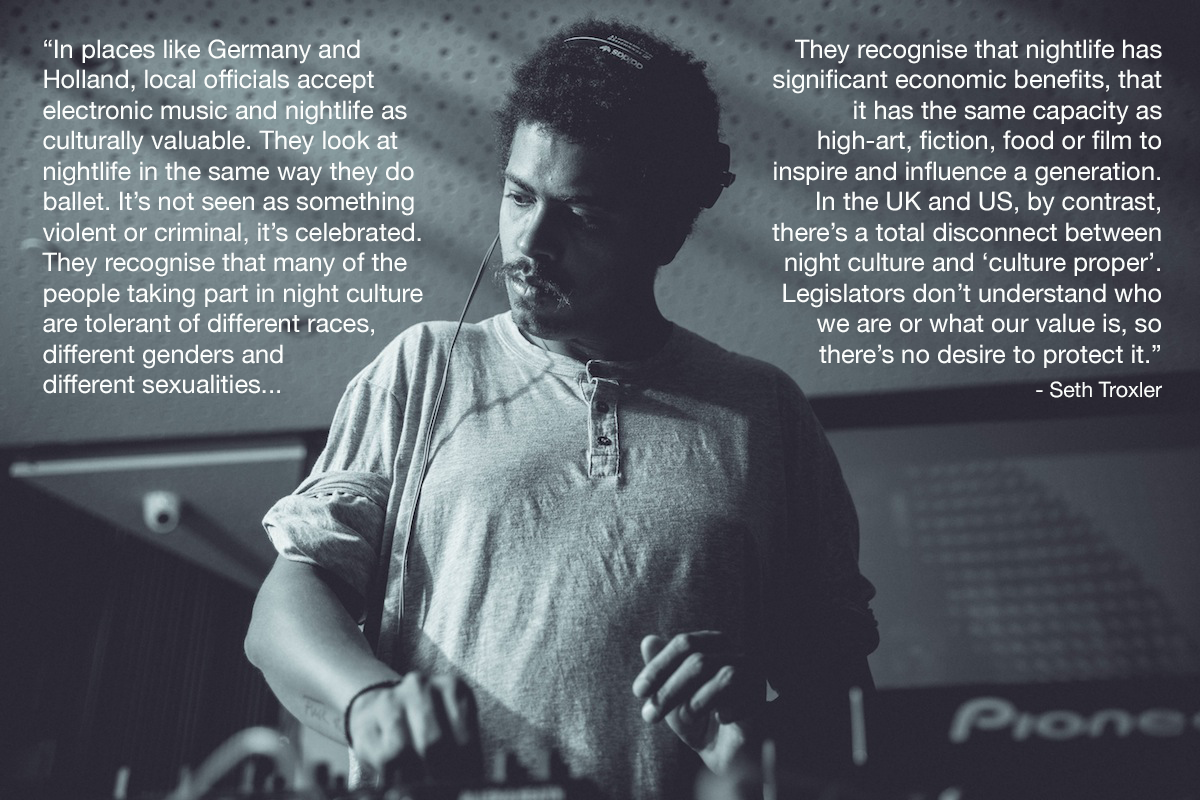
In places like Germany and Holland, local officials accept electronic music and nightlife as culturally valuable. They look at nightlife in the same way they do ballet. It’s not seen as something violent or criminal, it’s celebrated. They recognise that many of the people taking part in night culture are tolerant of different races, different genders and different sexualities. They recognise that nightlife has significant economic benefits, that it has the same capacity as high-art, fiction, food or film to inspire and influence a generation. In the UK and US, by contrast, there’s a total disconnect between night culture and ‘culture proper’. Legislators don’t understand who we are or what our value is, so there’s no desire to protect it.

If we’re to change these attitudes, we can’t just talk about them, we need to have more young people start participating. If we want to change perceptions about club culture we need to act. Part of the reason I launched Acid Future, part of the reason I’ve spent my life playing underground music, is to try and keep the dream alive, to try and fight the fight by educating people about electronic music.
Seth Troxler Music Matters

#NIGHTLIFEMATTERS is addressing the same issues, albeit from a different angle. They’re going direct to policy makers, showing them who we are, showing them that we’re valuable, showing them that we aren’t the stereotype that they think we are or that we might have been in the 90s. Their giving young people a platform to make their voice heard, in just a few clicks on nightlifematters.com you can email local councillors and MPs to let them know why nightlife is important to you.

It’s a first step but it’s only the beginning. We’re at a point where the old structures of society are losing their grip, there’s a huge opportunity for young people to change both the government and its policies for the better. Take for example this guy Will Thompson, he used to work for our management company, he was incredibly brilliant, very cool. He quit so he could go back to school and start working in politics because he wanted to change the situation he found himself in. He realised that the only way to really change things is to get involved.

The only reason these conservative councillors get in is because the only people who vote in local elections are 65 year old tea ladies, if you had everyone in Shoreditch get involved in the political process you’d be able to protect bars and clubs in the area.

It’s not hard, all we need to do is participate. That’s how we’re going to protect our night life. That’s how we’re going to save club culture.”

Source: Clash Music

Four Tet Has Plans For a London Version of Berghain

Four Tet performs during the Red Bull Music Academy Bass Camp in Vienna, Austria on November 16th, 2013 . Picture by Red Bull Music Academy

Four Tet performs during the Red Bull Music Academy Bass Camp in Vienna, Austria on November 16th, 2013 . Picture by Red Bull Music Academy

It goes without saying that when it comes to iconic dance music venues, Berghain/Panorama Bar wins the crown as the most sought-after and acclaimed nightclub in the industry.

However, British producer Kieran Hebden, best known as Four Tet, has plans for a London equivalent of the famed Berlin techno institution. The artist took to Twitter to voice his concerns about London’s nightclubs, stating that “there is no club in London right now where the sound is so good it will change your life. We need this.”

His plan? Take the recently closed Trocadero in Central London and transform it into a destination venue armed with an impressive Funktion 1 sound system to rival the world-renowned set-up at Berghain. While it’s not entirely clear if he is 100% serious about these plans, his series of tweets seem to indicate that he is indeed at least interested in following up with the idea.

Screen Shot 2016-04-11 at 2.35.27 PM


A review of Trocadero’s website, however, indicates that Four Tet may be a little late with this idea. The former entertainment complex is, “currently undergoing some exciting changes,” according to the website, which also states that, “a new website will be up soon with more information about these changes and the new operators [they] have on board.”

Will Kieran pursue this further? We can’t say we’re not intrigued by the idea of another iconic venue in the heart of the British capital!

Pacha NYC Is Closing Its Doors For Good in January

pachaIn an official statement issued today, New York’s renowned Pacha Club will be closing its doors in January 2016 following a triple series of parties leading up to its grand conclusion.

In honor of being at the forefront of dance music for the last ten years in New York City, Pacha will be hosting a ten year anniversary celebration known as the Decade of Dance featuring a centerpiece show on December 12 by Pacha’s founding resident DJ Erick Morillo. The New Year’s party will be a 72-hour classics marathon with West 46th Street veteran Jonathan Peters. The closing parties will take place through the month of January and are to be announced in the coming month. Read more

Air Tokyo will Close at the Conclusion of 2015

closing

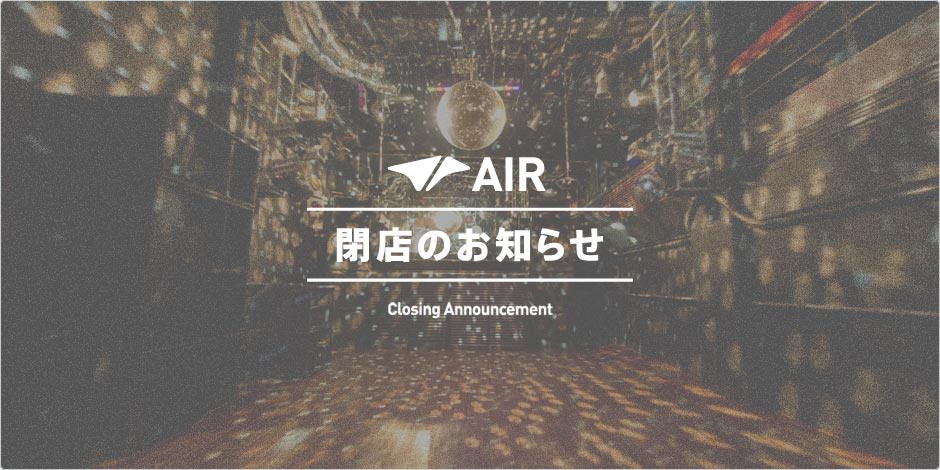
Sad news today as Tokyo’s Air Club is set to close at the conclusion of the year. Since its inception in 2001 in the Daikanyama District, Air has been a center for top-notch house and techno bookings from around the world for the last fourteen years. For undisclosed reasons, the club will hold its final night on December 31, 2015 to ring in the new year. No lineup has been announced as of late, but details are to be determined in the upcoming months. Read more

New Amsterdam Club, De School, to Open in Wake of Trouw Closing

schoolWhile still early in the process, it appears that plans are positively in motion for De School to obtain licenses and open in the near future. De School is the new nightlife vision from the folks behind the famed and former nightclub, Trouw. When Trouw closed at the end of 2014, early 2015, Amsterdam surely lost a cherished venue, but the legacy could live on with the introduction of De School.

An official statement by the Municipality of Amsterdam states that De School has applied for a 24-hour catering license, and, if granted, will allow De School “to have the opportunity to develop this site for a period of five years” (our Dutch is iffy…thanks Google Translate!)

De School will be a 500-person capacity venue located at the old East Land College in West Amsterdam. If all goes according to plan, De School could open as early as December 2015, and remain active until late 2020.