
Three in Four UK Nightlife Businesses are Reporting Being on “Financial Cliff Edge”
More than a quarter of nightlife businesses including promoters, clubs, and event organisers have reported being on a “financial cliff edge”. Read more

More than a quarter of nightlife businesses including promoters, clubs, and event organisers have reported being on a “financial cliff edge”. Read more

While not always, there comes a time when a DJ/producer gets one of those 20 second opportunities that they cannot afford to miss, opportunities that could turn into career-changing moments. How those opportunities ultimately turn out to be depend on the approach of the artist themselves. It can be easy to blow one of these rare chances by either making the wrong move or doing nothing as a result of not knowing what to do in the first place.
Fortunately, there is a way to make a good impression at the first go and we will be sharing you here how to do it. Take note, for these tips may be the deciding factors to furthering your career to the next level:

Today we live in the information age and data has become a vital tool in the way business is being done. Even for those whose business is managing clubs, bars, or other event/music venues, the use of data has become an important and vital element in determining how well their business is faring, or what needs to be changed to improve the bottom line and thus business sustainability. Read more

There’s no denying that today there are many websites earning money through clicks and shares instead of the value of content being digested by readers. In fact it is even happening in the electronic music industry, where sensationalistic headlines are used to blow up stories of little content or use. On top of that, thanks to technology there are now Autobots that stand in for readers and listeners and control the business of the internet. Can we say the same is happening with creative minds? No. There is hope yet for creatives in spite of modern technology.
A recent article from Jon Westenberg discusses how creative people, or “creatives”, have been screwed over by the online society. His definition of “creatives” are the musicians, the artists, the writers and other people who make stuff for a living. In this article, Westenberg says “bloggers and writers must never try to get paid. Once you try and get paid everyone thinks you’ve sold out.” He goes on to explain that this philosophy also touches on other types of artists, musicians, filmmakers, and journalists.

We will be the first one to admit it: there is a negative connotation attached to the word “promoter” when it comes to the nightlife and electronic music industry. A promoter can be a number of things, but is essentially the person behind planning, marketing and executing an event of any size, be it at a small local lounge, big city nightclub or even a festival.
The stigma attached to the job title of “promoter” is one that we feel is unfair and often overlooks the true skills and activities that a promoter does to pull off a successful event. Career Cast listed “Event Coordinator” as the 5th most stressful job of 2017, behind such industries as firefighters, police officers, enlisted military personnel and airline pilot. Whereas the first four are directly concerned with matters of life or death, an event coordinator, which essentially is the same thing as a promoter, is constantly dealing with a million moving particles at once and more often-than-not having to combine a wide array of critical skills to ensure multi-scale productions go smoothly despite the high risk of anything out of their immediate control going wrong. A promoter executing events in the nightlife industry faces these struggles constantly, and perhaps even at a higher frequency due to the nature of the events they are handling and all the elements that come into play when putting together club nights, live shows or multi-stage festival production.
6AM has been working tirelessly for almost a decade producing and promoting hundreds of events of all sorts of sizes and scope. From small intimate lounges to organizing Electric Island Festival — a festival on the island of Guam that is turning 5 years old this year— and everything in between, 6AM’s team has done it all, learning invaluable and critical skills along the way.
Being a promoter is much more than “spamming Facebook with event invites and flyers,” and has essentially become one of the self-starter entrepreneurial careers of our time. We are sharing what we have learned, and are constantly still learning, with you today, in recognition of the hard work and skills it takes to be a promoter in the electronic music industry today:

There has been quite some mixed opinion as to whether 2017 will be a good year for music/tech startups. Some feel this year does not hold much promise with the seeming lack of excitement with what these startups have to offer. There are also those who feel pessimistic as far as their chances for sustainability are concerned, given the current issues facing the music industry in general.
The truth is that these negative sentiments do not reflect the whole picture. For one, there are a number of options already available for startups to secure the needed funding and investments. Also worth noting is the fact that many of these startups have what you could refer to as more “low-key” ambitions, making them more sustainable. While there are some who seek to be the next Spotify, many of them look to leverage existing platforms and build on them to create some innovative services and technologies.
Music Ally has recently come up with a list of the most interesting music startups to watch out for. We will be highlighting 15 of them here as we showcase what each startup has to offer in the music industry.

Launched in November 2015, this Singapore-based startup pitches itself as a “social music maker and recording studio.” Its app offers a 2-track recording capabilities for musicians, a built-in editor, collaboration features, post video clips, and, just recently, mastering features as well. It has also been aggressive in acquisitions. In the past year, it has acquired rival Composr, US design studio Mono, and even a 49% stake on Rolling Stone Magazine’s publisher Wenner Media. In an interview, BandLab’s CEO Meng Ru Kuok said, “We are focused on the consumer and the supply chain of music, and innovative business models around music that exist today…BandLab’s goal is to be a global music business.”

Started in the UK by musician Benji Vaughan and music executive Leanne Sharman in June 2016, Discple Media develops the platform for artist apps. It aims to help musicians connect to their audiences via smartphones while allowing audiences to push content back to the musicians as well. In an interview, Sherman explained that the platform helps provide an incremental revenue stream for artists, record companies, publishers, and collecting societies. Despite being a newcomer, it has managed to snag some high profile clients with the likes of The Rolling Stones, Luke Bryan, and KSI using their platform.

Unlike many startups, and especially in the music industry, Dot Blackchain stands out for being a “public benefit corporation”, which means it is not established as a for profit operation. What this startup aims to achieve is to develop a new media format and architecture where artists, songwriters, and their shareholders can “express their rights and wishes” regarding the commercial use of their work. It was launched in August 2016 with the introduction of its file-bundling technology, a registry of ‘minimum viable data’ for works, and plug-ins for users. This project is expected to begin its second and third planned phases later this year. with more input from the music industry. At the same it time, it looks at contributing between 5% and 25% of its revenues towards education and music-focused charities.

Dubset began as “DJ-defined radio service” in 2011 that offered streaming mixes from DJs and used music fingerprinting to identify tracks and pay music rights holders. It has evolved over the years as it introduced new technologies. Notable of these is MixBank, launched in 2016, which identifies music used in remixes and mixes and clear the music’s use through deals with labels and publishers before it is distributed. Through MixBank, it has managed to enter into relationships with high-profile clients such as Apple Music and Spotify. Already, the service has shown signs of promise when it released its first licensed remix in October 2016: DJ Jazzy Jeff’s remix of Anderson Paak’s “Room In Here”.

While Gearbox is mainly a UK-based independent label that releases its music on vinyl, it employs a good deal of technology, especially for its music. It owns an analogue vinyl-cutting facility which cuts its records with no digital process being employed to create an authentic vinyl sound. In 2017, the company is going further in its vinyl technology with the introduction of Gearbox Automatic, which is described as an “autostreaming hifi turntable” that not only plays vinyl but also add tracks to streaming playlists. Make no mistake though, it is not ripping vinyl tracks into digital files but rather matches the records with their digital versions on Apple Music or Spotify that people can add in their digital libraries and play them on the move.

Grammofy is one of the few music services that is focused on the classical music genre. Through its app, it offers a subscription service of weekly curated collections of classical music, guiding its users to the different works, musicians, and composers in the genre. In addition, it employs expert curators from BBC Music and Gramophone Magazine and offers both compressed and premium audio quality. Since its launch in Germany and the UK in May 2016, it has expanded to other countries in Europe, as well as in the United States. For now, its app is only available on iOS.
Grooveo is an artist-centric live streaming platform for DJ’s with unique tools to engage audiences and allow for monetization through direct fan donations. The recently-launched Grooveo aims to disrupt this market with a distinctive quality: those using it can get paid during their stream.
Grooveo works the same way most streaming services do, requiring DJs to provide only a soundcard and webcam to use to sync their performance with the app. It works on multiple systems, from vinyl to digital, and even can be used with multiple cameras so viewers can get a full breadth of the “live” experience. Then, during the set, viewers have a chance to tip DJs as their performing using “beatcoins.” Later, they can even be paid for their own royalties.

Instrumental may be just an independent label (albeit partly owned by Warner Music Group), but it has a powerful technology at its employ. This technology is a specially built software that explores YouTube’s API for data on new music content creators and helps identify those who have the fastest growing engagement for the label to sign a record deal with. One example of this strategy is the label’s signing of Johnny Orlando, a 13-year old Canadian with a million fan following on Musical.ly, Instagram, and YouTube. In August 2016, Instrumental added a non-music division called DSCVRY, which identifies emerging social stars and connect them to brands for marketing campaigns.
Jaak is one of the startups exploring blockchain technology and music, in which it breaks down the anatomy of a song: songwriters, producers, artists, publishers and labels.“As its founder Vaughn McKenzie explained the idea behind the technology, “It’s just a way to design things that can work exactly how you want them to…it’s business logic, in an app.” This smart contract connects apps, websites, games and anything else that wants access to a certain song, thus providing a more interactive music experience. It has been working on the technology since 2014 and is due to announce its first product this year. For the meantime, it has been talking with various players in the music industry about what it could do for the industry.

Behind JoinMyPlaylist are two Danish entrepreneurs with experience in the music/tech realm. Leveraging from their experiences, they went on to create an app that encourages users to “experience music live with others” through live playlists that can be shared from jukebox to office radio. Even artists can join in as well by creating their own live playlists that they can share. As the industry is feeling the need to foster more conversations around music on platforms such as Apple Music and Spotify, JoinMyPlaylist strives to show how this can be done.

UK-based startup Jukedeck offers an interesting premise: utilizing AI or, to be specific, neural-network technology to compose music. Since the original prototype was introduced in 2012, its system went through significant improvements and is now being used mainly by video creators. While the technology itself is still in its early stages, its CEO Ed Newton-Rex foresees some potential uses for the technology, including the ability to teach music.
![i0hTIihu[1]](https://www.6amgroup.co/wp-content/uploads/2017/03/i0hTIihu1.jpg)
Another British startup in the list, Landmrk is considered to be music’s equivalent to Pokemon Go as far as technology is concerned. It is built on a location-based and augmented reality platform that can be utilized to run campaigns where digital content is dropped in physical locations for users to find, working the same way as Pokemon Go. It has already found success in the campaigns for Alt-J, Keith Richards, and CNCO. Beyond music, it also made its way into the TV industry through the campaign it ran for Showtime’s TV series Homeland.
![gyNhZ4-W[1]](https://www.6amgroup.co/wp-content/uploads/2017/03/gyNhZ4-W1-290x290.png)
London’s Mbryonic offers a visual approach in promoting artists and brands. In this case, it’s the use of virtual reality, game graphics, and live visuals that immerses people into the world of the artist. In addition, it has also created another product that transforms old music videos into 360-degree VR presentations that reacts to music and other commands as well. For its founder Tom Szirtes, this technology provides an opportunity for new revenue streams as well. “Why go to the expense of staging a gig…when you could stage an entirely virtual gig,” he pointed out.
![melody-VR-1250x500[1]](https://www.6amgroup.co/wp-content/uploads/2017/03/melody-VR-1250x5001.jpg)
Another British startup that is looking to tap into virtual reality for music is MelodyVR. Its focus is providing a total VR experience by providing both the hardware (through its range of headsets to be launched this year) and the content, with a catalogue of live performances shot specially for VR. It is set to be launched this year and has been able to secure partnerships with a number of artists, labels, venues, and festivals. It also recently launched a closed beta for Samsung Gear VR, targeting about 1000 users in Europe and the U.S.
![AAEAAQAAAAAAAAbfAAAAJGZhY2RiZDQyLWViNDMtNDhkMC04ZDljLWE3ZWRkZmI1ZmRmZQ[1]](https://www.6amgroup.co/wp-content/uploads/2017/03/AAEAAQAAAAAAAAbfAAAAJGZhY2RiZDQyLWViNDMtNDhkMC04ZDljLWE3ZWRkZmI1ZmRmZQ1.png)
Sweden’s Mind Music Labs is the startup behind what is considered the first real smart guitar in the world, the Sensus Smart Guitar. This guitar is a fully-functioning guitar with a digital audio workstation (DAW) that can modify the guitar’s sounds during looping or mixing. It also can be connected to the internet to play streaming music, which the user can play along. While this can be seen as part of a greater trend towards connectivity in instruments, Mind Music Labs’ Sensus stands out for its emphasis on the physical musical instrument that people can play with.
Source: Music Ally
If you found this article useful, sign up for our newsletter to learn more and to stay up to date with 6AM’s news and features on the world of electronic music.
SoundCloud is losing money faster as it grows. While the popular music sharing and streaming service based in Berlin posted a turnover of $14.1 million in 2013 (a 40% increase from the previous year’s revenues), its operating loss in the period more than doubled to $29.2 million in 2013 from $15.8 million in 2012.
“We are in a phase of growing SoundCloud into the market-leading platform for listening to, creating and sharing sound,” the company notes in its annual filings. “This has necessitated investment in technology, headcount and marketing. Our overhead base has increased faster than our revenues.”
The company is also at a deadlock at negotiations with Sony, Universal, and Warner over royalties for unauthorized uploads. “Deals with labels have been complex because they are about more than about advertising alongside content hosted and consumed on SoundCloud. There is also the issue of paying out royalties for licensed music that gets listened to on SoundCloud.”
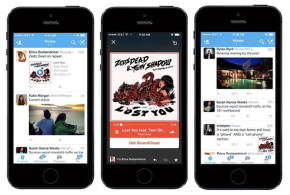
However, SoundCloud and social media giant Twitter launched today a feature enabling content creators to utilize Twitter “Audiocards” to deliver music right into their followers’ Twitter timelines on iOS and Android by hitting a play button within the Twitter app. Audiocards for the time being are exclusive to Twitter’s mobile platforms and not yet available on the desktop.
Sources: TechCrunch; hypebot

Assemblyman Joe Lentol of Brooklyn (D) is proposing new legislation to establish a 20% tax credit for music production and related activities. The scope of the tax credit would extend to many facets of the music industry ranging from production facilities and venues to songwriters and publishers. It could also be applied to cover royalties, musician sessions fees, direct marketing and consultant fees paid for recorded music.
Lentol says Georgia, Tennessee and Louisiana have already passed legislation to provide production tax credits and incentives. The New York state legislature will reconvene in January, 2015.
Source: Billboard


