
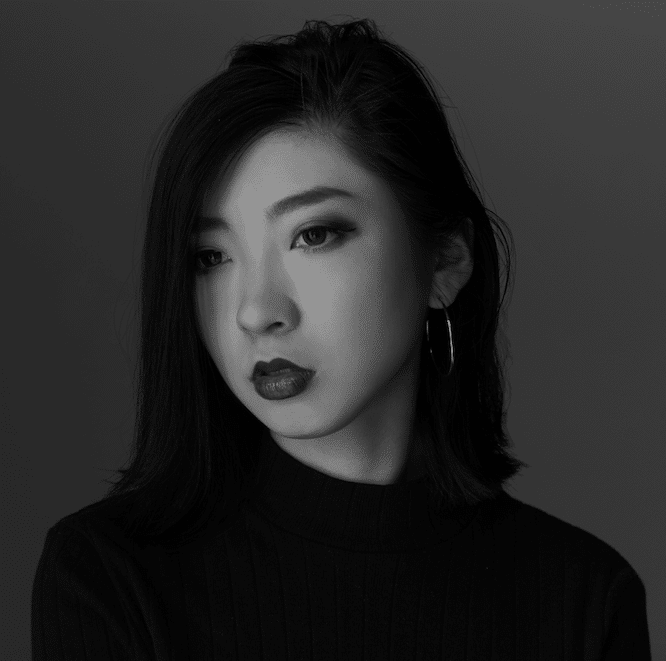
Well-established throughout the Japanese club music scene through her performances on streaming platform Dommune and radio stations Inter FM and Rakuten FM, as well as an active touring schedule that often sees her travel the length and breadth of the country, Risa Taniguchi has positioned herself as one of Tokyo’s most exciting artists going into 2018.
Her debut track “What Are You Doing” from Lyase Recordings (March 2018) was supported by so many artists like Maceo Plex, Amelie Lens, Charlotte de Witte, Perc, Daniel Avery, Boxia, etc. Also, her unreleased song “Satisfied” was played on BBC Radio 1 by Boxia, and “Emergency” was chosen out of thousands of demos from the world by Amelie Lens when she opened a temporary email address for upcoming artists.
It is thus no surprise that Risa is the newest addition to Clash Lion, with her new Ambush EP. The label is a mix of three personalities; Shall Ocin, TERR, and Daniel Watts. Three artists with different musical backgrounds merge forces to create a truly eclectic and open-minded label.
The title track “Ambush” is dark and distorted, with a thundering and abrasive bass presence. “Execution” is for the acid heads, and exclusively premiered on 6AM; its bouncing bass syncopation alongside a nastily good acid line drives the pace throughout the track.
Risa’s own muffled and eerie vocals come into play with “Monica” creating intensity in the track’s delivery. Linear in its flow, it’s a perfect late night after party track. Clash Lion proving true to their ethos of delivering music with no boundaries and freedom of expression from one of Japan’s hottest emerging talents.
Impressed by this new EP, 6AM had a lengthy chat with Risa to discover more about her and the home city of Tokyo and its scene.
Hi Risa, I appreciate you taking the time to talk to us all the way over here in LA. Are you in Japan right now?
Thank you for having me, yes I am!
Where were you born and do you still live there?
Yes, I was born and raised in Tokyo, and still, live here at the moment. I love the city and my country.
How was it growing up there? What kind of upbringing did you have?
My parents grew up out in the countryside, and not in Tokyo itself, but actually ended up meeting each other for the first time in a club. My dad is a French chef now but he was aiming to be a guitarist and came to Tokyo originally. He used to play my mum the guitar when she was pregnant with me.
What are some of the key cultural elements and moments that shaped your childhood?
I’m an only child and quite introverted and prefer to be at home. I liked to do things that I can do alone, like playing an instrument, drawing, studying, and reading. So making music suits my personality.
You discovered your love for Music early on. How did that come about?
When I was 8 my parents were given an invitation by one of their friends to one of the most famous symphony orchestra NHK and they bought me along. Unfortunately, they had little interest in classical music and they were dozing off once the show started! They noticed that I loved it, however, and they decided to take me to piano lessons, which I fell in love with and really got into classical music from that point.
When did the shift to electronic music happen? Who were the artists responsible for that back then?
I had been obsessed with classical music for a long time but at the same time, I really liked rock as well. Back when I started DJing, so many synth-based rock bands were getting popular like Klaxons, Phoenix, etc. This is when I first recognized the word ‘Dance / Club music’. Once I knew them I started digging out earlier electronic music like the Chemical Brothers, Fatboy Slim, etc.
Do they still influence your music today?
The Chemical Brothers influenced me a lot for my early productions, I was always trying to copy the balance of their mixing skills. These days it’s changed by so many other elements I’ve obtained and learned since, I can still feel something close in my works though which relates back to their productions, especially for my selection of the synths.
You have been DJing for 10 years but give a lot of credit for your career to a trip to London 8 years ago. What happened then?
London was a city which I had wanted to go to for a really long time since I started listening to UK rock bands. Also, my father was working in London for Jamie Oliver for a while, so I decided to go over there despite I was majoring in French at University at the time. Once I touched its club scene, I learned a lot about how to enjoy music on the dancefloor, the clubs in London were so amazing, it was something totally new to me, and I am sure that it changed my attitude toward DJing in many ways. To be honest, I can’t say if I would still be doing music and DJing now if it wasn’t for this trip to London.
How much do you feel you’ve changed as an artist since then?
I think my style has changed, as I have developed and become more knowledgeable about how to produce music, but that’s the same I am sure for many artists. There is no doubt for me, that 2010 seemed to be the year when bass music was all the rage, especially in the UK and London. So I played and produced a lot of that back then, as I was in the city at the time, but since many other things have led me to change and develop my style of music. I don’t produce what’s hot or popular, I just produce what I think represents my personality to the best of my ability.
And how much do you feel you’ve changed as a person since then?
Well, I was also just a clubber then, and my attitude toward enjoying a club has totally changed. Japanese people tend to be shy compared to other countries, so we cannot open our minds as easily and express ourselves, whether on a dancefloor or not. So this was something that I had to get used to, being able to be free in a sense when we went out, and it was liberating. I think I have become more of an open-minded person, who has been lucky enough to experience many cultures, and for that I am thankful. However, all these party nights out, have led me to drink a lot more beer on a daily basis now!
The house and techno scene in Tokyo is an intriguing one. What are the go-to spots there?
If you like to dance and also drink in a cozy and casual atmosphere, then I would recommend ‘Oath’ in Shibuya. It’s small and underground, with no bog dance floor or anything, but there is always a skilled or talented DJ playing there whenever you drop by, and I also play one a month!
What do you see in the future of underground electronic music in Japan?
We’re still in a process of solving a big issue regarding the law (the government is still prohibiting small bars/clubs from letting their customer dance. Some of you may know about this). Good music/culture is always found in underground venues as well, so without solving this issue, we can’t move on to the next stage really, which is such a shame, but I really do hope that it gets resolved.
Congrats on the new release coming out on Clash Lion! Can you tell us a little about the EP and the meaning behind it?
Thank you! I remember I made the first two songs of this EP (“Ambush” and “Execution”) around the same time so those have some kind of the same vibe. I really like adding a dark, mysterious atmosphere to my songs (that’s why my songs are almost minor) by using so distortion elements mixed up with traditional drum machine sounds. On the other hand, “Monica” has a different feel compared to the other two and I recorded my voice for it. What I’m speaking about in this song is a sentence I randomly found in a post that one of my American friends created on Facebook and her name is Monica (I got permission from her before the release of course!). As you can see from the artwork, the title song “Ambush” represents a Samurai ambushing his enemy behind the tree at midnight……I hope you enjoy it.
Your music has enjoyed support from a ton of internationally acclaimed producers and DJs. Who and what inspires you in the studio these days?
Well, I have so many heroes, but one especially for Maceo Plex. I was influenced by his music and his label Ellum for a lot of my productions. When I heard that he played one of my last songs ‘What Are You Doin” [Lyase] for the first time, I was so overwhelmed I literally cried with happiness! This is how I came to know about Clash Lion since their first EP was from Maetrik and then since I have really been into everything they have put out.
You went through a rebranding, from DJ RS to your current artist name. Why is that?
Good question. I’ve been DJing based in Tokyo for 10 years now and I wanted to make some kind of turning point this year, in other words, to remember my first state of mind. Of course, I liked the previous name but when it comes to thinking about for future, like when I go abroad more frequently, my real name seems easier to be noticed and people can simply call me “Risa” too.
If you weren’t working in music, what would you be doing now?
My main interest has been always music and languages. So I think I would be a translator or something like that.
Is that something you still do and work on when you’re not producing in the studio or out playing?
Playing piano is my routine even when I’m in a hectic situation. Also, I like drinking with my peeps.
What are some of your current hobbies?
I have never really been into sports or fitness, but I am aware I should do and need to move my body, so Yoga is the first thing I got interested in, which is good for my health. I started going to classes regularly now, and hope to keep it up whenever I have some extra time.
What are your top 5 things to do and see in Tokyo if you’re coming for the first time?
1. Having a Ramen tour (To be ready for this, you need to skip breakfast!)
2. Eating around in Asakusa whilst grabbing a beer
3. Hanami in April
4. Going to a public bath (what we call Sento) after having Yakiniku (the Japanese version of Korean BBQ)
5. Heading to Shibuya to find a person who will give you some useful information about the venues. Especially at the bar called Oiran in Shibuya, so many people will give you great information for a night of clubbing.
Favorite Tokyo sushi spot?
I would recommend “Daruma-Sushi” in Shin-Egota. You can just rely on the chef to choose for you there, and every single bit of Sushi is perfect.
And how about Ramen? And Udon?
This is one of the most difficult questions for me, as you know there are tons of good Ramen / Udon places in Tokyo. Hmm, I would say “Hashimoto” in Nakano or “Usagi” in Shibuya for Ramen. For Udon it’s better to go to Kagawa instead of Tokyo! But if you need it, I can complete a huge list for you of ALL the places!
Is there another must-try food spot in the city? Ok, I’ll be honest, I’m coming for the first time in June and need your advice.
Amazing, then I’ll organize a special food tour for you! If you’d like to experience real Japanese food life more than a ‘typical sightseeing’ styles places, I would recommend you go to Koenji for Izakaya. There are tons of many Izakaya spots and you can enjoy drinking (If you like, Sake is the best) OUTSIDE with your homies. People there are always welcoming and are so down-to-earth. I think June is the best time of year for enjoying Izakaya to your heart’s content. Once you take a step out of Izakaya you can also see our traditional/typical Japanese life there as well.
What’s your favorite hidden gem in the city?
You can find a bathroom anywhere in Tokyo. This is actually vital.
If you could travel anywhere in the world to DJ, where would you go?
At this moment I’d say it’s 100% Barcelona without hesitating since I’ve never met Clash Lion’s crew yet and they are amazing people. I’d love to play there with them to enjoy the city’s eclectic music scene, culture, and food.
What else is on your bucket list for the coming years?
First of all, to fulfill a proper European tour, then to make an album, and then complete Chopin’s Ballade no.4 and Debussy’s L’Isle Joyeuse.
Honestly, I’m always creating my bucket list, so I always have a goal.
Risa Taniguchi’s Ambush EP is out June 1st and available via Beatport


