
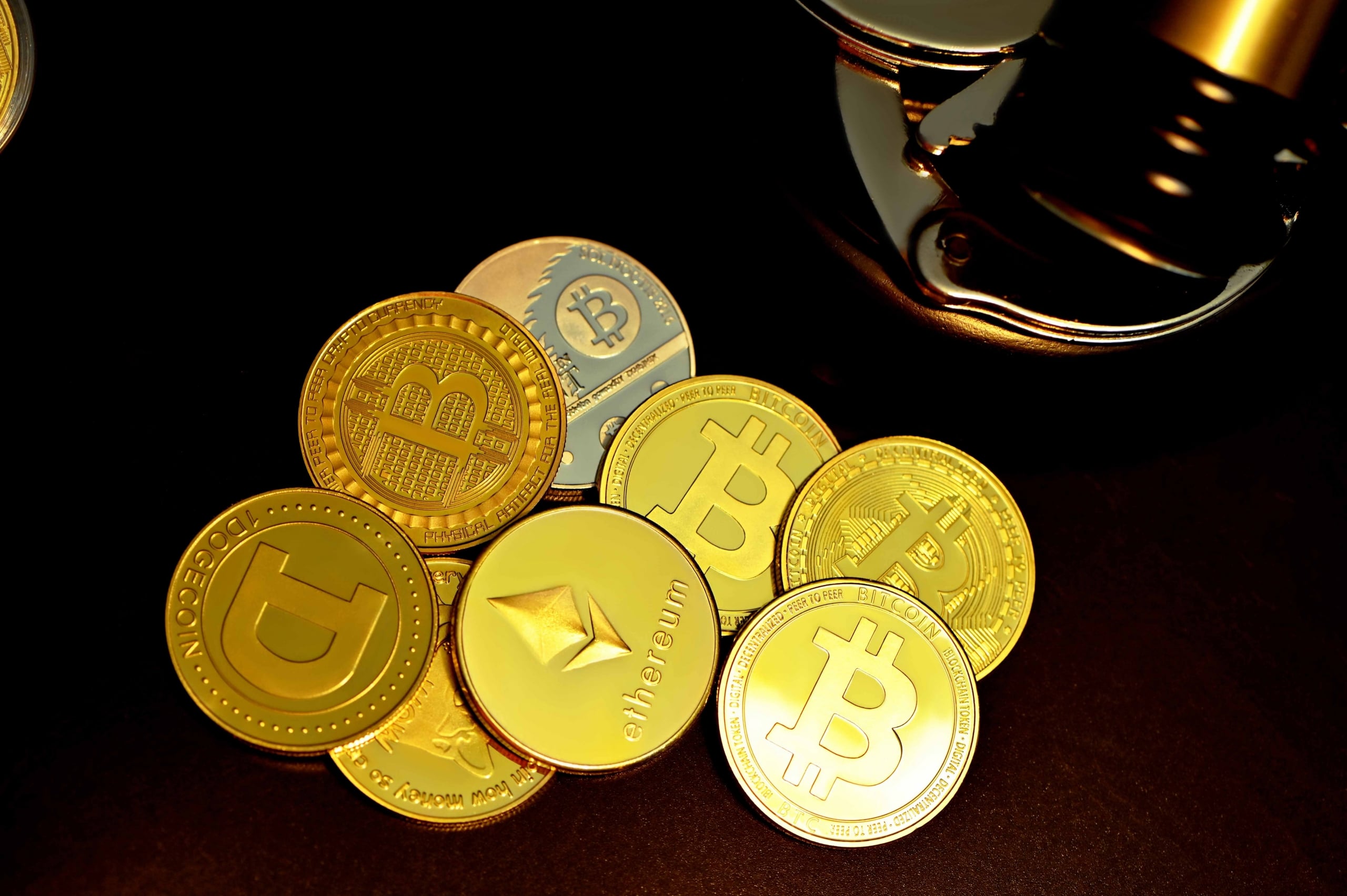
Cryptocurrency is the most financial-related topic, and has become a regular subject of debate. Digital money is progressively gaining recognition as an alternative payment method to fiat currency on worldwide marketplaces. Cryptocurrency is, for the unversed, a form of electronic funds handled via blockchain technology.
Blockchains are sophisticated computer networks constructed with math and code. Unlike government-issued and banking-controlled fiat currencies, cryptocurrency is decentralized and not issued or regulated by any government or institution.
At the starting of Bitcoin in 2009, there was little — or no — competition in the newly formed field of digital money. By 2011, however, other varieties of cryptocurrency were emerging as competitors incorporated Bitcoin’s blockchain technology to establish their currencies and services. Suddenly there was a rush to build more excellent cryptography. For more precise and accurate information, visit the bitcoin.
Ethereum
Like the one used by Bitcoin, Ethereum is a blockchain network. However, the programmable blockchain enabled the users of Ethereum to develop, publish, monetize and utilize apps (known as “dApps”) not to support a currency. Ether (ETH), the Ethereum-native money, has been established on the Ethereum platform as a payment method. Ether was the virtual currency number two after Bitcoin in September 2021. ETH is using a proof-of-work method.
But unlike Bitcoin, the amount of ETHs which may be generating is not limited. Ethereum has contributed to fueling numerous initial coin offerings since several ICOs have used the Ethereum blockchain. Ethereum also was the source of the surge in non-fungible tokens (NFTs) – digital art copies or collectibles connected with a blockchain and created unique.
Bitcoin
It’s digital money you may send to others. It might be a present, a service, or a commodity. You get the picture – it’s like our money in our bank accounts. But it’s digital, not tangible. It’s digital. That’s not all, though; that makes it different. It is decentralized. Therefore it does not need a bank or a third party to manage it – I mentioned this before in my cryptocurrency description.
Each transaction occurs directly between users using Bitcoin – it is termed a peer-to-peer network. Thanks to the blockchain, this is all feasible. Bitcoin has implemented blockchain technology to enable users to transfer and receive Bitcoin without a third party. You don’t have to identify yourself because you don’t require a third party. Click here if you’re interested in crypto OTC Australia.
Dogecoin
This cryptocurrency has been developing using a popular meme featuring an emblem of a Shiba Inu dog. The meme was viral, as was the cryptocurrency, the price of which rose after getting Tesla CEO Elon Musk’s support. Musk succeeded in shaking the already turbulent crypto market by supporting the meme coin.
Cardano (ADA)
Cardano touts itself as a blockchain platform for the third generation, casting itself as a next-level participant. It means that the problematic PoW computations and the significant power consumption required for mining corners, such as Bitcoin, are not needed to increase the efficiency and sustainability of the network. After Ada Lovelace, a mathematician of the 19th century, his cryptocurrency is called ADA.
The significant uses of Cardano are identity management and traceability. We may use the first application to simplify data collecting from several sources. We can use it to check a product’s production path and avoid fraud and counterfeit items perhaps.
Cardano is being developed into a decentralized application platform (dApp) with a multi-asset booklet and verified clever contracts in five phases to achieve network development. Each step of the Cardano roadmap consists of a research framework and peer-reviewed discoveries contributing to its status as a scholar.
Altcoins
It is crucial to note that not all altcoins are only different Bitcoin versions. Some are very, very different from Bitcoin and have very distinct objectives/purposes. Stakers, like miners, are those that validate reward transactions. But instead of controlling to check a block before anybody else, they are chosen to turn one by one. It consumes significantly l