

Guest post by Lydia McDowell
A year ago, back when we could get together on the dance floor, I had no idea that the mind-melting acid and techno throwdown from 999999999 at WORK by Synthetik Minds and 6AM Group in Los Angeles would be my last for a long time. This was written in the afterglow of that incredible night.
Music has the ability to touch the deepest wells of rage, sorrow, and grief within us. Dance allows us to shake and untangle the experiences living in our bodies. And breath is the current that evaporates it all into the ether.
Anger has a temperature and a texture. When activated, it’s hot, in-your-face, propelling, churning, heavy, thundering, boiling, compressive. The freight train in the dark. The whistling pressure cooker. The snap of the snare. The war cry. If someone is riding the crimson tide of anger, you can feel the vacuum of it sucking all surrounding energy before you even enter the room with them. Anger is intense. And it is a natural human emotion.
It’s our legitimate response to the incongruences and injustices of our world. If you’re a human on this planet and you’ve been angry about something, congratulations! You’re alive. But in our contemporary culture, feeling anger is largely frowned upon, and without a channel to process and diffuse it, fury often gets channeled into either the unhealthy path of destruction or that of suppression. In the latter case, anger lives as tension in our bodies, most often in the shoulders and chest, and is called to the surface when we’re triggered by something externally.
For most of my life, my anger was the closest emotion I had access to. Growing up in rural Appalachia, my experience was illuminated by incredible natural beauty and shadowed by profound inequality. At a young age, I couldn’t understand why the sermons I was hearing in church about charity, helping the downtrodden, and Christ’s love were at stark odds with the reality of how minorities, women, and workers in my community were treated. A lot of things didn’t make sense at this time, but in the core of my being, I knew they weren’t right. So I was pissed off a lot, and being both an outspoken and rebellious straight-A student, I was a conundrum that teachers funneled into gifted programs and detention in equal measure.
In high school, frustrated with sports that involved balls and teamwork, I started running cross country. This was probably the first time that I was able to start to process my angry energy. I enjoyed any training run that got me outside, but the long-distance days were where I really shined. Along ridges and streams into deep rhododendron and cedar-lined canyons, I learned how to be with myself; that being with what I thought and felt wasn’t a dangerous place. Propelling myself through layers of physical and mental resistance, after several miles I could fall into a steady rhythm of flow. Things were moving within me and with each footstep on the ground, each exhale into the sky, I could feel the tension in my body loosen. In these long runs, I felt expansive, connected, and clear.
Running in nature was a dependable place I could go to access my inner world — to process, to find inspiration, and to empty out my head.
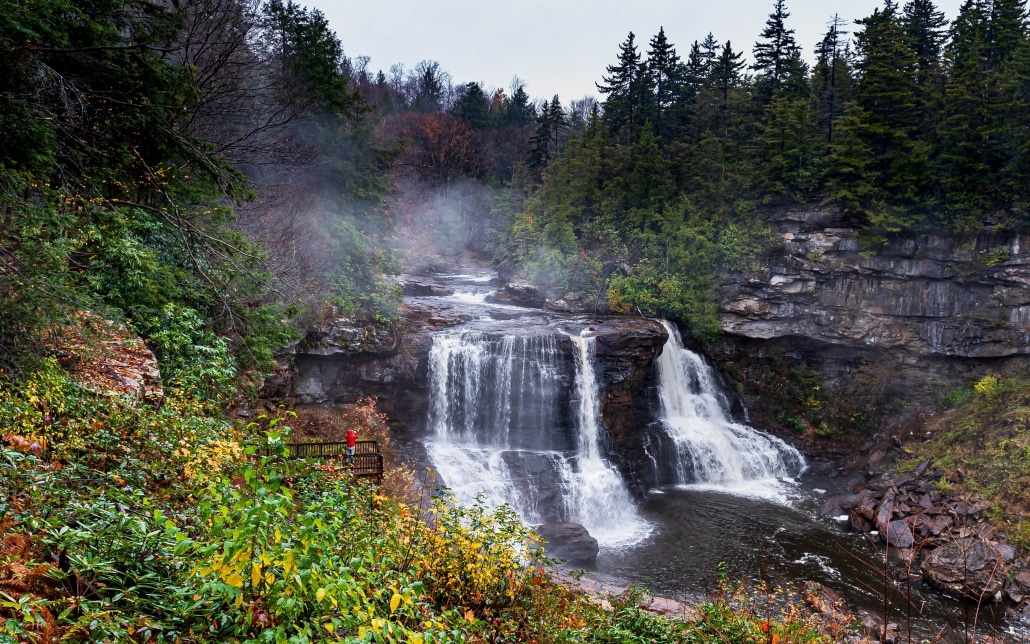
The steep and winding trails of the Blackwater Canyon were where I fell in love with running. Photo of Blackwater Falls, Davis WV by Stephen Walker on Unsplash.
Anger has a temperature and a texture. When activated, it’s hot, in-your-face, propelling, churning, heavy, thundering, boiling, compressive. The freight train in the dark. The whistling pressure cooker. The snap of the snare. The war cry. If someone is riding the crimson tide of anger, you can feel the vacuum of it sucking all surrounding energy before you even enter the room with them. Anger is intense. And it is a natural human emotion.
It’s our legitimate response to the incongruences and injustices of our world. If you’re a human on this planet and you’ve been angry about something, congratulations! You’re alive. But in our contemporary culture, feeling anger is largely frowned upon, and without a channel to process and diffuse it, fury often gets channeled into either the unhealthy path of destruction or that of suppression. In