

DJs and producers Billy Kenny and Bassnectar (Lorin Ashton), despite playing on opposite spectrums of electronic music, share something in common, and it’s not just the letter “B” in their names. Both have been hit with serious sexual accusations coming from a long string of accusers, all of which are highlighting a troubling pattern of sexual abuse and rape. No court actions have been taken at this point, but these aren’t isolated incidents in the world of electronic music. They join a string of male electronic music artists known for inappropriate behavior. The sexual allegations against Billy Kenny and Bassnectar bring to light not only the music industry’s prevalent issues of sexual abuse and sexism but also the perils of stardom.
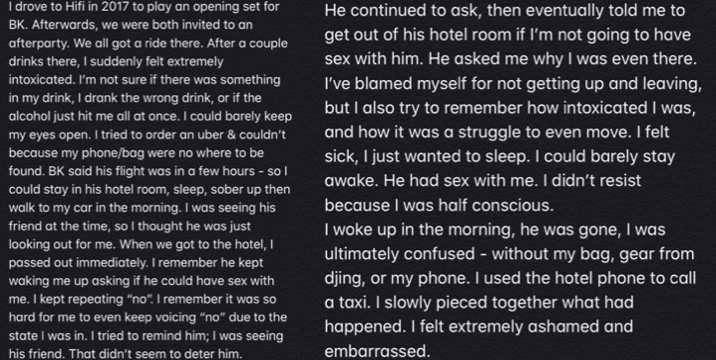
Sexual violence survivors, far more often women than men (1 out of 6 women experience sexual violence in her lifetime compared to men, 1 out of 71), have to prove themselves as victims rather than holding the perpetrator accountable. The MeToo Movement appears to be moving the needle and creating a culture where fans withdraw public support of an artist due to inappropriate behavior. #MeToo first appeared in 2006 across social media, and the two words are undeniably simple yet powerful. They serve to publicize allegations of sex crimes committed by powerful and/or prominent men. The hashtag caught national attention in 2017 when sexual abuse allegations surfaced against then film producer and entertainment powerhouse Harvey Weinstein. This sparked a movement and realization that survivors aren’t alone. If it happens once it most likely has happened again and again, and lo-and-behold, when one story surfaces, it can oftentimes give other survivors the strength to come forward thus highlighting a pattern of abuse at the hands of the abuser.
For those asking, “Why did they wait so long to say anything?” or saying, “They must have been asking for it” you need to understand one thing: asking a sexual assault survivor to re-tell their experience (over and over again) can be very painful. There are negative psychological, emotional, and physical effects causing trauma even years after the abuse has happened. Reliving the past doesn’t help with the healing process, so most victims don’t report cases knowing that the law already challenges them.
Survivors’ stories deserve belief, not questioning.
Rape is the least reported and convicted crime in the United States, primarily because victims fear they won’t be believed. Think about it, someone reporting a stolen car can probably recount the story or share facts easier than sharing details of a sexual violation. Already facing disbelief coupled with artists’ “clout,” victims feel intimidated.
Are the systems that serve as society’s foundation antiquated? Does “the burden of proof” need a reexamination? “Innocent until proven guilty” implies one of the parties is lying. It’s a lot to bear for the victims to present evidence of their struggles, especially when it’s against someone’s celebrity